New UK leader Burnham vows to fix a ‘broken’ social care system
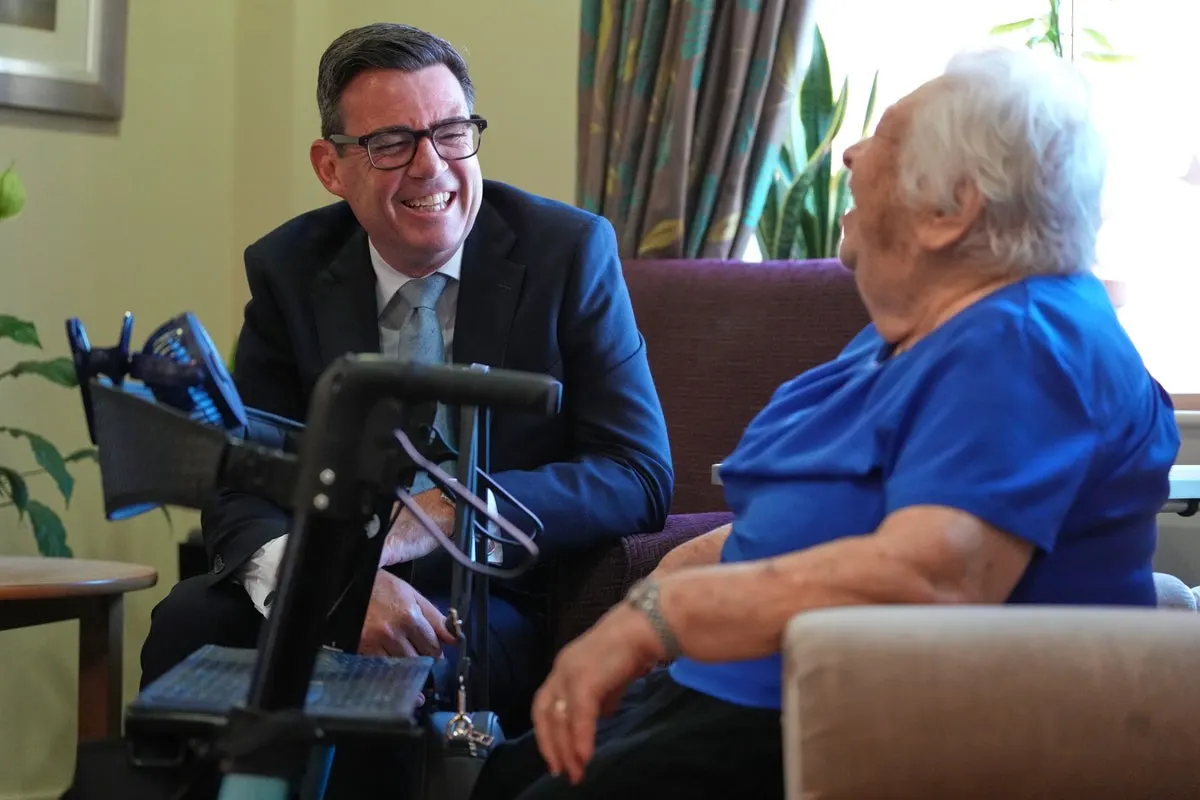
British Prime Minister Andy Burnham has pledged to fix England's "broken" social care system, describing decades of political failure to provide affordable, decent care as a "major dereliction of duty." Speaking at a London care home, Burnham said the system was as unfair as American healthcare, with vulnerable people bearing the brunt of costs, and announced plans to work across party lines to build a "national care service" alongside the NHS. The issue is personal for Burnham, whose father lives with Alzheimer's, and he acknowledged his own past failure to reform care as health secretary in 2009.
Burnham has appointed social welfare expert Louise Casey to lead a public "Big Conversation" on reform, and has invited opposition parties to talks, with the Conservatives and Liberal Democrats confirming attendance while Reform UK said it was not invited despite leading in opinion polls. He signalled he was willing to risk unpopularity, including potential tax rises, to improve pay and conditions for care workers and to review how much people must pay before receiving state-funded care, as well as the role of profit-making private care home operators.
In short
- Burnham vows to fix England's "broken" social care system
- Louise Casey to lead public consultation, cross-party talks planned
- Reform possible tax rises, care worker pay, private firms' role
Steelman: both sides, in good faith
The strongest fair case each way — we don't pick a winner.
The case for
England's social care system demonstrably fails millions of vulnerable people, forcing families into bankruptcy whilst care workers remain chronically underpaid, creating a crisis of quality and recruitment. A unified, tax-funded national service integrated with the NHS would ensure dignified care as a right rather than a commodity, finally realising the principle that essential health and social support should be free at point of use. The moral imperative to protect elderly and vulnerable citizens justifies necessary investment, and cross-party consensus creates the stability needed for systemic reform that transcends electoral cycles.
The case against
Whilst social care requires urgent attention, centralising provision within an already-stretched NHS risks repeating failures of efficiency and responsiveness that plague state-run services, when private providers have demonstrated cost discipline and innovation. The massive tax increases required for universal state care carry significant economic costs that may prove unsustainable long-term, and lack of detail on funding models or evidence that integration improves outcomes warrants caution. Targeted reforms to means-testing thresholds, enhanced support for those in genuine hardship, and continued private sector participation might address inequities more efficiently than wholesale state takeover of a complex, diverse sector.
Explained simply
Social care is support for elderly, disabled and vulnerable people with daily living tasks such as washing, dressing and managing their homes. It is separate from the NHS, which provides medical care.
The UK's social care system has faced significant challenges for years. Many people must pay substantial costs for their care, whilst care workers are often poorly paid, leading to staffing shortages and concerns about the quality of the support available.
As the population ages, demand for social care is growing. The issue affects millions of older and vulnerable people and their families across the country, making it an increasingly urgent challenge for policymakers.