World news and discussion on TalkFuse.
Newsom orders California’s most reviled killers off death row – 10 of the worst who could benefit
Developed over time first seen 3 hours ago
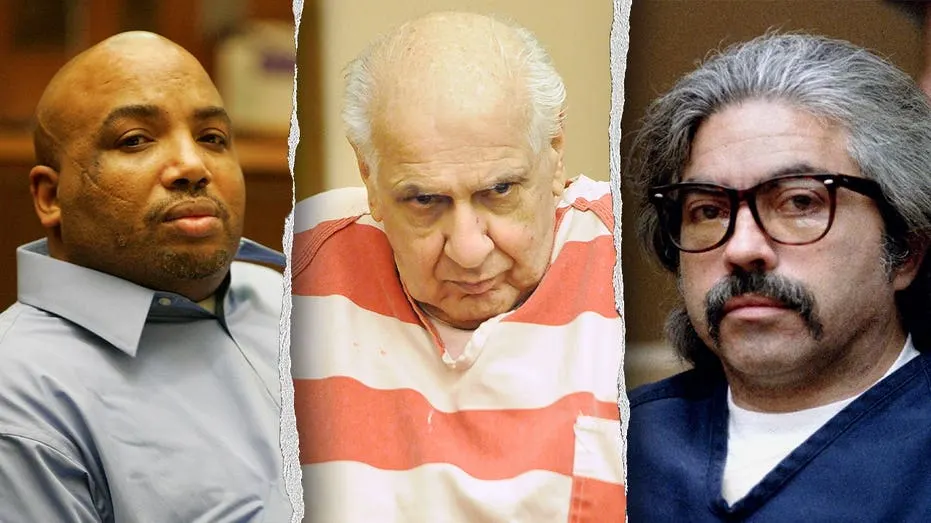
California Governor Gavin Newsom has ordered the commutation of all 548 death sentences in the state to life in prison without parole. The move would end those sentences if approved, but California law requires state Supreme Court approval for inmates with numerous felony convictions; Newsom said he recognised the decision would hurt victims’ families.
The article names ten notorious prisoners who could benefit, including Richard Allen Davis, convicted of murdering 12-year-old Polly Klaas, and Cary Stayner, convicted of killing three people near Yosemite. It also describes serial killer Chester Turner, who received death sentences for killing 14 women, and Joseph Naso, sentenced for at least four murders. The article text supplied ends during its account of Christopher Cheary and does not include the full list.
- Sources
- 2
- Outlets
- 1
- Left · Centre · Right
- 0 · 0 · 2
In short
- Newsom ordered commutations for 548 people on California’s death row.
- The sentences would become life without parole, subject to legal approval.
- The article highlights cases involving child murders and serial killings.
How this story developed
- 43 minutes ago California Governor Gavin Newsom has ordered the commutation of all 548 death sentences in the state to life in prison without parole.
Full account
California Governor Gavin Newsom has announced plans to commute the death sentences of all 548 people on the state’s death row to life imprisonment without the possibility of parole. In an open letter dated 5 November, he argued that the state should no longer carry out executions, while acknowledging that his decision would cause pain and anger among some victims’ families. The announcement does not immediately change every sentence: under California law, commutations for prisoners with multiple felony convictions require approval from the state Supreme Court. Hundreds of cases could be affected by that requirement.
The decision would reach prisoners convicted of crimes that have remained prominent in California for decades. Richard Allen Davis was sentenced to death for the 1993 abduction and murder of 12-year-old Polly Klaas. Joseph Naso received a death sentence after being convicted of four murders committed between 1977 and 1994. Cary Stayner was sentenced to death for killing three visitors near Yosemite National Park in 1999; he was already serving a life sentence for the murder of nature guide Joie Armstrong. These cases illustrate the breadth of Newsom’s proposal, although the court approval required in some cases means its effect on each prisoner has yet to be settled.
Newsom imposed a moratorium on executions when he took office in 2019, and California has carried out none since 2006. His latest decision goes further by seeking to replace existing death sentences, though it does not repeal the state’s capital punishment law. Supporters of abolition have welcomed the move. Newsom says he regards execution as incompatible with California’s values and considers life without parole the most severe punishment the state can properly enforce.
Prosecutors and police representatives have responded sharply. San Luis Obispo County District Attorney Dan Dow accused Newsom of putting politics ahead of victims, while San Diego Police Officers Association president Jared Wilson pointed to the murder of police officer Jonathan De Guzman as an example of the loss felt by families and colleagues. Los Angeles County District Attorney Nathan Hochman said voters had rejected previous attempts to abolish the death penalty and that his office would continue to assess eligible cases under the law. Their objections centre on the replacement of sentences reached through individual prosecutions; Newsom’s stated position centres on whether the state should execute anyone, regardless of the crime.
Where outlets differ
From the full account, which is AI-written from the sources:
Both reports are from Fox News, so they do not represent different outlets. The first focuses on prisoners who could benefit and explains the Supreme Court approval requirement. The second focuses on objections from prosecutors and police, alongside Newsom’s reasons and the longer history of California’s execution moratorium.
Steelman: both sides, in good faith
The strongest fair case each way — we don't pick a winner.
The case for
Supporters can argue that life without parole still protects the public while avoiding an irreversible punishment that carries a risk of wrongful execution. They may also see commutation as a principled limit on state power, especially where capital punishment is applied unevenly, and as consistent with recognising the profound harm victims’ families have suffered without making execution the only form of justice.
The case against
Opponents can argue that the death sentences followed convictions for exceptionally grave murders and that commutation overrides punishments imposed through the courts. They may see execution, where lawfully imposed, as proportionate retribution and a way to honour victims’ families’ pursuit of justice, and warn that a blanket decision gives too little weight to the circumstances of individual cases.
Coverage · 2 sources
Bias meters
From 2 rated sources.