Nick Cave will never let his view of Morrissey tarnish his work: “A vast and extraordinary catalogue”
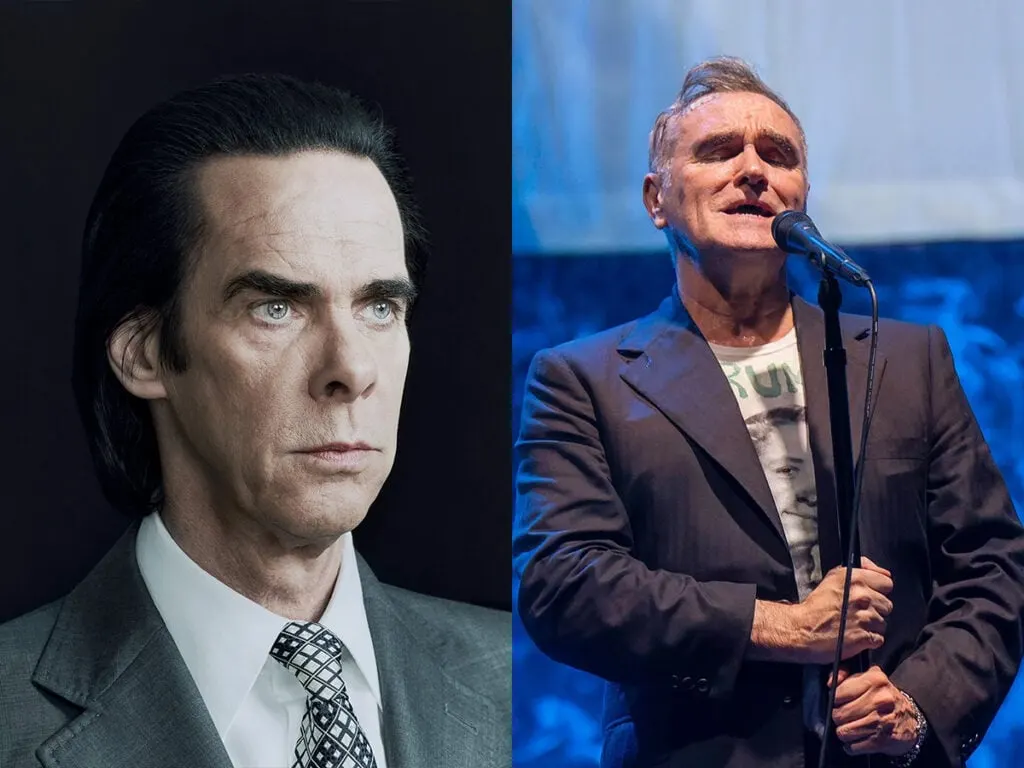
Nick Cave has argued that Morrissey’s controversial political views should not automatically erase the value of his music. He says listeners make songs their own through the memories and experiences they attach to them, so the work can retain meaning even when its creator expresses views they reject.
Cave made the argument in 2019, after Morrissey faced criticism for supporting the far-right For Britain party and speaking favourably about Nigel Farage. He called Morrissey’s output “a vast and extraordinary catalogue”, while stressing that defending his right to speak did not mean agreeing with him. Cave also acknowledged that an earlier response to a listener hurt by Morrissey’s immigration views had been poorly phrased, and said people remain free to challenge those views.
In short
- Cave says Morrissey’s music can retain meaning despite his politics.
- He called the songwriter’s output a “vast and extraordinary catalogue”.
- Cave says listeners can challenge Morrissey without discarding his songs.
Steelman: both sides, in good faith
The strongest fair case each way — we don't pick a winner.
The case for
A creator’s political views do not necessarily determine what their work means to listeners, who may have attached songs to important memories and experiences of their own. Preserving the music’s artistic value need not excuse or endorse the creator’s views, and separating the two can leave room for both appreciation and criticism.
The case against
Continuing to celebrate an artist’s work can help sustain their prominence and may seem to minimise the harm people feel when the artist expresses exclusionary political views. For listeners who see those views as incompatible with the work’s message or their own values, withholding attention or praise is a legitimate way to respond and to make clear that artistic achievement brings no immunity from criticism.
Explained simply
Nick Cave is an Australian singer-songwriter and the frontman of the rock band Nick Cave and the Bad Seeds. Morrissey is an English singer known for his solo work and as the former singer of the Smiths, whose songs have had a lasting influence on popular music.
Morrissey’s support for the For Britain party, which was described as far-right, and his favourable comments about Nigel Farage prompted criticism. The debate raises a broader question: whether listeners can value music while rejecting the views of the person who made it, and how much an artist’s public statements should shape the way their work is heard.
Art Culture Entertainment Music