World news and discussion on TalkFuse.
Farage pledges to reverse proposed UK-EU reset without penalty
Developed over time first seen 13 hours ago
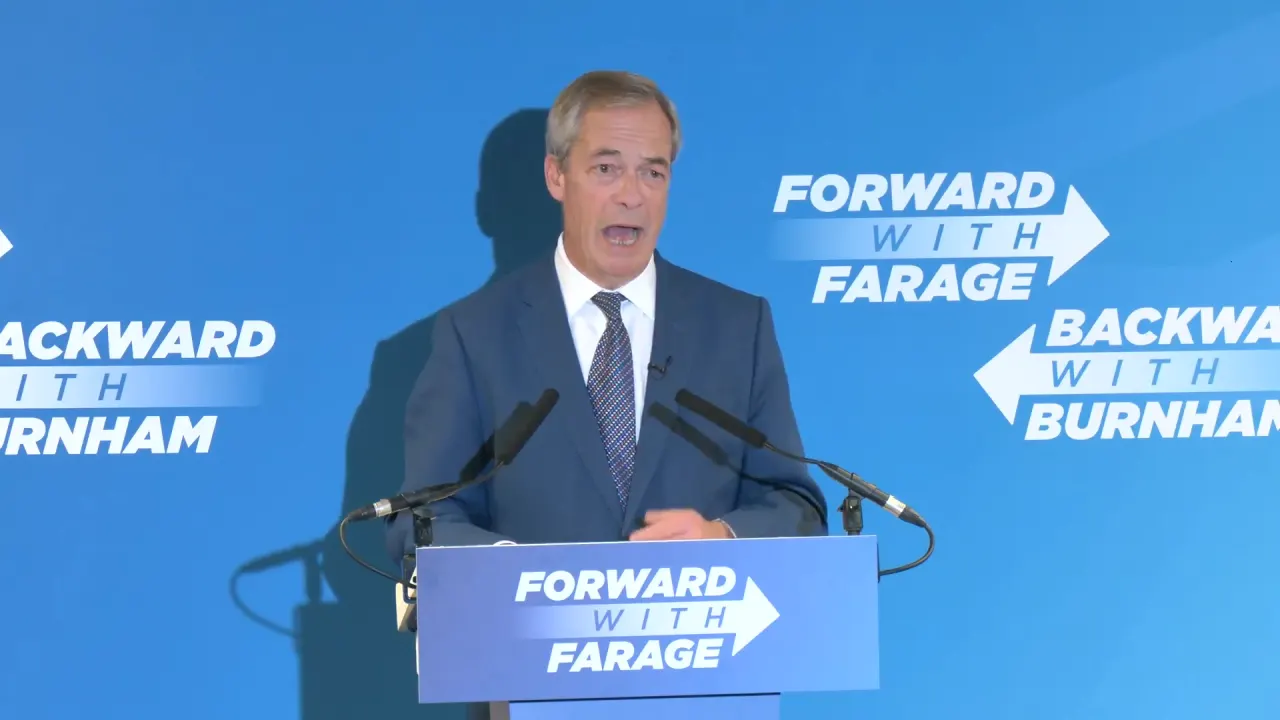
The opinion article argues that Reform UK would reverse the proposed UK-EU reset if it entered government, with Nigel Farage rejecting any financial penalty for doing so. Its author describes the deal as a surrender of economic independence and says cooperation with European neighbours should not involve unnecessary financial obligations.
The article objects to a proposed youth mobility scheme, claiming it could increase competition for jobs and pressure on housing and public services. It also criticises a proposed £450 million student-loan subsidy for foreign students and warns that linking carbon markets could raise costs for British industry. These are the author’s claims about the proposals’ likely effects.
- Sources
- 2
- Outlets
- 2
- Left · Centre · Right
- 0 · 0 · 2
In short
- Reform UK says it would reverse the proposed UK-EU reset.
- The article objects to youth mobility and student-loan proposals.
- It warns carbon-market links could raise industry costs.
How this story developed
- 4 hours ago The article reiterated Reform’s pledge to reverse the deal and Nigel Farage’s rejection of any financial penalty, while stressing its support for practical trade with European neighbours.
- 10 hours ago The article added that Reform UK would reverse the reset if it entered government and criticised Andy Burnham, though it did not explain his role in the negotiations.
- 11 hours ago An opinion article argued that the proposed UK-EU reset would undermine Britain’s economic independence, citing concerns over youth mobility, a student-loan subsidy for foreign students and linked carbon markets.
Full account
Prime Minister Andy Burnham has defended a new agreement with the European Union as a step towards closer relations, while critics say its terms give too much away. Nigel Farage has said a Reform UK government would withdraw from the deal. The headline’s claim that Farage can reverse a “betrayal” is political opinion; the reports describe proposals and competing assessments, not an established betrayal.
The agreement includes a youth mobility scheme allowing up to 100,000 young people to work in the UK each year, and a plan to reduce barriers to food exports. In return, Britain would follow future EU rules in the relevant food and farming sectors. The second report says the EU has given the UK six months to agree a package of almost £500 million to support European students at British universities, or risk the wider reset deal being shelved.
Burnham has called the agreement a good day for Britain and Europe. The Treasury forecasts that it could add £17 billion to gross domestic product, although officials say the full effects would take until 2040 to emerge. The second report notes that nearly half of the projected increase is linked to additional immigration under the youth scheme and would not raise GDP per person.
Opponents focus on the effects on jobs, public services and democratic control. The GB News commentary argues that additional workers could intensify competition for jobs and add pressure to housing and services; it also objects to a proposed subsidy for European students and closer links between carbon markets. The second report relays Conservative leader Kemi Badenoch’s concerns about competition for young workers and rule-making, while Farage argues that adopting EU laws would take Britain towards the single market. Supporters of the agreement point to reduced trade barriers and the Treasury’s growth forecast.
The outlets frame the story differently. GB News presents a strongly critical Reform UK argument, describing the reset as a capitulation and saying a future Reform government would reject it and refuse any penalty. The second report gives more detail on the negotiations, the EU’s student-funding deadline, the government’s economic case and opposition responses; it also reports Burnham’s stated aim of exploring closer ties, potentially including EU membership. Its references to humiliation and a sell-out are evaluative descriptions, rather than neutral terms.
Where outlets differ
From the full account, which is AI-written from the sources:
GB News is an opinion-led attack on the reset, foregrounding Reform UK’s objections to immigration, public spending, climate policy and economic independence. The second report focuses on the negotiations and includes the government’s projected economic benefit, while also carrying criticism from Badenoch and Farage.
The first report describes student-loan reductions as a £450 million subsidy. The second gives an approximate figure of almost £500 million and says the EU set a six-month deadline to reach agreement. The second also specifies the youth scheme’s annual limit as 100,000; the first uses broader estimates of hundreds of thousands.
The second report includes the food-export agreement and the requirement to follow future EU rules in that sector, as well as Neil Kinnock’s comment about a possible future referendum. These details do not appear in the GB News extract. The provided reports differ in emphasis and detail, and neither supplies a source URL.
Steelman: both sides, in good faith
The strongest fair case each way — we don't pick a winner.
The case for
Supporters of reversing the proposed reset argue that closer alignment with EU rules and new financial commitments could limit the UK’s freedom to set its own policies, while exposing taxpayers and businesses to costs without clear enough benefits. They say youth mobility could add pressure to jobs, housing and services, and that subsidies for overseas students or linking carbon markets should be justified on their merits. In their view, practical trade with Europe can continue without accepting obligations they consider unnecessary.
The case against
Supporters of the reset argue that negotiated cooperation can reduce barriers to trade, improve predictability for businesses and strengthen ties with a major neighbour, while preserving the UK’s ability to choose its relationship with the EU. They may see youth mobility as a limited exchange that benefits young people and employers, and student support or carbon-market links as tools for cooperation and shared economic goals. They would argue that reversing the package could carry its own costs by creating uncertainty and weakening access and influence.
Explained simply
The UK left the European Union in 2020, ending its membership of the EU’s single market and customs union. Since then, governments have discussed ways to make trade and cooperation with European countries easier while keeping the UK outside those arrangements.
A proposed UK-EU reset could include closer cooperation in areas such as youth mobility, student finance and carbon markets. These policies affect how people can work or study across borders, how education is funded and how businesses face climate-related costs.
Reform UK, led by Nigel Farage, says it would reverse the proposed reset if it formed a government and rejects paying a penalty for doing so. The debate matters because any new agreements could affect trade, public spending, migration and the UK’s freedom to set its own rules.
Coverage · 2 sources
Bias meters
From 2 rated sources.
Read the full article at the source →
Originally published by GB News as “Nigel Farage can stop Andy Burnham’s cowardly surrender to the EU and reverse Brexit betrayal”.