Entertainment news and discussion on TalkFuse.
Farage seeks primetime debate with Burnham over EU reset deal
Developed over time first seen 1 day ago
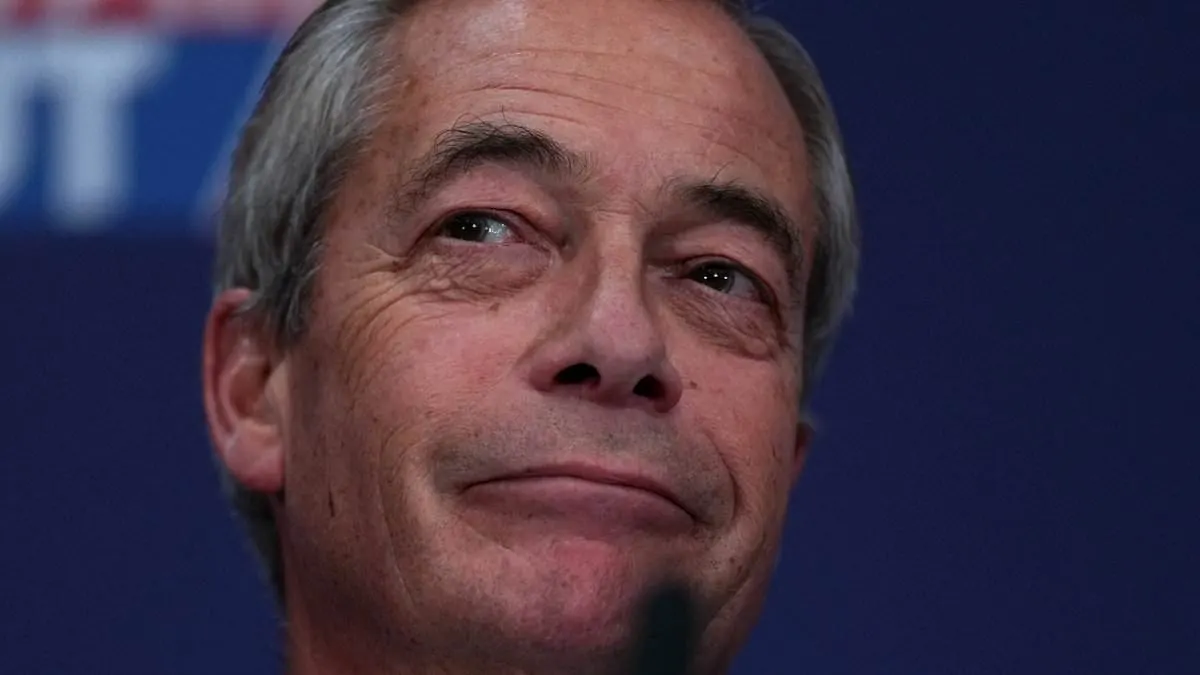
Nigel Farage is seeking a televised primetime debate with Prime Minister Andy Burnham over the Government’s proposed reset deal with the EU. The challenge gives Farage a chance to put Brexit back at the centre of public debate, as Reform UK has faced falling poll ratings and the new deal has revived attention on the issue.
The proposed agreements cover areas including food standards and emissions trading, and would involve the UK paying the EU hundreds of millions of pounds a year. Farage has previously debated Brexit with Nick Clegg and taken part in a referendum-era question-and-answer session with David Cameron. The article also reports that Arron Banks’s Keep Britain Out campaign plans to target younger voters and seek support from technology firms; Labour argues Brexit has harmed businesses, living costs and efforts to tackle illegal migration.
- Sources
- 2
- Outlets
- 2
- Left · Centre · Right
- 0 · 0 · 2
In short
- Farage wants a primetime debate with Burnham over the EU reset.
- The deal includes payments of hundreds of millions of pounds annually.
- Labour says Brexit has harmed businesses and living costs.
How this story developed
- 17 hours ago Farage's proposed debate has now been framed by a Reform source as a demand for public talks, since Burnham is expected to negotiate the UK's future EU relationship behind closed doors next year, and the challenge comes as the Keep Britain Out campaign, launched by Banks, cites Eurostat figures showing 4,144,961 non-EU nationals were granted EU citizenship between 2020 and 2024.
- 17 hours ago Nigel Farage is reportedly seeking a head-to-head primetime television debate with Prime Minister Andy Burnham over his Brexit "reset" deal with the EU, which covers food standards and emissions trading, as Reform UK seeks to reverse months of falling poll ratings, while Arron Banks launches a campaign aimed at younger voters and funded by tech firms.
Full account
Nigel Farage, leader of Reform UK, has reportedly approached broadcasters to propose a televised, prime-time head-to-head debate with Prime Minister Andy Burnham on the government's reset arrangements with the European Union. The reported focus is the contentious parts of the package, including food standards and emissions trading. Mr Burnham has agreed to make annual payments to Brussels running into the hundreds of millions of pounds, and Reform sources say Mr Farage wants the negotiations to be debated in public rather than conducted behind closed doors.
Commentators read the move as an attempt by Mr Farage to regain the prominence he held during the Brexit campaign a decade ago. Reporting suggests the announcement has given Reform a lift after a period of weak polling. Precedents cited include a 2014 hour-long BBC2 debate with Sir Nick Clegg and an ITV question-and-answer session with David Cameron during the 2016 referendum campaign. The story also follows the launch of the Keep Britain Out campaign by Arron Banks, who said it would focus on younger voters and seek funding from technology firms, including AI companies.
A separate strand of coverage concerns the veterinary consequences of the agreement. Under the reported terms, amantadine, a drug vets prescribe for chronic pain in dogs and cats, would be restricted from 1 March 2028 because the EU has reserved it for human use. The RSPCA, citing a Telegraph report, has urged the government to rethink this part of the deal and to review its animal welfare implications before the restriction takes effect. Veterinary specialists note that the main alternative, ketamine, must be given by injection or intravenously, which could mean repeated clinic visits and hospital stays for affected animals.
Several elements remain unverified in the reporting. The debate proposal is described as something Mr Farage is understood to be pursuing, and no broadcaster or date has been confirmed. The Reform and Banks comments are political claims rather than independent assessments, and the amantadine timeline rests on the regulatory dates cited by the outlets. The contrast between the two strands is notable: one treats the deal chiefly as a political contest, while the other examines its practical effect on animal health.
Where outlets differ
From the full account, which is AI-written from the sources:
Source 1 frames the story as a political contest centred on Mr Farage's ambitions and the cost of the deal, whereas Source 2 frames it through animal welfare and veterinary care, and does not discuss the debate at all.
Source 1 relies on an unnamed Reform source and quotes from Arron Banks, while Source 2 relies on named experts, including an RSPCA public affairs manager and a veterinary practitioner, plus a Telegraph report.
Source 1 gives no specific sum for the EU payments beyond hundreds of millions of pounds a year, whereas Source 2 gives precise dates for the amantadine restriction and the earlier EU ban.
Source 1 cites past Farage debates in 2014 and 2016 as precedents; Source 2 gives no political background and instead references veterinary bodies' warnings from 2022 and the UK Health Security Agency's guidance on flu treatment in humans.
Source 2 appears to contain a transcription error, reading through an HIV where IV is most likely meant. Source 1 contains a typo, regalvanise, for revitalise. Neither affects the substance, but both have been disregarded in this account.
Source 2 gives the UK Health Security Agency recommendation as dated 23 October without a year, so the year could not be confirmed from the text supplied.
Steelman: both sides, in good faith
The strongest fair case each way — we don't pick a winner.
The case for
Supporters of the reset argue that a practical agreement with the EU on food standards, emissions trading and trade barriers can reduce costs and paperwork for businesses and consumers after years of friction since the referendum. They see the payments as the price of stable access to a market on which many British firms depend, and they contend that a government elected on a mandate to improve relations is entitled to pursue that settlement. Complex regulatory negotiations, they maintain, are best conducted discreetly, since public positioning can harden the other side and narrow the room for compromise.
The case against
Critics argue that the reset asks Britain to accept EU rules and make substantial payments without the democratic accountability voters were promised when leaving the bloc. They see alignment on standards and emissions trading as a loss of regulatory independence, and they worry that the main terms of the future relationship will be settled in private before Parliament and the public can properly weigh them. From this perspective, a televised debate is a reasonable demand, because decisions of this scale should be argued openly, with costs and trade-offs set out for voters to judge.
Explained simply
Britain left the European Union in 2020 after voters backed leaving in a 2016 referendum, and the government has since been negotiating its new relationship with the bloc. The "reset" deal is a new agreement covering areas such as food standards, which set rules on how food is produced and sold, and emissions trading, the system that puts a price on carbon pollution. Under the deal, Prime Minister Andy Burnham has agreed to pay the EU hundreds of millions of pounds a year.
Nigel Farage leads Reform UK, a party that grew out of opposition to the EU and has seen its poll ratings fall in recent months. Arron Banks, a businessman who backed the Leave campaign in 2016, is also launching a new campaign aimed at younger voters. Farage has debated Brexit on television before, including a 2014 BBC2 programme against Sir Nick Clegg.
Labour argues that Brexit has harmed businesses, the cost of living and efforts to tackle illegal migration. The Stay Out campaign has cited Eurostat figures showing that 4,144,961 non-EU nationals were granted EU citizenship between 2020 and the end of 2024, arguing that they would gain the right to live in Britain if it rejoined. Questions about trade, migration and living standards explain why Brexit remains a central dividing line in British politics.
Coverage · 2 sources
Bias meters
From 2 rated sources.
Entertainment Europe Government Politics TV UK World
Read the full article at the source →
Originally published by Daily Mail as “Nigel Farage seeking TV showdown with Andy Burnham over his Brexit ‘reset’ deal with EU”.