World news and discussion on TalkFuse.
Nigeria’s president orders a 80% salary increase for junior soldiers
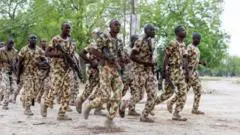
Nigeria's President Bola Tinubu has ordered a further pay rise for soldiers, with the most junior ranks receiving increases of up to 80%, in what he described as recognition of the armed forces' role in tackling the country's severe security threats. It is the second pay boost for troops in a month and forms part of Tinubu's wider push to combat violence from Islamist militants, separatist groups and criminal "bandit" gangs, following his recent order to recruit 28,000 additional soldiers and establish four new army divisions ahead of the 2027 elections.
Under the changes, privates up to staff sergeants will see an 80% rise, warrant officers up to colonels 50%, and brigadier generals up to generals 30%; the monthly wage for privates, having already risen from $36 to $73 in July, will reach $132 from September. The move will push the military's annual wage bill from $484m to $678m, and while a retired major general welcomed the increase, he cautioned that future governments may struggle to sustain it and called for similar pay reviews for other security agencies alongside investment in equipment such as uniforms and rifles.
In short
- Tinubu orders up to 80% pay rise for Nigerian soldiers, effective September
- Second pay increase in a month amid worsening security crisis
- Military wage bill to jump from $484m to $678m annually
Steelman: both sides, in good faith
The strongest fair case each way — we don't pick a winner.
The case for
Supporters of the increase could argue that Nigeria faces severe security threats from Islamist militants, separatist groups and criminal gangs, making improved soldier compensation essential for recruitment, retention and morale. Junior soldiers bear disproportionate personal risk and have experienced real wage erosion; raising their salaries acknowledges their sacrifice whilst building the larger, better-equipped military force necessary to counter these threats effectively.
The case against
Critics might contend that whilst security is paramount, a 40% increase to the annual military wage bill is fiscally unsustainable, as even the military's own retired general acknowledged. Such resources could achieve greater security impact through investment in equipment, training and intelligence; moreover, the timing alongside the 2027 electoral cycle, combined with the failure to similarly boost other security agencies' pay, suggests political calculation rather than rational resource allocation.
Explained simply
Nigeria’s armed forces face several security challenges, including Islamist militant groups, separatists and armed criminal gangs often called bandits. The army is one part of the country’s wider security services, which also include the police and other agencies.
Bola Tinubu is Nigeria’s president and commander-in-chief of its armed forces. His government has said it is expanding the army and increasing military pay as part of efforts to address insecurity; Nigeria is also due to hold its next general election in 2027.
Military pay affects recruitment and the cost of maintaining the armed forces. Changes to soldiers’ wages can also raise questions about how the government will fund them over time and how pay compares with that of other security workers.
Africa Cricket Government Politics Sport World