Nikon Removes AI-Generated Video from Microscopy Competition, Names New Winner
Developing story first seen 1 hour ago
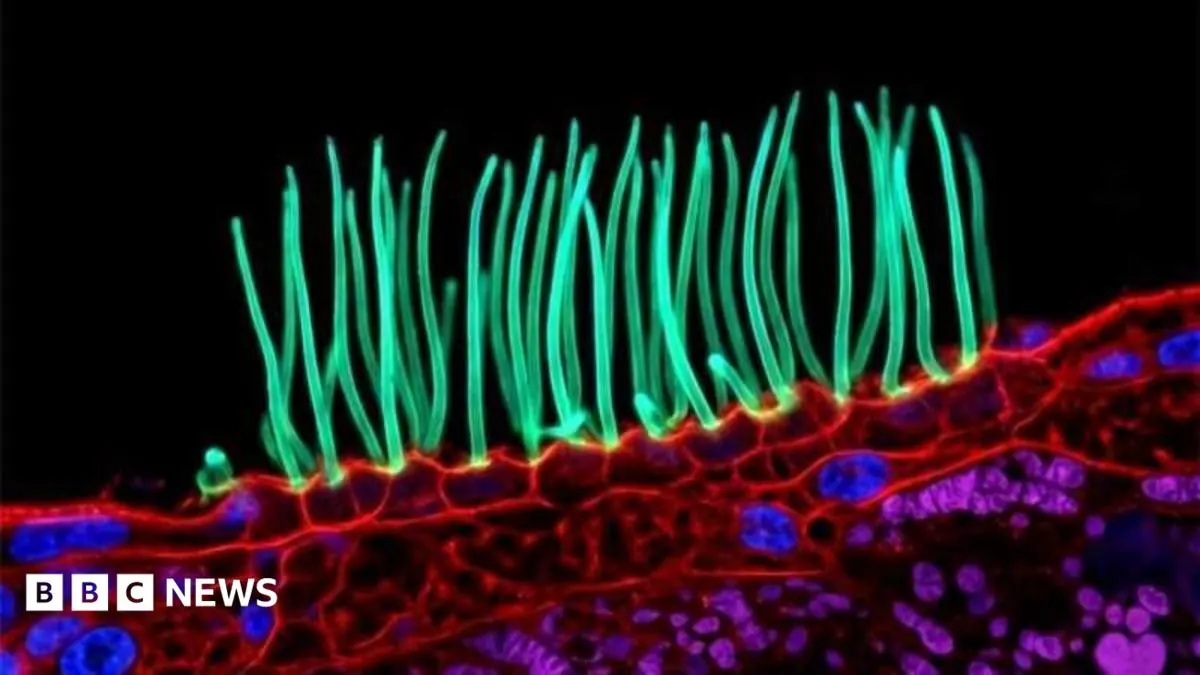
Structural abnormalities and suspected AI watermarks in Ning Xu's winning video confirmed what researchers had flagged, leading Nikon to disqualify the submission for violating competition rules. Xu acknowledged using AI to visualise features in reconstructed images but denied generating the experimental footage itself. The disqualification elevates Vietnamese scientist Nguyen Nam Nhat to first place, with four other entrants moving up in the rankings.
Researchers identified that cell features appeared and disappeared in ways inconsistent with actual cellular biology, raising questions about the video's integrity. The Small World in Motion competition, founded in 2011 as a spinoff of Nikon's Small World Photomicrography Competition (established 1974), highlights broader challenges posed by rapid advances in generative AI. Nikon has committed to revisiting the competition's rules and evaluation procedures to address these evolving challenges.
- Investigation confirmed structural abnormalities and AI watermarks in original winner's video
- Vietnamese scientist Nguyen Nam Nhat named new winner with four others promoted
- Nikon to revisit competition rules due to generative AI challenges
New here? Start with this
Nikon's Small World In Motion is an annual microscopy photography competition held for several decades and highly regarded in the scientific community. Participants submit videos filmed through powerful microscopes that reveal tiny organisms, individual cells and other structures invisible to the naked eye.
The competition enforces strict rules to maintain integrity, including an explicit ban on using generative artificial intelligence in submissions. These restrictions reflect concerns shared across many institutions and competitions about how to maintain authenticity and credibility when AI tools can produce convincing results.
As artificial intelligence becomes increasingly sophisticated and accessible, scientific competitions, journals and other organisations are grappling with how to address it. The microscopy field is now at the centre of these broader debates about the role of AI in science and what standards competitions should enforce.
Full account
Nikon has rescinded the winning entry from its prestigious Small World In Motion microscopy video competition, citing violation of rules governing the use of generative artificial intelligence. The withdrawal followed mounting pressure from the scientific community, who questioned the authenticity of the submission through public commentary and direct communication with the company.
The disqualified entry was submitted by Dr Ning Xu from Tsinghua University in China and depicted cilia—microscopic hair-like structures—moving within the airways of a child with primary ciliary dyskinesia (PCD), a rare respiratory disorder. Multiple specialists, including former members of the competition's judging panel, expressed doubts about the footage's legitimacy, citing anomalies in cellular structure and inconsistencies in how biological features appeared throughout the sequence. Dr Robert Hirst, director of Leicester University's NHS diagnostic centre for PCD, was among the first to voice concerns, drawing on his two decades of experience examining actual patient samples. He stated that the depicted cells and cilia bore no resemblance to those from genuine PCD cases. Whilst Xu had previously stated his belief that his use of artificial intelligence complied with competition parameters, Nikon's subsequent investigation concluded otherwise, determining that the submission breached established guidelines. The company clarified that this determination concerned only the technical eligibility of the entry and reflected no judgment on the contestant's professional integrity or scientific credentials.
Following the disqualification, the competition's placings have been adjusted, with Nguyen Nam Nhat of Vietnam now named as victor for his video of a roundworm and single-celled organism. The previous runners-up have all advanced by one position, with Benedikt Pleyer of Germany claiming second place for jellyfish larvae footage, Andrew Moore of the United States in third for synchronized cellular division, Patrick Hickey of Scotland in fourth for mitochondrial dynamics, and Igor Adameyko in fifth for his recording of a sea slug species.
The Small World In Motion initiative, launched in 2011 to complement Nikon's Small World photomicrography competition that began in 1974, celebrates scientific visualisation through optical microscopy. Nikon has announced intentions to review and strengthen the competition's rules and adjudication processes in response to this incident, acknowledging that rapid developments in artificial intelligence present ongoing challenges for organisations seeking to maintain the authenticity of scientific documentation competitions.
Where outlets differ
Source 1 emphasises the controversy's impact on patients and the PCD medical community; Source 2 does not address this dimension
Source 2 provides specific technical anomalies such as apparent AI watermarks in source files; Source 1 describes the concerns more generally without technical specifics
Source 2 directly quotes Xu's specific claim about AI being used only to 'distinguish and visualize features'; Source 1 notes only that Xu 'acknowledged using AI' without detailing the precise nature of his work
Source 2 identifies the new winner and all adjusted placings comprehensively; Source 1 does not mention the replacement victor
Source 2 contextualises Small World In Motion within the 1974 photomicrography competition's history; Source 1 refers only to the 15-year history of Small World In Motion itself