Noah’s Ark mystery deepens as new scans show boat-shaped formation is more than just rock
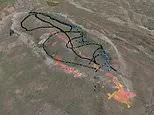
New scans of the boat-shaped rock formation at Durupınar, near Mount Ararat in Turkey, have reignited debate over whether the site could be linked to the biblical story of Noah's Ark. Researchers examining the formation say fresh survey data suggests it is composed of more than ordinary rock, adding weight to long-standing theories that the structure may not be entirely natural in origin.
The Durupınar site has attracted attention for decades due to its distinctive ship-like outline, visible from above and roughly consistent in scale with the vessel described in religious texts. While earlier geological assessments were divided on the formation's origins, the newest scanning work is being presented as evidence that warrants further investigation, though it stops short of confirming any connection to Noah's Ark. Full details of the scanning methods and findings were not available in the article text supplied.
- New scans examine the Durupınar boat-shaped rock formation near Mount Ararat
- Data suggests the formation is more than just ordinary rock
- Findings reignite debate over a possible Noah's Ark connection
Both sides, in good faith
The strongest fair case each way — we don't pick a winner.
The case for
Advocates of the Ark hypothesis argue that genuine anomalies deserve investigation rather than dismissal, and that if new subsurface scans show the formation is not uniform solid rock, this is a data point that should be taken seriously rather than explained away. They point to the site's unusual boat-like shape, its elevation and location consistent with regional flood traditions, and argue that mainstream archaeology has sometimes been slow to examine unconventional sites. For many, this reflects a broader commitment to following physical evidence wherever it leads, alongside a respect for the historical plausibility of flood narratives shared across cultures.
The case against
Sceptics counter that a formation being geologically complex rather than a single solid mass of rock is a modest, ambiguous finding that does not, on its own, indicate manufactured structure, since natural processes routinely produce layered, voided or heterogeneous rock formations. They caution against interpreting inconclusive scan data through the lens of a preferred conclusion, noting that the site has been examined by geologists before and explained through natural formation processes. Their concern is upholding rigorous scientific method and resisting the pull of motivated reasoning, particularly when a finding generates dramatic headlines but has not been peer-reviewed or independently replicated.