Kim Jong Un unveils North Korea’s AI-guided missiles amid disputed claims
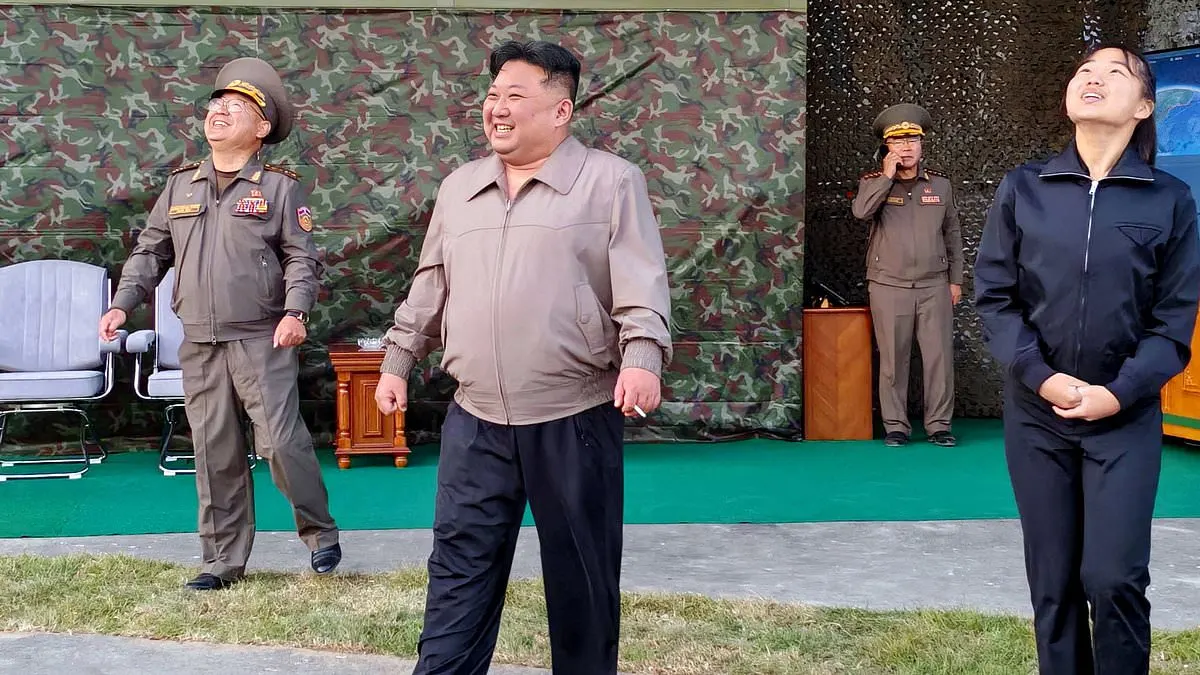
North Korea's leader Kim Jong-Un has claimed his country has developed AI-guided missiles capable of altering their flight path at low altitude, allegedly making them impossible to intercept. The regime displayed the new technology during a test launch near Wonsan on Saturday, flying more than 700km, with Kim attending alongside his wife and daughter. The announcement represents another step in North Korea's continued weapons development and military posturing on the Korean Peninsula.
Key details include that South Korea's military disputes Pyongyang's claims about the missiles being unavoidable, asserting they fall within interception capabilities maintained jointly with the United States. North Korea disclosed precise target coordinates accurate to 30 centimetres, which analysts interpret as demonstrating confidence in the system. The launch violated UN Security Council resolutions and drew condemnation from Seoul, which urged an immediate cessation of actions heightening regional tensions.
- North Korea claims it has developed AI-piloted missiles that cannot be intercepted.
- The regime tested the system near Wonsan on Saturday, flying over 700km.
- South Korea disputes the claims, saying the missiles can be intercepted.
New here? Start with this
North Korea has been developing nuclear weapons and missiles since the 1990s, despite international opposition and sanctions. The country's weapons programmes are considered one of the most serious security concerns for both the region and the wider world. Under its current leader Kim Jong Un, who took power in 2011, these programmes have expanded considerably.
South Korea and the United States maintain a close military alliance and jointly maintain defence capabilities against potential threats from the North. The two countries often dispute North Korea's military claims. This pattern has characterised their relationship for decades.
North Korea's weapons development violates multiple United Nations Security Council resolutions designed to constrain its military programmes. The Korean Peninsula remains technically at war, with an armistice agreement rather than a peace treaty dating from 1953. Each new weapons development by Pyongyang thus carries significant implications for regional stability.
Both sides, in good faith
The strongest fair case each way — we don't pick a winner.
The case for
North Korea has demonstrated consistent progress in missile capabilities over many years, and systematic scepticism about each new claim risks overlooking genuine technological advancement. Whilst some announcements may be exaggerated, the repeated testing and incremental improvements to guidance systems suggest meaningful development. Regional security arrangements must account seriously for North Korea's demonstrated trajectory of military development.
The case against
North Korea has a well-established pattern of inflating military claims, and treating unverified announcements as confirmed threats plays into the regime's information warfare strategy. South Korea and the United States, possessing superior intelligence and defensive capabilities, assess that current missile systems remain within interception range—a more reliable measure than Pyongyang's self-serving proclamations. Proportionate scepticism toward claims lacking independent verification represents responsible analysis rather than dismissal of legitimate security concerns.
Read the full article at the source →
Originally published by Daily Mail as “North Korea claims it has developed ‘AI-piloted’ missiles that leave ‘no way to avoid’ attack after latest sabre-rattling military drill”.