Nothing but ruins: Chinese rescue team find Nepal border station was swept off face off the Earth by flood as incredible satellite images show scale of devastation with 2,426 still missing
Developed over time first seen 2 months ago
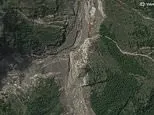
Satellite images and rescue reports indicate that severe flooding in Nepal has destroyed the Rasuwagadhi border crossing with Tibet, bridges and parts of nearby settlements along the Trishuli River. The disaster matters because it has cut through a remote but important route used by pilgrims and trekkers, while leaving thousands unaccounted for and complicating access for rescuers.
Authorities reported at least 626 deaths and 2,426 people missing, including more than 500 foreign tourists; 33 Britons were known to be among them. A 21-person Chinese rescue team and search dog reached Rasuwagadhi on Friday, describing the area as “nothing but ruins” after travelling through forest and cliffs where roads had been destroyed. Images also showed widespread damage in Syapru Besi and the loss of a nearby bridge, with poor weather and the risk of further flooding hampering rescue efforts.
- Nepal floods destroyed a key Tibet border crossing and surrounding infrastructure.
- At least 626 people have died and 2,426 remain missing.
- Remote terrain and poor weather are impeding rescue operations.
New here? Start with this
Nepal is a mountainous country between India and China, where rivers can rise rapidly during heavy rain and cause floods and landslides. Rasuwagadhi is a border crossing in the north of the country, linked to Tibet, and lies beside the Trishuli River in an area with limited road access.
The surrounding region is used by local communities, traders, trekkers and pilgrims travelling towards religious sites, including routes associated with Mount Kailash in Tibet. Damage to roads, bridges and border facilities can isolate settlements, disrupt cross-border travel and make it harder for emergency teams to reach people in remote valleys.
Full account
Rescuers searching the Nepal–Tibet border region have reported widespread destruction after a devastating flood tore through valleys, settlements and transport links along the Trishuli River. A Chinese emergency team which reached the Rasuwagadhi crossing on Friday said the site had been reduced to ruins. Satellite photographs circulating after the disaster appear to show that buildings, roads and bridges near the Friendship Bridge have been swept away, leaving broad deposits of mud and altered river channels.
Nepal’s disaster authorities said at least 675 people had died in the country, while Chinese state media reported seven deaths in Tibet, taking the reported cross-border total to 682. Officials said 2,426 people remained unaccounted for in Nepal, including 517 foreign nationals, 933 workers linked to hydropower projects, and members of the army, police, immigration and customs services. The figures are expected to remain subject to revision as access improves and searches continue.
Recovery operations have been hampered by poor weather, the steep and isolated terrain, unstable ground and concern about further flooding. In Chitwan district, officials said they had recovered 233 bodies but that only four had been identified, with DNA collection under way for the others. Indian authorities also said seven bodies had been recovered from rivers downstream, though these were not included in the Nepal–Tibet death count.
The flood struck an area used by trekkers, pilgrims and people crossing between Nepal and Tibet, raising concern for foreign visitors. More than 30 British nationals were reported missing, including members of a family said to have been on a trek near the border. Reports have described the event as a sudden, exceptionally powerful surge, with some attributing it to a possible glacier collapse; the precise cause and the ultimate human toll have yet to be confirmed by a full investigation.
Where outlets differ
Source 1 places greater emphasis on satellite imagery, the destruction of Rasuwagadhi and Friendship Bridge, and the Chinese rescue team’s first arrival at the crossing. It gives a Nepal death toll of 675 and describes nearly 3,000 people as missing.
Source 2 focuses more on victim recovery and identification, gives a combined Nepal–Tibet death toll of 682 by adding seven reported deaths in Tibet, and specifies 2,426 missing people in Nepal. It also provides a detailed breakdown of those missing and highlights British nationals reported unaccounted for.
Both reports use dramatic descriptions of the flood and refer to a possible glacial collapse, but these should be treated as reported accounts rather than a confirmed final explanation.