Technology news and discussion on TalkFuse.
Nvidia is happy to take your money whether you’re using open or closed models, says Jensen Huang
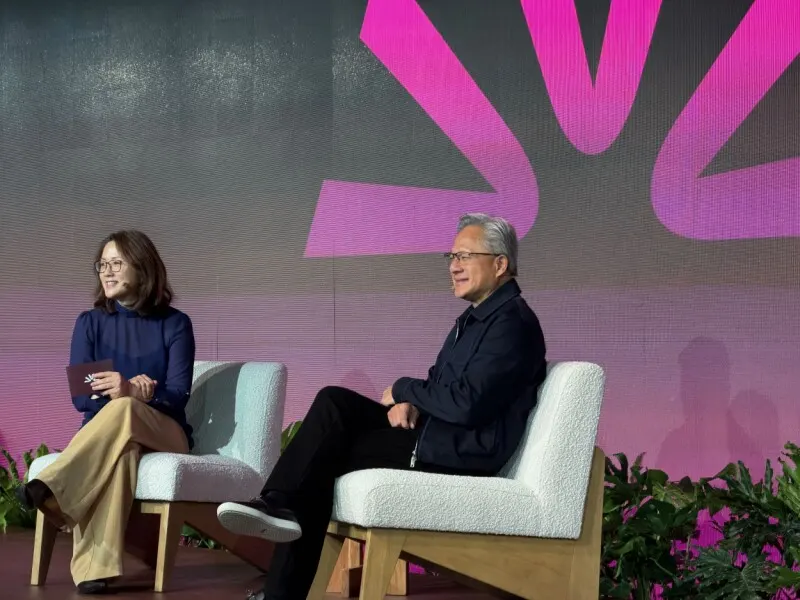
Nvidia chief executive Jensen Huang said the company supports both open and closed AI models, as long as they run on Nvidia hardware. At a San Francisco event, he argued that models tailored to specific fields can create substantial value, while acknowledging a continuing role for closed frontier models.
Huang described adapting an open model with specialist knowledge, tools and evaluation as a way to build highly capable systems. The event also highlighted cost pressures: Genspark said its slide-generation model delivers results comparable to Anthropic’s Opus 5 at $0.30 per million tokens, against $5. Nvidia has supplied Fireworks.ai with 25,000 GPUs for its European expansion; Huang also forecast safer agent deployment and robotics as potential breakthroughs.
In short
- Huang backs both open and closed AI models.
- Nvidia supplied Fireworks.ai with 25,000 GPUs.
- Genspark cited a 17-fold lower token cost for slide generation.
Steelman: both sides, in good faith
The strongest fair case each way — we don't pick a winner.
The case for
Supporting both open and closed models can encourage a diverse AI ecosystem: open models let organisations adapt systems to specialist needs, while frontier models can continue to advance general capabilities. Competition among providers may also lower costs and widen access, and hardware that can run varied models gives developers flexibility.
The case against
An ecosystem centred on one hardware supplier may leave developers and organisations dependent on that company, even when models themselves are open. Open systems can also require substantial expertise to adapt and evaluate, while claims of comparable performance at much lower cost may not establish equivalence across tasks; closed frontier models may retain advantages in capability and reliability.
Explained simply
Nvidia designs the computer chips and systems used to train and run many AI models. Its chief executive, Jensen Huang, leads a company whose business can benefit whether customers choose models whose underlying technology is openly available or models controlled by a company.
An open model can be adapted by adding specialist information, tools and checks for particular tasks, while a closed model is developed and controlled by its provider. Businesses weigh factors such as capability, cost and how well a model fits their needs; the choices matter to AI developers and to the companies supplying the computing power they use.