Nvidia’s DLSS 5 neural rendering draws mixed hands-on reactions
Developed over time first seen 2 months ago
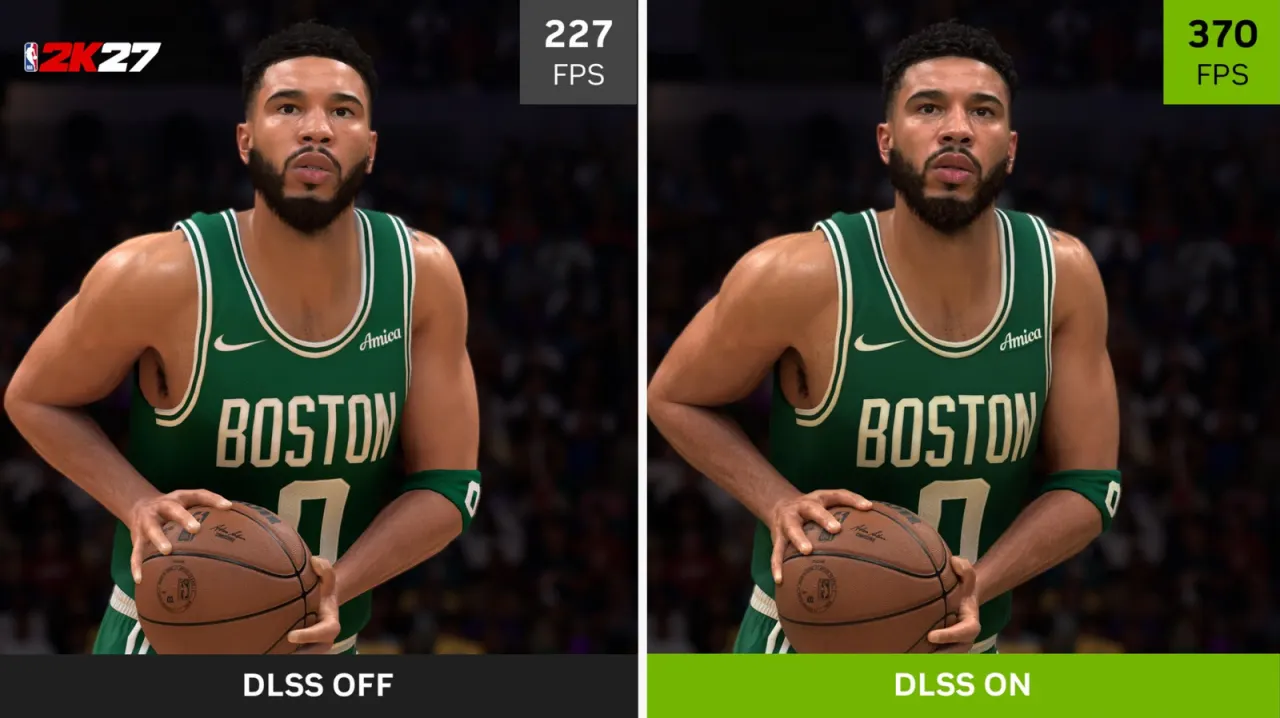
Nvidia has demonstrated DLSS 5 to journalists in a hands-on session ahead of its release, with the neural rendering technology drawing a mixed verdict from those who saw it in person. Attendees variously described the AI upscaler as beautiful, impressive, ugly and troubling, reflecting genuine uncertainty about how the tool performs in practice rather than a simple thumbs up or down. The reactions matter because DLSS 5 represents Nvidia's most ambitious push yet into AI-driven graphics, and its reception could shape how developers and players view generative alterations to games going forward.
The latest impressions follow on from a divisive March preview, in which DLSS 5's tendency to produce exaggerated, "yassified" facial changes was dismissed by critics as "AI slop". Nvidia has continued to emphasise that developers retain control over how the technology is applied and that it is designed to respect artistic intent, but the newest first-hand accounts suggest its output remains unpredictable, swinging between striking visual upgrades and jarring, unwanted alterations to characters and scenes made without direct developer input. That unresolved tension between technical capability and creative control appears likely to persist as DLSS 5 heads towards a wider release.
- Journalists got a hands-on preview of Nvidia's DLSS 5 technology
- Reactions were mixed: impressive visuals but unsettling AI alterations
- Echoes March's "AI slop" backlash; control concerns remain unresolved
New here? Start with this
Nvidia's DLSS technology uses artificial intelligence to boost game performance and generate visual detail rather than rendering every pixel from scratch. DLSS 5 is the next version of this system, and it goes further than earlier releases by letting the AI make its own changes to character faces, models and scenes during gameplay, rather than simply sharpening or upscaling an image the developer has already built.
Nvidia first showed the technology in March, when journalists criticised it for producing exaggerated, over-smoothed facial changes, a style some dubbed "AI slop". Nvidia has since said it wants developers to retain control over how characters look, even as the AI takes on a bigger creative role in real time.
This matters because DLSS 5 is due to reach millions of gamers through Nvidia's RTX 50-series graphics cards, its GeForce Now cloud gaming service, and titles such as NBA 2K27, making it one of the most visible tests yet of how far AI should be trusted to alter creative work without direct human oversight.
Both sides, in good faith
The strongest fair case each way — we don't pick a winner.
The case for
Advocates of DLSS 5's approach argue that neural rendering represents the necessary future of real-time graphics, allowing hardware to deliver visual fidelity far beyond what raw rasterisation could achieve at playable frame rates. They contend that some inconsistency is an inevitable and acceptable cost of pushing a genuinely new generative technology forward, and that Nvidia's design, which keeps final control in developers' hands, is the right approach because it lets studios opt into the benefits while retaining the ability to fine-tune or reject outputs they dislike.
The case against
Sceptics argue that unpredictable, unrequested alterations to characters and scenes undermine the artistic intent of developers and the trust of players, since a tool that can unilaterally reshape a game's visuals, sometimes for the worse, threatens the integrity of a medium built on deliberate creative choices. They contend that describing outputs as merely inconsistent understates the risk, since even occasional jarring or unwanted changes suggest the technology is being deployed ahead of its readiness, and that genuine respect for artistic intent would mean far tighter guardrails before wide release rather than after the fact.
Full account
Nvidia has begun rolling out DLSS 5, the latest version of its AI-driven graphics technology, alongside the launch of NBA 2K27 on 3 September, several months after an early preview of the feature triggered a wave of ridicule online. The technology, which Nvidia describes as "neural rendering", works by analysing and altering the finished 2D image a game engine produces in real time, adding light, shadow, colour and texture detail rather than changing the underlying shapes or geometry of a scene. Nvidia has framed the relaunch around messaging that the tool "preserves artistic intent" and "respects the rendered frame", while handing developers detailed control over how and where it is applied, in an apparent attempt to draw a line under the criticism that greeted its unveiling in March.
That earlier backlash centred on a demonstration showing Grace Ashcroft, the protagonist of Resident Evil Requiem, with a noticeably altered, smoothed-out face, which many players mocked as "AI slop" or likened to an unwanted beauty filter. Journalists who have since had hands-on access, including to a version that leaked ahead of launch, note that DLSS 5 is not a single on/off effect but a configurable system: developers can choose between three built-in visual profiles, described as "default", "natural" and "cinematic", and can use sliders to dial the effect up or down, or restrict it to specific elements of a scene such as clothing, food or foliage while leaving character faces untouched. Nvidia also stresses that the effect is deterministic, meaning a given scene should render identically each time, unlike more familiar generative AI tools that vary their output. At launch, NBA 2K27 is the only title confirmed to support the feature, running on Nvidia's RTX 50-series desktop and laptop GPUs as well as through its GeForce Now cloud-gaming service; other games shown in the original March reveal, including Resident Evil Requiem, Starfield, EA Sports FC and Hogwarts Legacy, do not yet support DLSS 5, and Nvidia has not said when or whether that will change.
Reaction to the more restrained NBA 2K27 demonstrations has been notably more positive than to the March showcase, with several outlets pointing to specific effects, such as contact shadows that make characters appear properly grounded on surfaces, or fabric that visibly drapes and casts shadow on a player's body, as evidence the technology can enhance realism convincingly when applied with restraint. Even so, coverage remains divided on how significant DLSS 5 actually is. Some reporters who attended in-person or remote briefings describe the results as impressive in places but still capable of veering into uncanny or unsettling territory depending on how heavily it is used, and note the heavy computational cost involved, with the effect reportedly able to roughly halve frame rates and being restricted entirely to Nvidia's newest RTX 50-series hardware. Others are more sceptical of its overall importance, arguing that the improvements are often subtle enough to matter only to viewers closely scrutinising still images, and drawing an unflattering comparison to Nvidia's early real-time ray-tracing push, a feature that also proved demanding on hardware and slow to become widespread. One notable admission cited from Nvidia's own research team was that despite a huge increase in the computing power dedicated to the effort, achieving genuine photorealism remains a distant goal.
Where the coverage diverges most is in overall tone and emphasis. Reports focused on the technical mechanics tend to take a measured, increasingly reassured view after seeing the technology paired with a real game rather than isolated marketing stills, while more critical takes question whether neural rendering represents a meaningful advance for most players at all, given its narrow hardware support and the modest scale of the improvements demonstrated so far. There is also disagreement over how much credit Nvidia deserves for course-correcting: some coverage credits the company for building in developer-facing controls and restraint after the initial backlash, while other reporting points out that the games most associated with the original controversy still lack the feature months later, leaving open the question of how it will look once applied more widely. For now, DLSS 5's reception appears to hinge heavily on implementation, with the consensus across outlets being that its success or failure will depend on the restraint individual developers show in how they deploy it, rather than on the underlying technology itself.
Where outlets differ
The Verge's coverage is the most detailed on how the technology technically works (sliders, three visual profiles, deterministic rendering) and offers a comparatively upbeat hands-on assessment after seeing it in NBA 2K27 and other games, while also flagging that Nvidia declined to confirm a timeline for other previously announced titles such as Resident Evil Requiem and Starfield.
The more sceptical outlet (Source 3) argues DLSS 5 is largely inessential for most players, unfavourably compares it to Nvidia's early ray-tracing push, and highlights an Nvidia researcher's own admission that true photorealism remains far off, framing the tool as mainly for enthusiasts scrutinising fine detail.
PC Gamer's account (Source 4) is framed around an in-person hands-on and, per its headline, describes the impression as simultaneously beautiful, ugly, impressive and troubling, indicating a more mixed, unresolved reaction than the other pieces, though the retrieved content was mostly site navigation rather than substantive detail.
Outlets differ on emphasis: some focus on the redemption angle (Nvidia responding to March's backlash with more controls and restraint), while others emphasise the continued absence of DLSS 5 from marquee titles and its limited hardware support as reasons for lingering doubt.
Coverage
- The Verge — Nvidia relaunches DLSS 5 ahead of 3 September debut
- The Verge — Nvidia launches DLSS 5 for RTX 50-series GPUs
- Engadget — Nvidia launches DLSS 5 with NBA 2K27 amid criticism
- PC Gamer — Nvidia snuck me into a room to show off DLSS 5 in person, and it’s somehow beautiful, ugly, impressive, and troubling all at the same time
AI Americas Art Basketball Business Companies Culture Entertainment Gadgets Gaming Horror Music Sport Technology TV World