Culture news and discussion on TalkFuse.
Object heading toward Earth is mysteriously accelerating as scientist claims it is a long-lost spacecraft
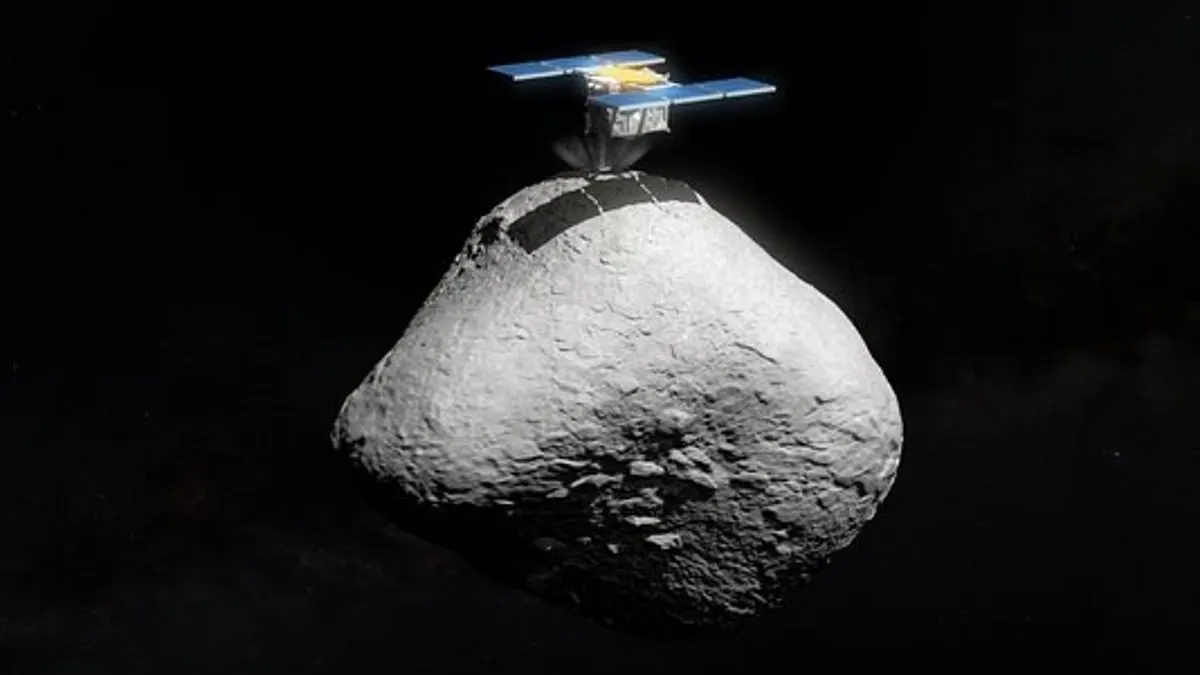
Researchers at the Georgia Institute of Technology say the near-Earth object 1998 KY26 is accelerating in a way that gravity alone cannot explain. Their study rules out ice releasing gas as the cause, but it does not establish what is driving the extra push. The unexplained motion matters because it has renewed speculation that the object may not be a natural asteroid.
Harvard professor Avi Loeb and co-authors propose that 1998 KY26 could be the Soviet spacecraft Phobos 1, lost while travelling to Mars in 1988. They argue that its size, reflectivity, rapid spin and orbit fit a spacecraft, with sunlight pushing on its metal surfaces and solar panels. The object is about 36 feet long, spins once every 5.35 minutes and is expected to pass within 32 million miles of Earth in 2028; the spacecraft claim remains a hypothesis.
In short
- 1998 KY26 is accelerating beyond what gravity predicts.
- Researchers ruled out ice-driven gas release as the cause.
- Avi Loeb proposes it could be the lost Soviet probe Phobos 1.
Steelman: both sides, in good faith
The strongest fair case each way — we don't pick a winner.
The case for
The case for taking the spacecraft hypothesis seriously is that 1998 KY26’s unexplained acceleration, reflective surface, rapid spin and orbit may be consistent with a human-made object, and sunlight could exert a small but sustained push on metal surfaces or solar panels. Since the reported study rules out one natural explanation without identifying another, proponents argue that Phobos 1 is a possibility worth investigating, while recognising that the evidence is circumstantial.
The case against
The case against identifying 1998 KY26 as Phobos 1 is that unexplained motion does not itself indicate artificial origin, and the reported study has not established what causes the acceleration. Similarities in size, reflectivity, spin and orbit may be suggestive but do not prove that the object is the lost spacecraft; until stronger evidence distinguishes it from a natural asteroid, the claim remains speculative.
Culture Research Science Space Technology Travel World