World news and discussion on TalkFuse.
Oil prices leap and stocks fall as Trump reinstates Hormuz blockade on Iranian shipping
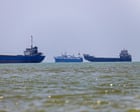
Oil prices jumped and share markets fell after Donald Trump said the US would again block Iranian shipping in the Strait of Hormuz and impose a 20% toll on other eligible cargo using the route. The move followed further US strikes on Iran and retaliatory action from Tehran, deepening uncertainty over one of the world’s most important energy chokepoints. It matters because disruption in Hormuz threatens global oil and gas supplies, raising energy costs and unsettling wider financial markets.
Brent crude rose 5% to $79.37 a barrel, having traded at $72.48 before US-Israeli strikes on Tehran in late February and reaching as high as $120 in April. US stocks weakened, with the Nasdaq down 1% and the S&P 500 0.4%, while Asian markets fell more sharply: South Korea’s Kospi dropped 8%, and Japan’s Nikkei 225 and China’s Shanghai Composite each lost 2%; chipmakers SK Hynix and Samsung fell 15% and 10% respectively. About a fifth of the world’s oil normally passes through Hormuz, but shipping is already slowing, with data firm Kpler reporting just six vessels crossed on Sunday, the lowest number in five weeks.
In short
- Trump’s Hormuz move pushed oil prices higher and stocks lower
- Fresh US-Iran attacks increased fears over Gulf energy supplies
- Vessel traffic through the strait has already dropped sharply
Steelman: both sides, in good faith
The strongest fair case each way — we don't pick a winner.
The case for
Supporters of the blockade argue that Iran poses a genuine security threat through its nuclear programme and support for regional militant groups, and that economic pressure is a necessary tool to constrain Iranian power and protect US allies, particularly Israel. They contend the policy demonstrates resolve and maintains crucial leverage for future negotiations, using established sanctions mechanisms to deter further aggression without direct military escalation.
The case against
Critics argue that disrupting the Strait of Hormuz inflicts widespread economic damage extending far beyond US-Iran relations, destabilising global energy markets and harming innocent parties reliant on international shipping. They contend the policy escalates an already dangerous cycle of military strikes and retaliation rather than de-escalating tensions, and point out that decades of sanctions have failed to meaningfully alter Iranian behaviour, suggesting the real costs to global stability outweigh uncertain security benefits.
Explained simply
The Strait of Hormuz is a narrow seaway between Iran and Oman through which roughly a fifth of the world's daily oil supply passes, making it one of the world's most critical chokepoints for energy. Even brief disruptions to shipping there can ripple through global markets, pushing up energy prices and affecting everything from air travel to manufacturing costs.
The United States and Iran have clashed repeatedly over control and access to the strait for decades. Past US administrations have imposed sanctions on Iranian oil exports and sought to restrict shipping, whilst Iran has periodically threatened to disrupt traffic or retaliated against American military action. These recurring tensions mean that any escalation in the region creates widespread uncertainty about future supplies.
When oil supplies tighten or energy costs surge, financial markets suffer because companies face higher expenses and consumers have less money to spend elsewhere. Stock markets typically weaken during energy crises because investors worry about inflation and slowing economic growth. The Strait of Hormuz's importance to global energy security means that political disputes there can quickly shake confidence across the world's financial system.
Americas Business Government Markets Middle East Politics Software Technology World