Oil-rich Canadian province of Alberta votes to remain part of the country… but demands immigration is slashed and voter ID laws are tightened
Developing story first seen 2 hours ago
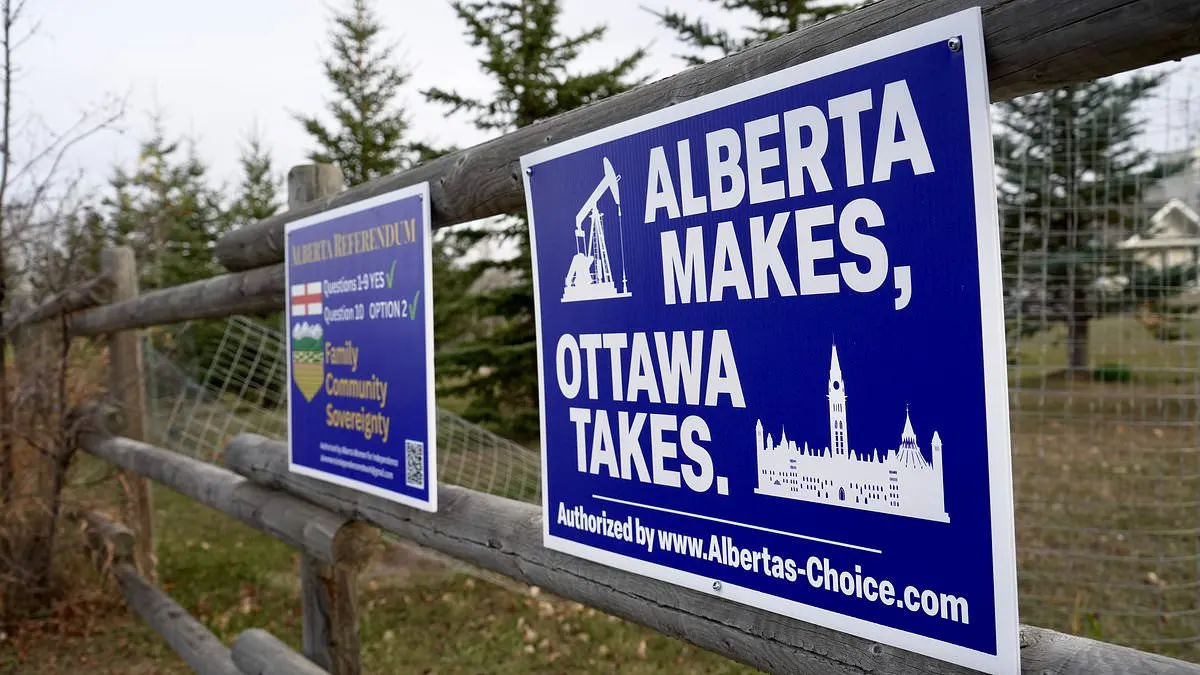
Alberta voted overwhelmingly to remain part of Canada, rejecting a potential first step towards separation. The result affirms support for national unity, while the referendum also showed strong provincial backing for policy changes that could deepen tensions with the federal government.
About 76 per cent voted to stay in Canada. In other questions, voters supported tougher immigration rules, restricting some provincially funded programmes and benefits, requiring proof of citizenship to vote in provincial elections, and prioritising provincial laws over federal ones; the ballot also included proposals on health care and education fees for non-permanent residents and abolishing the Senate. The separatist movement has gained support since the Covid-19 pandemic, amid disputes over federal pandemic, environmental and immigration policies.
- Alberta voted to remain part of Canada, with 76 per cent backing unity.
- Voters also supported several changes to immigration and provincial policy.
- The result leaves federal-provincial tensions unresolved.
New here? Start with this
Alberta is a province in western Canada with a large oil and gas industry. Canada’s federal government sets rules that apply across the country, while provincial governments control areas such as health care and education. This division of powers can lead to disputes over which level of government should decide an issue.
Some Albertans who support independence say the province has too little control over its resources and policies. The movement has grown amid disagreements with the federal government over issues including pandemic measures, environmental rules and immigration. The ballot also asked about proposed changes to provincial policy, including voting rules and access to some publicly funded services.
The result matters because it shows both support for Canada remaining united and backing in Alberta for changes that could bring the provincial government into conflict with federal policy. Those disagreements may shape future debates about immigration, public services and the balance of power between Alberta and Ottawa.
Both sides, in good faith
The strongest fair case each way — we don't pick a winner.
The case for
Supporters of the proposed changes argue that Alberta should have more control over immigration and provincial policy, especially where federal decisions affect local services, costs and the province’s economy. They see citizenship checks as a way to protect confidence in elections and giving provincial laws priority as a means of defending Alberta’s democratic choices within Canada.
The case against
Opponents argue that tighter immigration rules and limits on services for non-permanent residents could harm people who contribute to Alberta and worsen labour or service shortages. They also see voter ID requirements and claims of provincial law taking precedence as risks to access to voting and to consistent federal standards, potentially deepening conflict within Canada.
Full account
Alberta has voted to remain part of Canada, decisively rejecting a proposal to pursue independence. With most votes counted, more than two-thirds of voters chose to stay; one report put support at 76 per cent. The result closes off the immediate route towards a separation referendum, but does not resolve the province’s disputes with Ottawa or end the separatist campaign.
The ballot, called by Alberta Premier Danielle Smith after a petition drive, contained nine questions. Smith opposed separation but said there was a strong public demand for a vote. A court had blocked the petition’s proposed binding referendum, ruling that it had not adequately consulted Indigenous First Nations people; Smith proceeded with a provincial ballot. She welcomed the initial result as support for a stronger Alberta within a united Canada and said she would set out the province’s next steps.
The other questions reflected demands for policy changes. Voters backed tighter provincial immigration rules, including restricting some publicly funded programmes to citizens and requiring non-permanent residents to live in Alberta for 12 months before qualifying for social benefits. They also supported requiring proof of citizenship to vote in provincial elections, charging non-permanent residents for some health and education services, abolishing the Senate and giving provincial laws priority over federal ones. The vote therefore rejected independence while signalling support for a more assertive provincial agenda.
Separatists have argued that Alberta’s oil-led economy is held back by federal environmental policy and that the province receives too little consideration in Ottawa. The movement gained ground in recent years, including during anger over pandemic restrictions, but its leaders now face a clear defeat at the polls. Prime Minister Mark Carney welcomed the result, describing it as a choice for unity and pointing to Alberta’s place in Canada’s energy future. He and Smith also discussed cooperation on immigration and other shared priorities. At a watch party in Edmonton, supporters of separation fell quiet as results came in; leader Jeffrey Rath nevertheless said the movement would continue and described the vote as a first step.
The reports differ in emphasis and detail. One foregrounds the nine-question ballot and the conservative policy changes voters endorsed, while the BBC account focuses on the separatists’ reaction, the petition and court ruling, and the political arguments around federal environmental policy and US trade tensions. The first report gives a precise 76 per cent figure and describes the vote as overwhelmingly in favour of staying; the BBC says more than two-thirds had voted to remain with most ballots counted. Both portray the result as a setback for independence advocates, while noting that the wider dispute between Alberta and the federal government persists.
Where outlets differ
The first report lists the outcomes of all nine referendum questions and gives support for remaining in Canada as 76 per cent. The BBC report concentrates on the separatist campaign and reaction, and describes the stay vote as more than two-thirds with most votes counted.
The first report links the movement’s growth to pandemic-era restrictions and stresses Alberta’s demands for policy change. The BBC gives more attention to the petition, the court’s First Nations consultation ruling, economic arguments over environmental policy, and trade tensions with the United States.
More coverage
Art Culture Elections Environment Government Politics Science World