One glaring issue goes unaddressed in UN chief’s high-stakes talks with Iran’s president
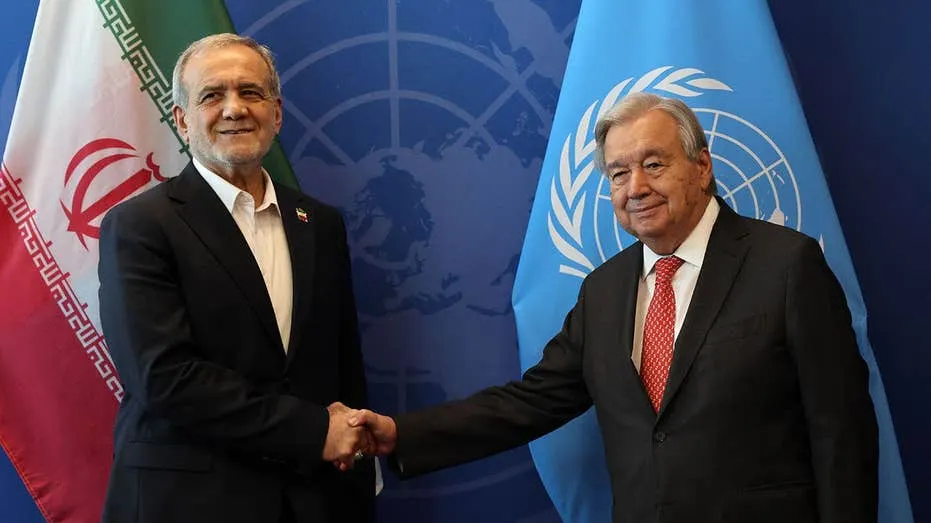
UN Secretary-General António Guterres met Iranian President Masoud Pezeshkian in Bishkek on Tuesday, but the official UN readout of the meeting omitted any mention of Iran's ongoing crackdown on protesters detained since January's nationwide demonstrations, including imprisonment, alleged torture and rising numbers of executions. When pressed by Fox News Digital, UN spokesperson Stéphane Dujarric declined to say whether Guterres had raised the matter directly with Pezeshkian, though he insisted the Secretary-General had addressed such issues with senior Iranian officials in other settings and had previously condemned Iran's use of the death penalty.
The omission comes amid mounting evidence of continued repression: rights groups estimate more than 60,000 people were detained after the January protests, with some sources putting the figure above 100,000. Human rights monitor HRANA recorded 78 executions in Iran in August alone, including two protest-related cases, alongside 21 new death sentences, forced confessions, beatings and denial of legal counsel. The Abdorrahman Boroumand Center says it has documented 950 executions in Iran since the start of 2026, including at least 30 protesters, while individual cases—such as psychologist Seyed Ahmad Seyedabdollahi, jailed after appealing to President Trump for support—illustrate the human toll of the crackdown.
In short
- Guterres met Iran's president but UN readout ignored the protest crackdown
- HRANA reports 78 executions in Iran during August alone
- Rights groups say 950 executions recorded in Iran since 2026 began
Steelman: both sides, in good faith
The strongest fair case each way — we don't pick a winner.
The case for
A UN Secretary-General meeting with a president can be a rare channel for private diplomacy, and the public readout may not capture everything raised behind closed doors. Guterres may have judged that a direct, confidential approach could better protect detainees or encourage concrete steps than a public confrontation, while leaving room to address human rights in other forums.
The case against
The scale and severity of reported detentions, executions and mistreatment make the crackdown a central matter for the UN, not a peripheral concern. Omitting it from the readout and declining to confirm whether it was raised risks weakening public accountability and signalling that high-level engagement can proceed without visible pressure on Iran’s authorities.
Explained simply
The United Nations is an international organisation whose secretary-general, António Guterres, represents it in meetings with world leaders. Iran’s president, Masoud Pezeshkian, leads the country’s government, while other Iranian institutions also play major roles in law and security.
Iran has faced nationwide protests and a government crackdown, with rights groups reporting mass arrests, executions and mistreatment of detainees. These reports have drawn international concern about people’s safety, access to legal help and the use of the death penalty.
The UN’s public account of a meeting can indicate which issues were discussed, but it does not necessarily record everything said privately. Whether human rights concerns are raised in talks with Iran matters because the UN can press governments on their obligations and draw wider attention to reported abuses.
Geopolitics Government Middle East Politics World