World news and discussion on TalkFuse.
One Mauricio Pochettino question will linger long after coach’s USMNT exit
Developed over time first seen 1 day ago
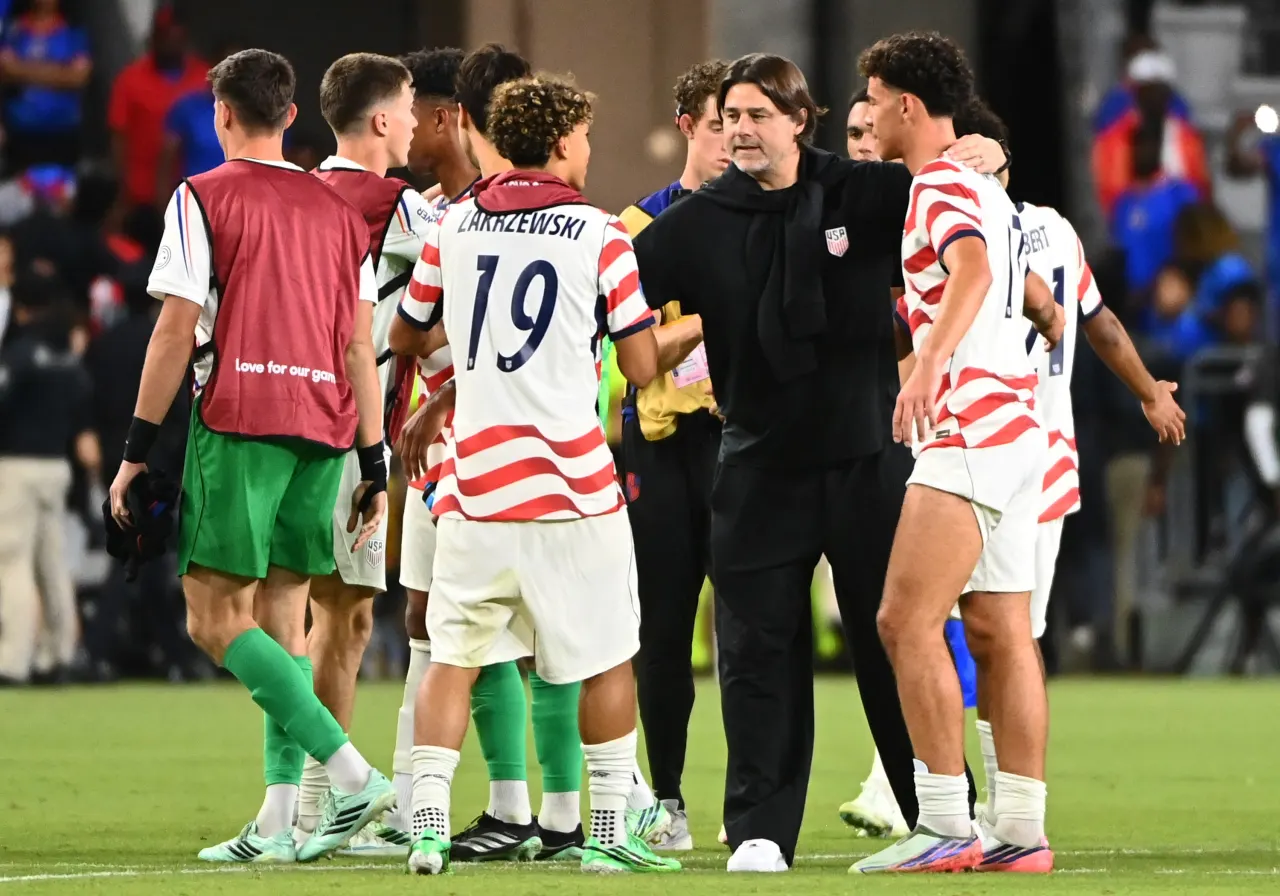
Mauricio Pochettino’s profile in the United States has risen during his two years as national team coach, and his departure for a major club role will leave a question about what his tenure achieved beyond results. The article argues that he brought greater stature and ambition to a job that had previously drawn less public attention.
In Cincinnati, passers-by and people at an NFL game recognised Pochettino and wished him well, unlike earlier in his tenure. The writer contrasts his approach with Jürgen Klinsmann’s earlier spell: although both criticised aspects of the American football system, Pochettino’s comments were received more as calls for improvement, helped by relationships and changes in the game since Klinsmann’s time.
- Sources
- 2
- Outlets
- 1
- Left · Centre · Right
- 0 · 0 · 2
In short
- Pochettino leaves the US national team with a far higher public profile.
- The writer sees added stature and ambition as a key part of his legacy.
- His critiques were received differently from Klinsmann’s a decade earlier.
How this story developed
- 1 day ago Mauricio Pochettino’s profile in the United States has risen during his two years as national team coach, and his departure for a major club role will leave a question about what his tenure achieved beyond results.
Full account
Mauricio Pochettino’s departure from the United States men’s national team leaves a question that will outlast his final match: can his successor preserve the belief and shared purpose he helped build? His two years in charge ended in Cincinnati on Tuesday with a 2–0 victory over Haiti, a place in the Nations League final four and a sixth consecutive win. He left for Manchester United with supporters chanting his name, an unusually warm farewell for a coach whose tenure had been relatively short.
After the match, Pochettino stayed in front of the American Outlaws supporters’ section to thank them and gathered his staff for a photograph. He told reporters he expected the players to achieve more in the years ahead and believed they would be well supported. Folarin Balogun said the coach’s address to the squad had brought tears. The farewell also showed how strongly Pochettino’s staff and players had connected with one another, though their next challenge will be to carry that relationship into a new coaching era.
His influence was visible beyond the stadium. On a walk around Cincinnati before the match, members of the public stopped him; at an American football game that evening, people approached him to offer their good wishes. The prospect of his move to Manchester United helps explain the attention, but his standing within US football also appears to have changed during his tenure. His criticisms of the American game could be pointed, yet one report argues that his relationships across the sport helped them land as calls for higher standards rather than complaints.
The federation has not announced who will take over or committed to a timetable, although a new coach is widely expected before the Nations League semi-finals in March. Pochettino said he had not been asked to suggest a successor and would not put forward names if asked. The players described the qualities they hope to keep: Weston McKennie wants an ambitious, open-minded coach who connects with the squad and trusts younger players, while Christian Pulisic wants someone who can build on its developing culture and identity. Whoever is appointed inherits a team in good form, along with the less easily measured task of sustaining what Pochettino brought to it.
Where outlets differ
From the full account, which is AI-written from the sources:
Source 1 concentrates on Pochettino’s growing public profile and argues that he gave the USMNT greater stature; it compares the reception of his criticism with that of former coach Jürgen Klinsmann.
Source 2 concentrates on the Haiti match, the emotional farewell, the players’ views and the uncertainty over the appointment of a successor. It gives greater weight to the team culture Pochettino leaves behind.
Steelman: both sides, in good faith
The strongest fair case each way — we don't pick a winner.
The case for
Pochettino’s tenure can be seen as having raised the profile and expectations of the US national team, even if its lasting value cannot be measured by results alone. His public criticism of the football system was framed as a constructive push for improvement, and the recognition he received suggests he helped make the role more visible.
The case against
Greater profile and ambition matter only if they produce durable gains for the national team, and public recognition is not evidence that the underlying programme improved. With Pochettino leaving for a club role, it is reasonable to question whether his tenure built lasting change or mainly brought short-term attention and stature to the job.
Explained simply
The US men’s national team, often called the USMNT, represents the United States in international football. Its head coach selects the squad and leads it through matches and tournaments, while also helping shape how the team prepares and develops.
Mauricio Pochettino, an Argentinian coach who has managed major clubs, took charge of the team for two years before leaving for a club job. His public profile grew during that time, drawing attention to a role that has often received less notice in the United States.
The debate over his tenure includes more than match results: it also concerns the influence he had on the team’s ambitions and on discussion of how football is organised in the country. Earlier coach Jürgen Klinsmann also criticised parts of the system, but Pochettino’s comments were heard in a different context and alongside his relationships within the game.
Coverage · 2 sources
Bias meters
From 2 rated sources.