World news and discussion on TalkFuse.
One of China’s workhorse rockets just exploded in flight
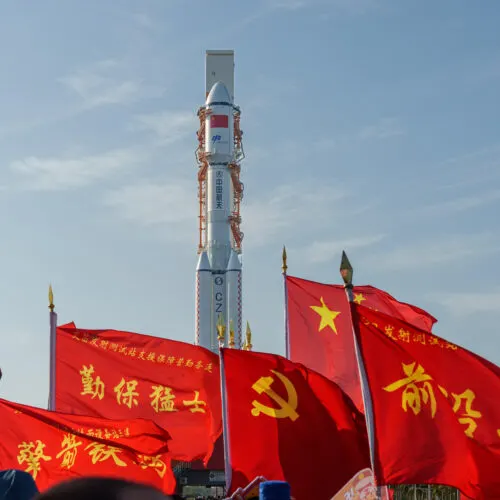
The Long March 7A, one of China's most frequently flown rockets, exploded roughly a minute and a half after lifting off from the Wenchang Space Launch Site on Monday evening local time. The payload, believed to be a military communications satellite, was not disclosed by officials, and Chinese state media had made no comment on the incident by Monday night. The failure is notable because China's state-run launch programme has built a strong safety record in recent years, now averaging more than 50 launches annually with only a handful of failures.
Footage showed the rocket's first stage exploding about one minute and twenty seconds into flight, potentially triggered automatically if the vehicle strayed off course. Because China's space programme operates with limited transparency, the precise cause may never be confirmed, but if it involved the YF-100 first-stage engine, the implications could be significant, since that engine powers as many as nine different Chinese rocket types, including newer variants such as the Long March 10. A failure linked to the YF-100 could also jeopardise the planned Chang'e 7 lunar mission, due to launch on a Long March 5 in around two weeks, as that mission is central to China's efforts to explore the Moon's resource-rich South Pole region ahead of NASA.
In short
- China's Long March 7A rocket exploded shortly after launch on Monday
- Cause unclear; may involve widely used YF-100 engine
- Could delay China's Chang'e 7 Moon mission, due in two weeks
Steelman: both sides, in good faith
The strongest fair case each way — we don't pick a winner.
The case for
The failure of the Long March 7A is particularly concerning because the suspected culprit is the YF-100 first-stage engine, which powers at least nine different Chinese rocket variants. A systemic problem with this engine could cascade through China's entire launch cadre at a critical moment, potentially jeopardising the Chang'e 7 lunar mission launching in two weeks and undermining China's strategic Moon race objectives against NASA. The secrecy surrounding the incident and China's limited transparency compound these worries, making it difficult to independently verify the cause or assess the full scope of potential risks.
The case against
China's space programme has demonstrated an impressive safety record with over 50 successful launches annually and only a handful of failures, placing it among the world's most reliable programmes. A single failure should be evaluated against this strong track record rather than taken as evidence of systemic problems. Rocket failures, whilst significant, are not uncommon in spaceflight, and investigation will likely identify and resolve any issues before subsequent missions. Prematurely assuming systemic problems before investigation is complete risks mischaracterising the overall progress and competence of China's space programme.
Explained simply
The Long March family is a series of rockets run by China’s state space programme, used to carry satellites and spacecraft into orbit. The 7A is one of its regular launch vehicles, and its first stage is powered by engines from the YF-100 family, which are also used on several other Chinese rockets.
China has expanded its launch programme in recent years, while sharing limited public information about some missions and failures. The rocket’s payload was not officially identified, though it was believed to be a military communications satellite.
The engine matters because it is used across multiple rocket types, so a fault could affect other launches if investigators linked it to the engine. China also plans to send the Chang’e 7 mission to the Moon’s south pole region, an area of interest to several countries exploring the Moon.
Asia Culture Space Technology Travel World