Outrage over claim Canadian taxpayers are funding BODYGUARDS for Justin Trudeau’s many lavish jaunts with girlfriend Katy Perry
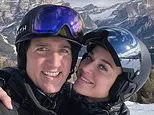
Justin Trudeau, Canada's former prime minister, is reportedly still being protected by Royal Canadian Mounted Police (RCMP) officers on personal trips with his girlfriend, pop star Katy Perry, prompting accusations that taxpayers are footing the bill for his romantic getaways. According to the Journal de Montréal, sources say Trudeau, 54, continues to use the RCMP as a "private security agency" despite leaving office in March, with taxpayers understood to be covering officers' travel, accommodation, meals, salaries and overtime as he and Perry have been spotted at Coachella and on trips across Greece, Italy and Switzerland.
Trudeau reportedly requires three or four federal officers at a time, and a former RCMP deputy commissioner, Pierre-Yves Bourduas, suggested his "hectic love life" was straining a force with "limited personnel." The RCMP has declined to disclose details or costs of his protection, citing security concerns, while Trudeau's overall security bill reportedly exceeded $30 million during his time as prime minister, the highest of any Canadian leader on record. Trudeau, who split from wife Sophie Grégoire in 2023, went public with Perry in December after the Daily Mail published photos of the pair together; Perry has her own separate security detail, which experts say cannot substitute for official protection.
- Trudeau reportedly still uses RCMP security on trips with Katy Perry
- Taxpayers may be funding travel, meals and officers' wages
- His security cost over $30 million during his premiership, a record
New here? Start with this
Canada’s prime minister leads the federal government, and Justin Trudeau held the office from 2015 until March 2025. The Royal Canadian Mounted Police (RCMP) is the national police force and provides protection to some current and former senior officials.
The RCMP has not said what protection Trudeau receives or what it costs, citing security concerns. Such details are generally kept private because they could reveal how protection is organised.
The issue matters because the reported costs may be paid from public funds, while the RCMP must also allocate officers to other duties. Trudeau’s relationship with singer Katy Perry has drawn attention to his personal travel, but the reported security arrangements and costs have not been publicly confirmed.
Both sides, in good faith
The strongest fair case each way — we don't pick a winner.
The case for
Those raising concerns argue that taxpayers deserve transparency and restraint when public money follows a former leader on what appear to be personal holidays and celebrity social occasions. They contend that even if security protocols require protection to continue, the optics of lavish, high-profile leisure trips funded partly by the public purse invite legitimate scrutiny, and that citizens have a right to ask whether costs are proportionate and whether some element of personal travel should be borne privately. This view is rooted in principles of fiscal accountability and the expectation that former officials remain mindful of public perception even after leaving office.
The case against
Those defending the arrangement argue that former heads of government retain credible, lasting security threats precisely because of the office they once held, and that protection details are a matter of national security assessment rather than personal choice, following the individual regardless of whether the trip is official or private. They point out that security agencies, not the former leader, determine risk levels and coverage, and that stripping protection during personal travel would be both operationally reckless and inconsistent with how other democracies protect former leaders. This view is grounded in the principle that personal safety of former officials is a state responsibility that should not be politicised based on who they are seen with or where they travel.