Culture news and discussion on TalkFuse.
Pentagon UFO files reveal mysterious radar detections suggesting Mach 2.5 flight — but there’s a catch
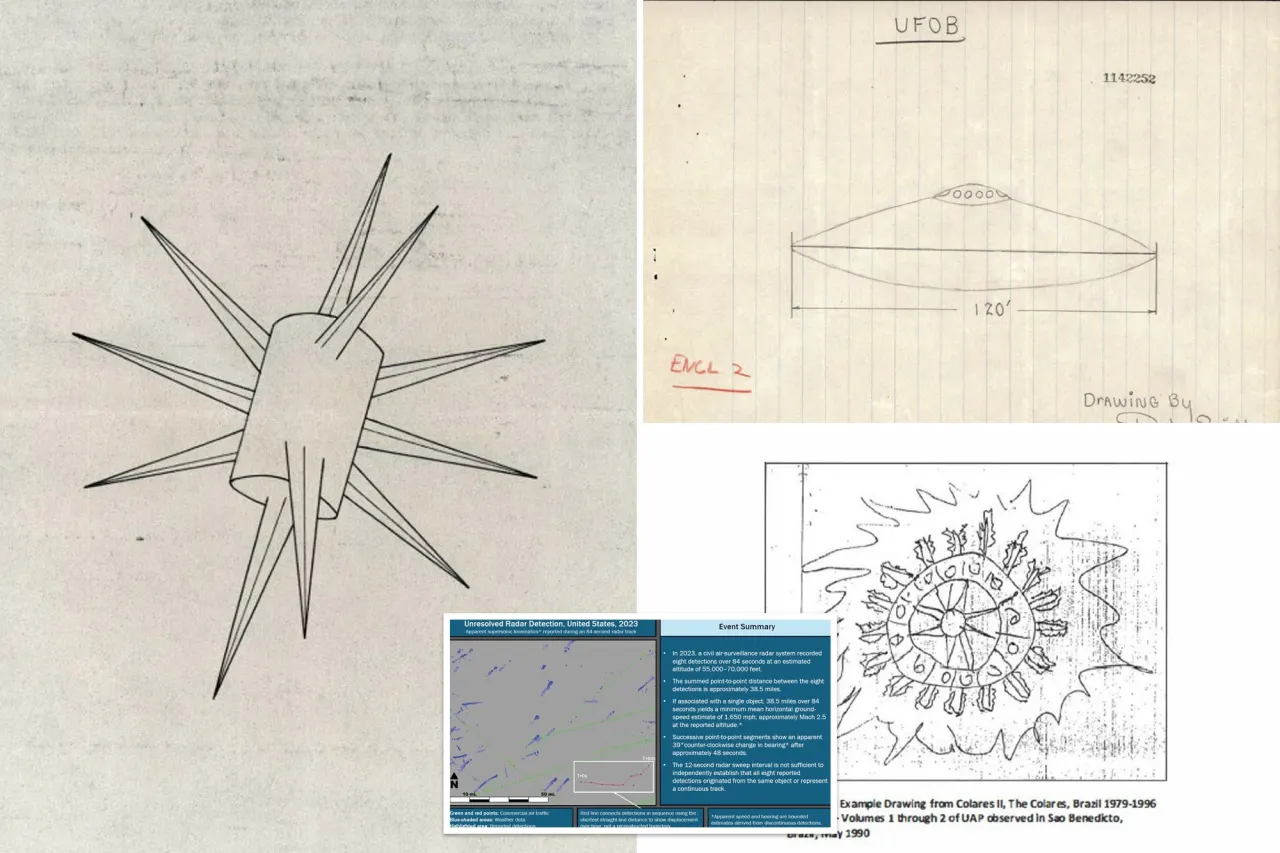
A newly released Pentagon analysis describes eight radar detections in 2023 that, if they came from one object, would suggest it travelled at an average ground speed of about Mach 2.5 and changed direction. The case is notable because it is the first in the government’s UFO archive to include an analysis of radar tracks, but investigators could not establish that the signals came from a single craft.
The detections spanned 84 seconds at an estimated altitude of 55,000 to 70,000 feet, with 38.5 miles between them and a possible 39-degree turn after about 48 seconds. The radar’s 12-second sweep interval could not confirm a continuous flight path, and the plotted distances showed only the shortest links between detections. The release also included 43 files, among them reports on a proposed vault for unusual materials, a 1953 sighting later attributed to a lenticular cloud, and three military videos whose objects’ size and speed remain unclear.
In short
- Radar detections could indicate Mach 2.5 flight.
- Investigators could not confirm the signals came from one object.
- The Pentagon released 43 files, including reports and videos.
Steelman: both sides, in good faith
The strongest fair case each way — we don't pick a winner.
The case for
The detections merit attention because the reported distances, timing and possible change in direction are unusual enough to warrant careful investigation, and radar-track analysis adds a useful kind of evidence to the public record. Even without proof of a single craft, preserving and examining such cases could help identify gaps in sensor data and improve understanding of events in military airspace.
The case against
The figures do not establish that an object travelled at Mach 2.5: investigators could not show that the eight detections came from one source, and the radar’s 12-second intervals could not confirm a continuous track. The plotted distances were shortest links between detections, so treating them as one craft’s route risks drawing a dramatic conclusion from incomplete and ambiguous data.
Explained simply
The Pentagon’s office for investigating unidentified anomalous phenomena—often called UAP, or UFOs—reviews reports of objects or signals that cannot be readily identified. Such reports can come from military personnel and equipment, including radar, which detects objects by sending out radio waves and recording their returns.
Radar readings can show where a detection appeared, but gaps between readings may leave its path uncertain. Establishing whether several detections came from one object can require more information, such as additional sensor records or a clear visual sighting.
The files matter because they show how investigators assess unusual reports and what remains unknown. An unidentified detection does not by itself establish that it was an aircraft, a single object or something of unusual origin.
Culture Government Paranormal Politics Travel Weird & Viral World