Perplexity launches Mac AI feature to keep data local
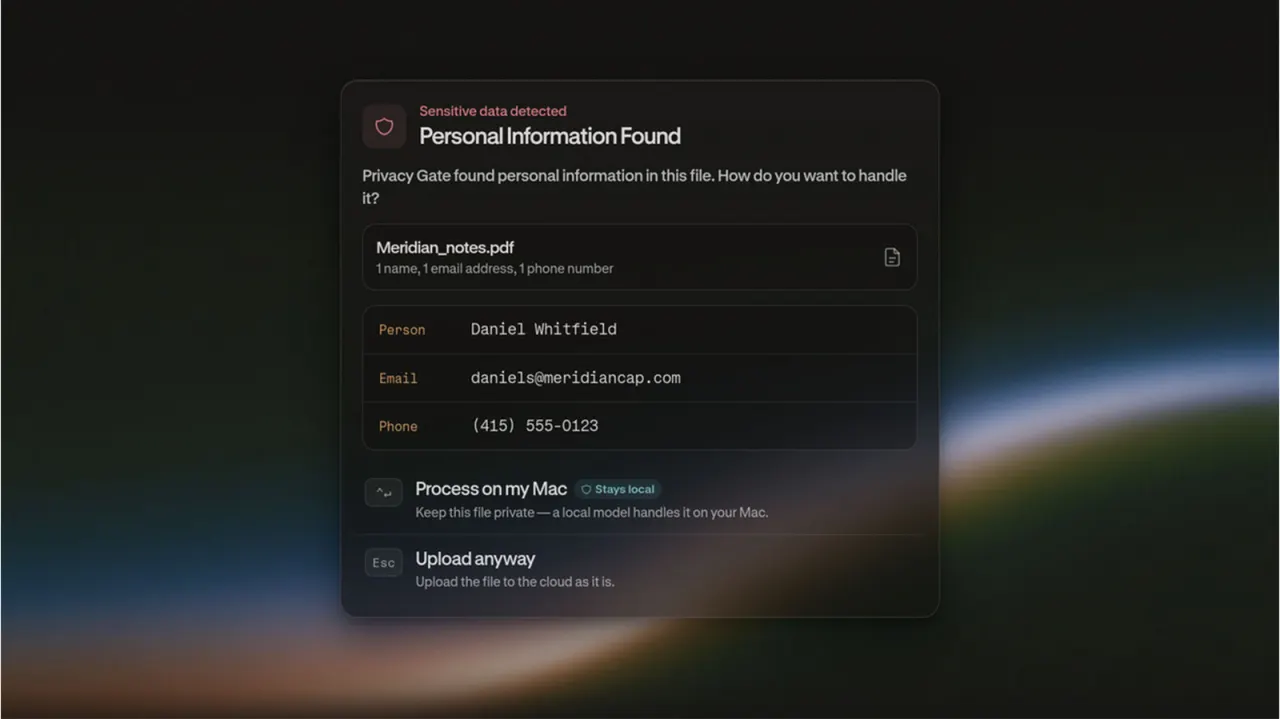
Perplexity has launched Hybrid Compute, a new feature for its Mac-based AI agent platform that splits a task between a powerful cloud-based model and a smaller AI model running locally on the user's computer. The system is designed so that sensitive information stays on the user's own machine while less sensitive parts of a task are handled by a more capable cloud model, addressing both privacy concerns and the cost of using premium cloud AI services.
The feature works by automatically scanning files and information a user tries to upload, using a newly trained privacy classifier to flag content that should stay local, though users can review and adjust these choices before processing begins. Local options include Gemma E4B and two versions of a 35-billion-parameter Qwen model, one of which Perplexity fine-tuned itself, with the company promising more local models to come; installation requires no technical setup, and tokens generated locally are free. Perplexity acknowledges that fully cloud-based outputs remain more capable overall, but argues many users will trade some quality for greater privacy and lower cost. Hybrid Compute is currently limited to Apple Silicon Macs running macOS 15 with at least 32GB of unified memory, and is available to Pro, Max and enterprise subscribers.
- Perplexity's Hybrid Compute splits AI tasks between cloud and local models
- Aims to keep sensitive data private and cut inference costs
- Available now for Mac Pro, Max and enterprise users on macOS 15
New here? Start with this
Perplexity is a company that makes AI tools, including an agent for Mac computers. AI agents can carry out tasks using information and files supplied by the user. Some AI models run on remote servers, while others can run directly on a computer.
Hybrid Compute divides a task between those two kinds of models. Perplexity says a privacy classifier checks files and flags information that should stay on the Mac, while other parts can be sent to a more powerful cloud model; users can review the choices before processing. Running a model locally means the flagged information does not need to leave the computer.
The choice involves a trade-off: local models may be less capable, but can keep more information on the user’s device and avoid cloud processing costs. The feature is for certain newer Macs with enough memory, and is available to some paid Perplexity subscribers.
Both sides, in good faith
The strongest fair case each way — we don't pick a winner.
The case for
Hybrid Compute offers a practical way to limit how much sensitive information reaches cloud services while still using a stronger model for less private parts of a task. Automatic screening, user review and free local processing could make privacy protections and lower costs accessible without requiring technical setup.
The case against
Splitting a task between local and cloud models may still leave users unsure what information is shared, and a classifier can miss sensitive material or flag harmless content. Users may also have to accept weaker results from local models, while the hardware and subscription requirements limit who can benefit.
Read the full article at the source →
Originally published by Engadget as “Perplexity’s Hybrid Compute splits sensitive tasks between cloud and local AI”.