Physicist does the math on Star Trek’s “Picard maneuver”
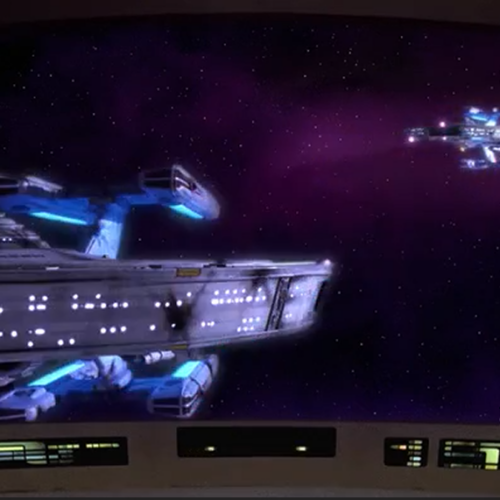
A Brazilian physicist has re-examined the "Picard maneuver" from the first-season Star Trek: The Next Generation episode "The Battle," discovering that the manoeuvre would actually work even better in reality than the show depicted. Rather than exposing a plot hole, Níckolas de Aguiar Alves's analysis reveals a genuine relativistic effect the writers stumbled upon, offering a rare case of science fiction accidentally illustrating real physics teaching material. The finding matters because it shows how a decades-old TV trick can serve as a genuine, if imperfect, illustration of how faster-than-light travel would visually appear, a concept physicists still find useful despite such travel being impossible.
In the episode, Captain Picard evades an enemy attack by charging at warp speed then stopping abruptly, gambling that his ship's pursuers would fire at an outdated image of the Stargazer rather than its true position, since light from two points along its path would arrive separately. De Aguiar Alves, of the Federal University of ABC, found that because the ship accelerates twice rather than travelling at constant speed, an observer would actually see three images of the Stargazer, not two as the show implies, making the deception potentially even more effective. He said the episode nonetheless captured the core relativistic idea well. His interest stemmed from separate research into the "memory effect," a phenomenon where waves passing a particle leave a lasting effect on its motion, and physicists' use of faster-than-light mathematics to describe phenomena such as Cherenkov radiation in media like water, where light travels more slowly.
- Physicist finds Star Trek's "Picard manoeuvre" is more effective than the show realised
- Enemy ship would see three images of the Stargazer, not two
- Real insight ties into relativity and the physics of "memory effect" research