Pink Explains Slamming Macklemore’s Pro-Palestine Performances, Acknowledges Heavy Backlash: ‘I’m Standing Up for My Own People, and I Thought I Knew How Lonely That Would Be. It’s Lonelier Than That’
Developed over time first seen 2 months ago
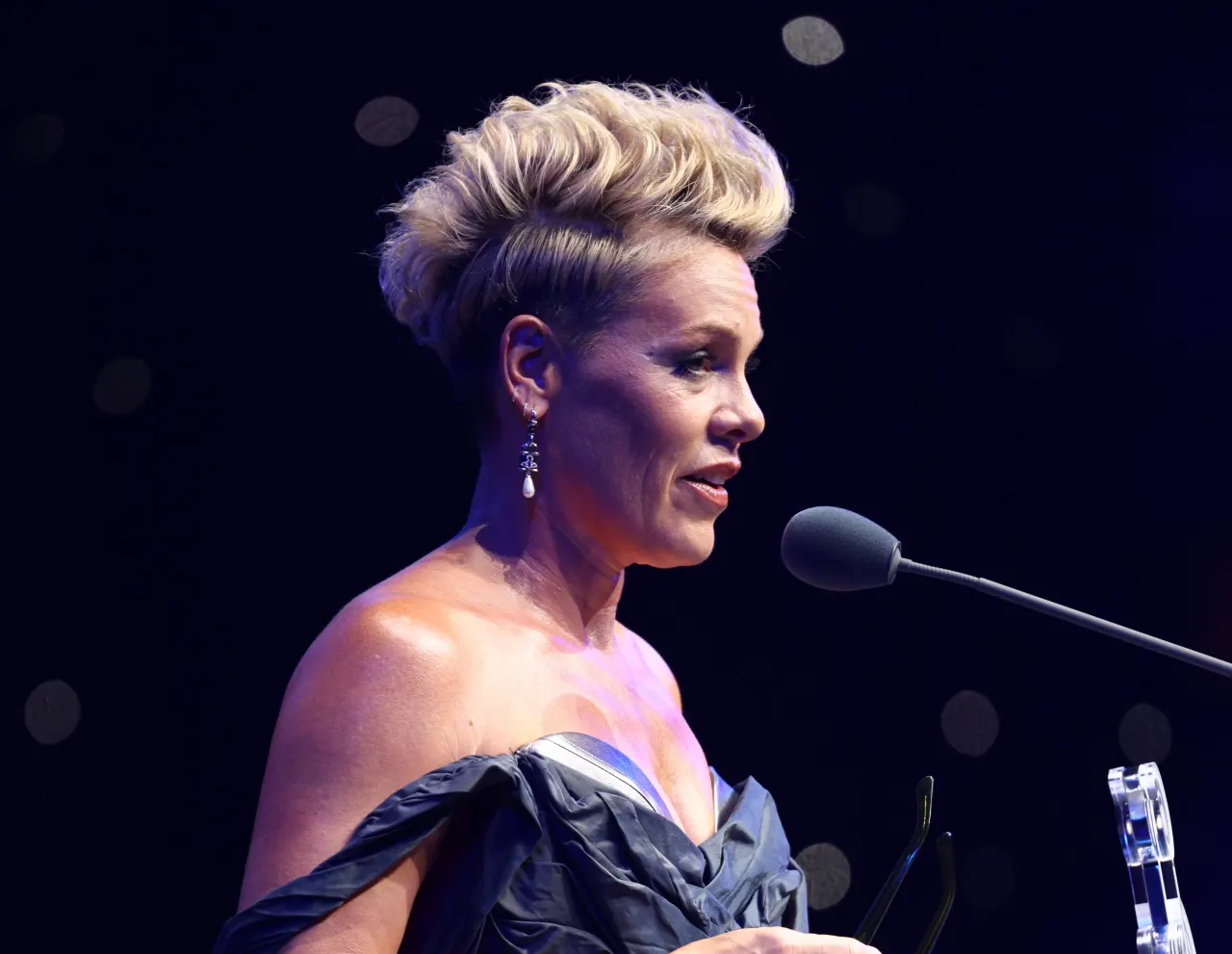
Pink has publicly explained why she called for Macklemore to be dropped from Ed Sheeran's tour, saying in a lengthy statement that the backlash she has faced as a Jewish woman defending her stance has been "lonelier" than she expected. She clarified that her objection was not to Macklemore saying "Free Palestine" or to his right to say it, but specifically to his on-stage claim that his remarks were aimed at Israel rather than Jewish concertgoers, which she said had frightened her and people close to her.
In the statement, Pink traced her shifting view of the rapper, recalling cheering his 2014 Grammy performance of "Same Love" before later objecting to an antisemitic costume he wore, which he apologised for at the time. She reaffirmed her October 2023 position that Hamas is a terrorist organisation while insisting Palestinians deserve a future that honours their humanity, cited a decade as a UNICEF ambassador visiting children affected by war, and said she was not seeking to have Macklemore fired or silenced, only to be able to voice her fear without being accused of dismissing Palestinian suffering. She concluded by acknowledging the isolation of "standing up for my own people," saying it had proven far lonelier than she had anticipated.
- Sources
- 4
- Outlets
- 4
- Left · Centre · Right
- 0 · 0 · 0
In short
- Pink explains why she urged Macklemore's removal from Sheeran's tour.
- Objection was to his on-stage claim his words weren't about Jews.
- She says backlash has left her feeling isolated, but stands by it.
How this story developed
- 1 month ago Pink has publicly explained why she reposted a call for Macklemore to be dropped from Ed Sheeran's tour, revealing in a 1,300-word statement that the backlash she has faced as a Jewish woman defending her stance has been "lonelier" than she expected.
- 1 month ago Pink has expanded on her earlier repost calling for Macklemore to be dropped from Ed Sheeran's tour, publishing a full 1,300-word statement explaining her reasoning and describing the backlash she has faced as a Jewish woman as "lonelier" than she anticipated.
- 1 month ago Pink has publicly explained why she called for Macklemore to be dropped from Ed Sheeran's tour, saying in a lengthy statement that the backlash she has faced as a Jewish woman defending her stance has been "lonelier" than she expected.
- 2 months ago Pink has expanded on her earlier statement defending her repost of a call for Macklemore to be dropped from Ed Sheeran's tour, publishing a fuller 1,300-word account of her reasoning and describing the backlash she has faced as a Jewish woman as "lonelier" than she expected.
- 2 months ago Pink has broken her silence over the backlash following her repost of a call for Macklemore to be dropped from Ed Sheeran's tour, after the rapper made nightly pro-Palestinian statements during performances.
- The Hollywood Reporter Pink Issues Statement Following Backlash for Critiquing Macklemore’s Pro-Palestine Comments: “Standing Up for My Own People”
- Rolling Stone Pink Responds to Fallout After Sharing Post Criticizing Macklemore’s Speech on Palestine
- Variety Pink Explains Slamming Macklemore’s Pro-Palestine Performances, Acknowledges Heavy Backlash: ‘I’m Standing Up for My Own People, and I Thought I Knew How Lonely That Would Be. It’s Lonelier Than That’
- Billboard Pink Addresses Backlash Over Comments About Macklemore’s Pro-Palestine Stance: ‘Standing Up for My Own People’
Full account
Pink has broken her silence over the backlash she received after resharing a post that called for Macklemore to be dropped from Ed Sheeran's tour, following the rapper's nightly pro-Palestinian statements and performances. In a lengthy statement posted to Instagram, running to well over a thousand words, the singer said she wanted to address the row in her own words rather than let a shared meme stand in for her views, acknowledging that the backlash had left her feeling isolated: she said she had expected to feel lonely standing up for her own people, but that the reality had proved lonelier still.
In the statement, Pink said the post she had reshared used language she had not written and would not necessarily have chosen herself, arguing that she would rather be criticised for her own words than condemned for someone else's. She described being born Jewish and said she had watched people assume what she believed this week without checking anything she had actually said or done. She reiterated a position she said she had held consistently since October 2023: that Hamas is a terrorist organisation, that Palestinians deserve a future which respects their humanity and aspirations, and that protecting innocent life must come first on all sides. She pointed to a decade spent as a UNICEF ambassador, saying she had personally met and grieved for children affected by the conflict, and said she had no intention of using a social media caption to litigate the wider war or to recite slogans to placate critics.
Explaining what had driven her original repost, Pink traced her history with Macklemore back to the 2014 Grammy Awards, where she recalled cheering as he performed 'Same Love' while dozens of same-sex and heterosexual couples were married on stage. She contrasted that memory with an incident shortly afterwards in which the rapper performed wearing what she described as a stereotypically antisemitic costume, which he later apologised for and which she said she had chosen to forgive at the time. She said his recent tour performances had changed her view: at a recent stadium show, with images from the war displayed on screen, he had dedicated a song to a cause of his choosing and told the audience the moment was not about Jewish fans present, a framing she said he was not entitled to impose. She stressed that her objection was not to the phrase 'Free Palestine' or to any artist's right to voice it, and that she has never called for another performer to be silenced.
Coverage of the episode varies in emphasis. One account frames the statement chiefly as an act of personal reckoning, focusing on how Pink's feelings towards Macklemore evolved from admiration to alarm and on her language about the isolation of the backlash. Another account pays closer attention to the mechanics of how the statement circulated, noting it was posted on Instagram and later expanded in the comments section, that much of the extended text was subsequently removed after she restricted comments, and that screenshots and social media reposts of the full statement continued to spread online after the fact. Both accounts agree on the substance of her remarks about Macklemore's 2014 costume, his stadium comments, and her insistence that her views reflect personal conviction rather than any official political position.
Where outlets differ
From the full account, which is AI-written from the sources:
One outlet frames the story mainly around Pink's personal emotional journey and sense of isolation, giving detailed narrative of her evolving feelings about Macklemore over the years.
The other outlet focuses more on the practicalities of how and where the statement was published and how it was later partially removed, with screenshots and reposts preserving the full text online.
One source explicitly notes the statement's approximate length (around 1,300 words); the other does not specify a word count.
One source includes Pink's explicit clarification that her objection was never to the phrase 'Free Palestine' or to an artist's right to say it, and that she has never called for anyone to be silenced — a nuance less foregrounded in the other account.
Steelman: both sides, in good faith
The strongest fair case each way — we don't pick a winner.
The case for
Jewish communities have legitimate concerns when pro-Palestine activism becomes conflated with antisemitism or directed at Jewish people specifically rather than Israeli policy. Pink articulates a real fear many Jewish people report—that political criticism of Israel sometimes extends into hostility toward Jewish identity itself—and she explicitly distinguishes this from opposing Palestinians' right to advocate for their cause. Her attempt to voice her community's safety concerns whilst acknowledging Palestinian humanity represents a reasonable effort to hold multiple truths.
The case against
Pro-Palestine activism is legitimate political speech on a contested geopolitical question where Palestinians face documented suffering that warrants sustained advocacy and protest. Pressure to remove artists from tours based on political expression raises serious concerns about censorship and industry constraints on free speech, and equating such activism with antisemitism can function to suppress legitimate political discourse about Palestinian rights. Macklemore's willingness to take political risks for a cause he believes in reflects the kind of principled speech that democratic societies should protect.
Explained simply
Pink is a well-known American singer who identifies as Jewish and has been an active supporter of UNICEF for around a decade, working with children affected by conflict. Macklemore is an American rapper who has used concert performances, including dates on Ed Sheeran's tour, to voice support for Palestinians amid the ongoing Israel-Gaza war, a conflict that began after Hamas's October 2023 attack on Israel and has since drawn strong reactions from artists and fans on both sides.
The row started when Pink shared a call for Macklemore to be removed from Sheeran's tour over his on-stage remarks, prompting accusations that she was trying to silence pro-Palestinian speech. She has since written at length to explain her position, saying she is not seeking to have him fired or censored, but objects to him telling audiences his comments were aimed at Israel rather than Jewish people generally.
The dispute touches on a wider and highly sensitive debate about how criticism of Israel's actions, opposition to Hamas, and concern for antisemitism intersect, particularly in public and celebrity spaces. Macklemore has previously faced criticism over a 2014 awards-show costume some considered antisemitic, which he apologised for at the time, adding extra context to the current disagreement.
Coverage · 4 sources
- VarietyPink Explains Slamming Macklemore’s Pro-Palestine Performances, Acknowledges Heavy Backlash: ‘I’m Standing Up for My Own People, and I Thought I Knew How Lonely That Would Be. It’s Lonelier Than That’
- The Hollywood ReporterPink Issues Statement Following Backlash for Critiquing Macklemore’s Pro-Palestine Comments: “Standing Up for My Own People”
- Rolling StonePink Responds to Fallout After Sharing Post Criticizing Macklemore’s Speech on Palestine
- BillboardPink Addresses Backlash Over Comments About Macklemore’s Pro-Palestine Stance: ‘Standing Up for My Own People’
Art Culture Entertainment Music