Riot police deployed as rival factions contest leadership of Poland’s top court
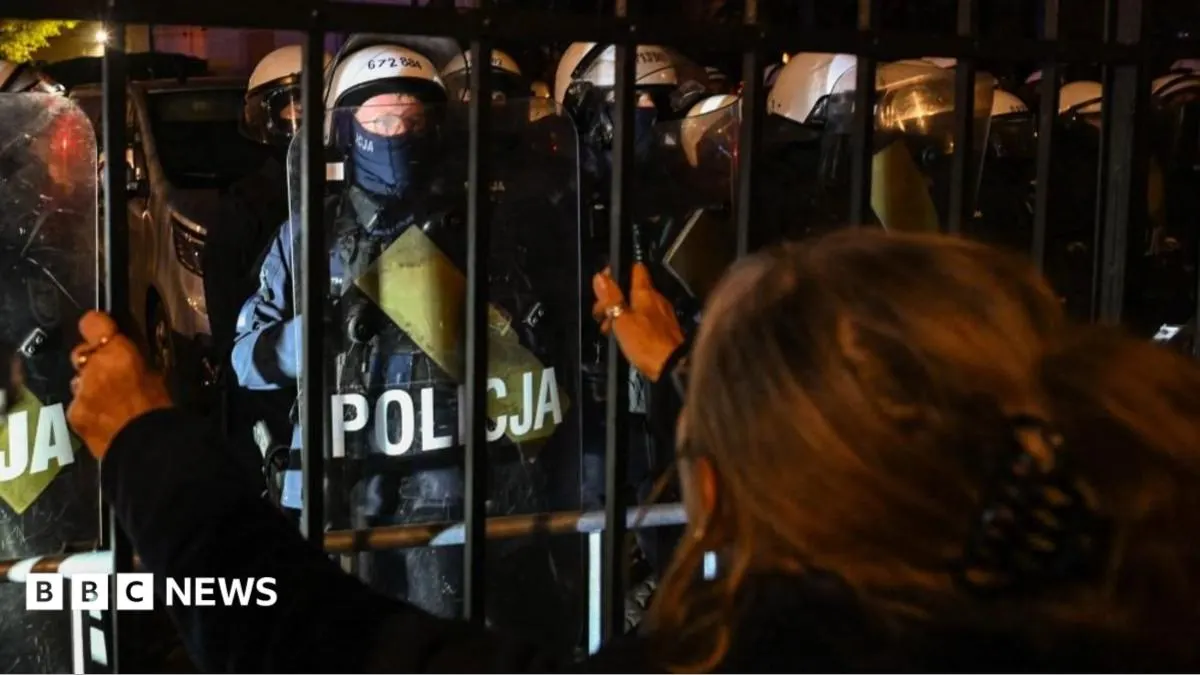
Riot police were deployed at Poland’s Constitutional Tribunal in Warsaw during a stand-off over who has authority to lead the court. The confrontation escalated after Justice Minister Waldemar Żurek sought to lift the immunity of the court’s president and vice-president so they could face criminal charges, deepening a dispute between Prime Minister Donald Tusk’s government and the former governing Law and Justice party.
The dispute stems from appointments made under the PiS-led government, which European courts later said left the tribunal lacking independence. Tusk’s government has relied on those rulings to stop publishing its decisions, while President Karol Nawrocki has blocked efforts to install five judges elected by parliament. Nawrocki cancelled a trip to Senegal and went to the court as PiS supporters gathered outside; the tribunal called the government’s actions a coup, while Tusk said restoring the rule of law required decisive action.
In short
- Police guarded Poland’s top court during a political stand-off.
- The government wants charges against two senior judges.
- The dispute centres on contested appointments and judicial independence.
Steelman: both sides, in good faith
The strongest fair case each way — we don't pick a winner.
The case for
The government can argue that appointments made under PiS left the tribunal’s independence compromised, as European court rulings found, and that restoring the rule of law requires addressing those appointments and enforcing accountability. On this view, decisive steps are needed to ensure the court’s decisions and composition command public and legal legitimacy.
The case against
Critics can argue that the government is undermining the rule of law by refusing to publish the tribunal’s decisions and seeking to lift the immunity of its leaders amid a contested dispute over appointments. They may see the president’s objections and the court’s resistance as safeguards against executive overreach, and argue that any reform must follow clear constitutional procedures rather than deepen the institutional stand-off.
Explained simply
Poland’s Constitutional Tribunal rules on whether laws comply with the constitution. Its judges are elected by parliament, while the court’s president oversees its work; disputes over appointments have left rival sides challenging who is entitled to serve.
The Law and Justice party, known as PiS, governed Poland before Donald Tusk’s coalition took office. European courts have questioned the independence of judges appointed during PiS’s rule, while Tusk’s government and President Karol Nawrocki disagree over how to address those appointments and the court’s decisions.
The conflict matters because the tribunal can affect whether laws passed by elected politicians take effect. It is part of a wider dispute over judicial independence and the balance of power between Poland’s government, parliament and president.
Read the full article at the source →
Originally published by BBC World as “Police deployed during stand-off over control of top Poland court”.