World news and discussion on TalkFuse.
Police seize five Lamborghinis and Mercedes G-Wagon as they stop supercar convoy that was ‘using motorway as racetrack’
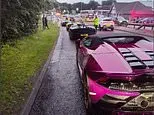
Greater Manchester Police seized five Lamborghinis and a Mercedes G-Wagon after stopping a supercar convoy that had allegedly been using the M66 and M62 motorways as a racetrack. Officers responded to reports of dangerous driving, with the vehicles said to have travelled at high speed, weaved between lanes, spun their wheels and slowed to as little as 17mph, prompting the force's Transport Policing and Crime Command to intervene. The incident highlights police efforts to crack down on anti-social driving, with officers now able to seize vehicles immediately rather than issuing a warning first.
Two Lamborghinis were stopped as they left the M62, with the remainder of the convoy halted in Rochdale; at least three of the cars appear to be Lamborghini SVJs, originally priced from £360,000 but now worth closer to £800,000. The vehicles were confiscated under Section 59 of the Police Reform Act 2002, which allows immediate seizure for careless or anti-social driving, and the drivers face prosecution for several offences. Chief Inspector Danny Kabal said the force would not tolerate such behaviour, thanked members of the public who reported the convoy, and pointed to Operation Snap, which lets people submit dashcam or CCTV footage of dangerous driving.
In short
- GMP seized five Lamborghinis and a Mercedes G-Wagon after a motorway convoy
- Cars were driving dangerously on the M66 and M62 near Manchester
- Vehicles seized under Section 59; drivers face prosecution for driving offences
Steelman: both sides, in good faith
The strongest fair case each way — we don't pick a winner.
The case for
Immediate seizure can be justified when officers have credible reports of dangerous, disruptive driving that puts other road users at risk. It may prevent further harm, make clear that motorways are not for racing, and reassure the public that reports and evidence of hazardous driving are acted upon.
The case against
Strong enforcement should still be proportionate and grounded in evidence, particularly when it involves taking exceptionally valuable vehicles before any prosecution is resolved. A careful process protects drivers from mistaken or excessive action, while clear, consistent rules help ensure that seizure powers deter dangerous conduct without being applied too broadly.
Explained simply
Motorways are designed for steady, predictable traffic, so driving at high speed, weaving between lanes or deliberately slowing can put other road users at risk. Reports from the public, including dashcam footage, can help police identify and investigate dangerous driving.
In England and Wales, Section 59 of the Police Reform Act 2002 gives police powers to seize a vehicle when it is being used carelessly or in a way that causes alarm, distress or annoyance. Police can also prosecute drivers for offences linked to their conduct; the law applies regardless of the type or value of vehicle involved.