Entertainment news and discussion on TalkFuse.
Popcorn Bucket Craze Pops Off With Skyrocketing Scalper Prices, Director Approvals and Imax’s First-Ever Movie Merch
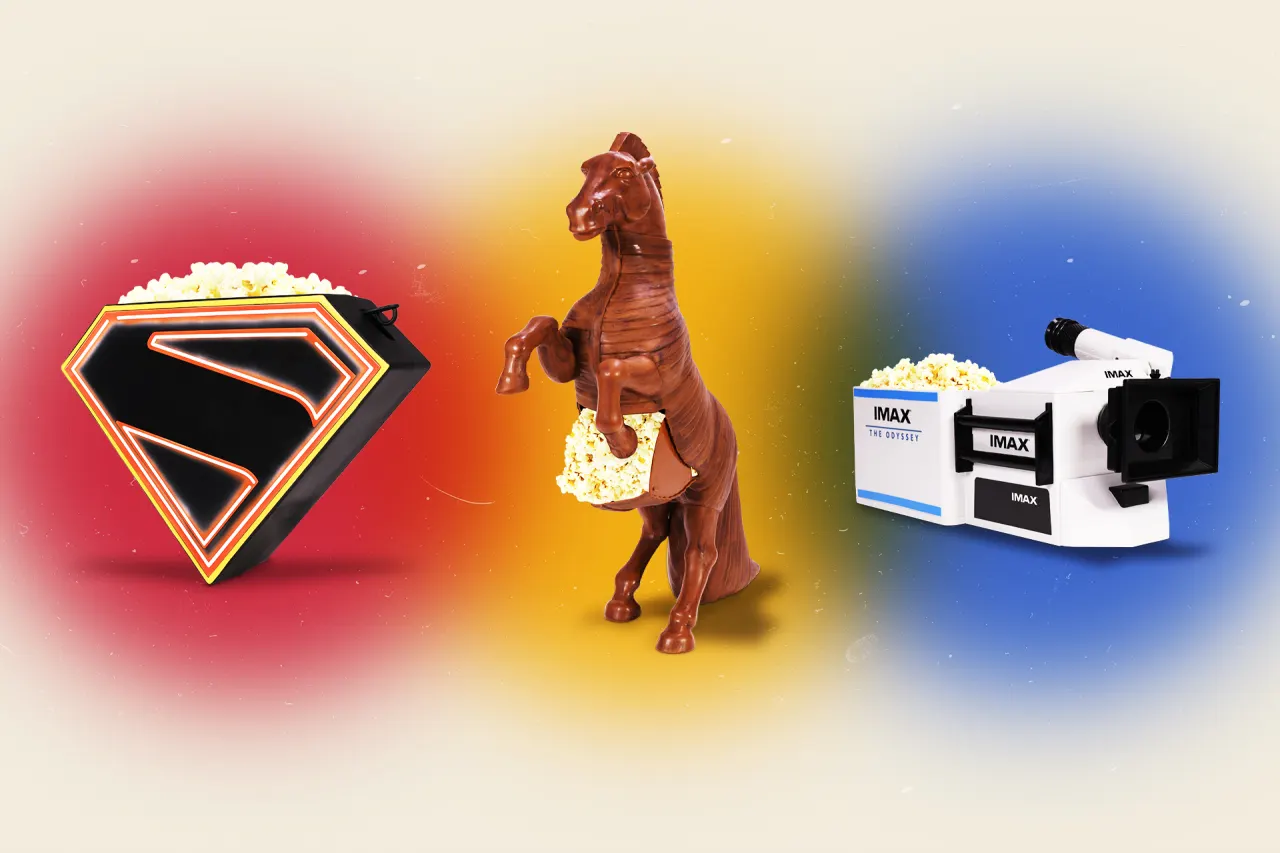
Popcorn buckets have become a booming merchandise category for cinema chains, with limited-edition designs tied to blockbuster releases like Christopher Nolan's "The Odyssey" and "Spider-Man: Brand New Day" selling out within minutes and being resold by scalpers on eBay at inflated prices. The trend matters commercially because cinemas typically keep only about half of ticket revenue, making concessions and merchandise an increasingly vital income stream, and it reflects a wider cultural moment in which collectible movie merchandise has become part of the fan experience.
For "The Odyssey", Imax created its first-ever piece of movie merchandise, a replica of the 15/65mm camera used to shoot the film, complete with a working viewfinder, while "Spider-Man: Brand New Day" offered buckets shaped like Spider-Man's head and a drink-popcorn combo. AMC reported $80 million in global merchandise revenue in 2025 and expects to reach $100 million in 2026, while Regal estimates it releases around 50 premium buckets a year, rising to over 100 when tins are included. Some chains have introduced per-visit purchase limits to manage demand, and industry figures, including AMC's Nels Storm and marketing professor Russell Belk, liken the buckets to "concert T-shirts" that tap into fans' attachment to directors and franchises.
In short
- Limited-edition popcorn buckets are selling out and being resold by scalpers
- Imax made its first-ever merchandise item for Nolan's "The Odyssey"
- AMC's merchandise revenue is set to hit $100 million in 2026
Steelman: both sides, in good faith
The strongest fair case each way — we don't pick a winner.
The case for
These limited-edition buckets address genuine financial pressures facing cinemas, which retain only roughly half of ticket revenues. The merchandise taps into authentic fan enthusiasm for beloved films and directors, representing voluntary transactions no different from established collectible markets in music, gaming and other entertainment sectors. This approach benefits all parties: cinemas secure needed revenue, fans acquire items they genuinely value, and filmmakers see their work generate wider cultural attachment. Responsible purchase limits help manage demand fairly.
The case against
This practice exploits fan enthusiasm through artificial scarcity and fear of missing out, with scalpers profiting from deliberately limited quantities. It represents corporate profit extraction that prioritises merchandise sales over the film experience itself, turning cinema into a consumption mechanism rather than an artistic medium. The secondary market demonstrates that scarcity is deliberate rather than inevitable—designed to maximise prices and extract additional spending from devoted fans. Whilst it may address short-term cinema economics, it normalises extractive business practices and unhealthily positions fan loyalty primarily as a revenue opportunity to exploit.
Explained simply
Cinemas earn money from ticket sales, food and drink, and merchandise. Because they usually keep only about half of ticket revenue, sales at the counter and in cinema shops are an important source of income. Collectible popcorn buckets have become part of how some fans mark a visit to a big film.
Cinema chains such as AMC and Regal sell limited-run designs linked to films and franchises. Filmmakers and studios can also shape the products: Imax made a replica of the camera used to film Christopher Nolan’s The Odyssey, while Spider-Man merchandise included a bucket shaped like the hero’s head. Fans may keep these items as souvenirs or collect them alongside other film-related goods.
Demand can exceed the number made, and some buyers resell sold-out items at higher prices. The trend matters to cinemas as merchandise revenue grows, and to fans who see film products as part of the shared experience of following a director or franchise.
Entertainment Film Space Technology