World news and discussion on TalkFuse.
Francis’s diary recounts three encounters with the Devil and a vision of Hell’s entrance
Developing story first seen 9 hours ago
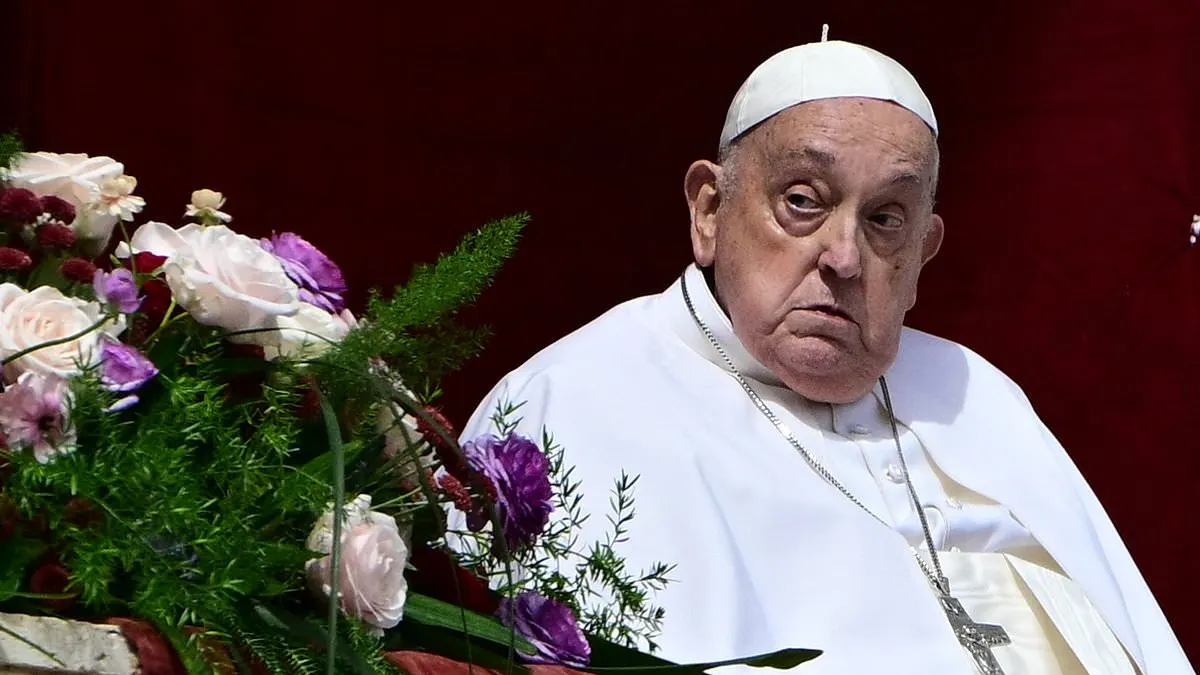
Newly published diary excerpts reveal that Pope Francis recorded seeing the Devil three times and what he described as the entrance to Hell. The entries add detail to his private spiritual concerns, alongside reflections on personal failings, faith and mercy.
The diary covers 1992 to 2024 and was published by Argentine Cardinal Victor Manuel Fernández, who said Francis had asked him to share its contents. Francis described fiery eyes and a rough voice in the three alleged encounters, and wrote that he was frightened by the sight of Hell’s entrance in 2018, reaching for his rosary. Other entries record anger, pride, regret over ignoring a man in the street and concerns about ageing.
- Sources
- 3
- Outlets
- 3
- Left · Centre · Right
- 0 · 0 · 3
In short
- Diary excerpts detail Francis’s accounts of three encounters with the Devil.
- He also wrote that he saw Hell’s entrance in 2018.
- The journal includes candid self-criticism and reflections on mercy.
How this story developed
- 2 hours ago The latest excerpts emphasise how Francis linked these spiritual experiences and candid admissions of personal failings to his reflections on faith, mercy and self-examination.
- 3 hours ago Further details emerged that Francis described the Devil’s fiery eyes and rough voice, reached for his rosary after the 2018 experience, and wrote of anger, pride, regret and ageing.
- 6 hours ago Excerpts from Pope Francis’s diary, published after his death, describe three occasions when he believed he saw the Devil and a frightening sight he interpreted as Hell’s entrance.
Full account
Excerpts from Pope Francis’s diaries, published in a book by Cardinal Víctor Manuel Fernández, describe three encounters in which Francis believed he had seen the Devil. The entries span 1992 to 2024 and combine accounts of spiritual experiences with reflections on faith, leadership and personal failings. Fernández, who compiled the selected material with commentary, said Francis had asked him to make the diary’s thoughts available.
In a January 2021 entry, Francis recalled two episodes from his time as Archbishop of Buenos Aires. In one, he said he saw a figure from a car and remembered its unsettling yet alluring eyes. In another, in a Carmelite chapel, he described a gaze like fire. A third encounter, which he placed after a visit to Chile and during a meeting in Rome, involved a voice he remembered as rough and triumphant. He wrote that he was able to leave the meeting and felt freed.
The published extracts also recount a night in June 2018 when Francis said he saw what he understood as the entrance to Hell. He wrote that the sight frightened him and that he reached for his Rosary. Elsewhere, the diary portrays a sustained concern with temptation and spiritual struggle, alongside candid self-examination: Francis recorded emotions such as envy and pride and regretted occasions when he had put his own comfort first.
The accounts are presented as Francis’s personal recollections, rather than independently verified events. The excerpts also show the diary’s broader scope: it covers his inner life and the demands of authority, with some entries from 2021 and 2022 coinciding with the period around his restrictions on the traditional Latin Mass. The reports describe the book as a selection from a much longer journal, rather than a complete publication of it.
Where outlets differ
From the full account, which is AI-written from the sources:
The first report gives the three encounters as occurring while Francis was Archbishop of Buenos Aires, whereas the second says two took place in Buenos Aires and one during his papacy. The second also cites an August 2024 entry in which Francis looked back on the first two encounters and said the Devil reappeared in other situations; the first foregrounds the January 2021 account.
The first report includes the June 2018 account of seeing the entrance to Hell and several examples of Francis’s self-criticism. The second instead emphasises alleged demonic attacks, the struggle to exercise power, and the connection between some entries and Traditionis Custodes.
The first describes Fernández’s role and says Francis asked him to bring the diary’s reflections to public attention. The second calls him a close aide, gives the book’s length as 160 pages and notes that it contains selected entries and commentary.
Explained simply
Pope Francis was head of the Roman Catholic Church from 2013 until his death in 2025. Catholics believe the Devil is a spiritual being who opposes God, while Hell is understood as separation from God; how these beliefs are described and understood can vary.
A diary is a personal record, and Francis’s entries cover decades of his life as a priest and church leader. His reflections on guilt, pride, ageing and compassion connect to Catholic ideas about examining one’s actions and showing mercy.
The account matters because it offers a glimpse of how a major religious leader understood his own faith and shortcomings. It is a record of Francis’s personal experiences, rather than a statement that Catholics must interpret those experiences in the same way.
Coverage · 3 sources
Bias meters
From 3 rated sources.
Read the full article at the source →
Originally published by Daily Mail as “Pope Francis saw the ‘flame-eyed’ Devil three times and even the ‘gates of Hell’ once, his diary reveals”.