World news and discussion on TalkFuse.
Populism poses serious challenge to independent central banks, Bailey says
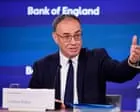
Bank of England governor Andrew Bailey has warned that rising populism poses a serious threat to the independence of central banks, saying policymakers must be ready to explain their decisions publicly or risk being branded an "unrepresentative elite". Speaking at an LSE conference as Reform UK held its annual gathering in Birmingham, Bailey argued that populist movements often claim to alone represent the "authentic will of the people", casting independent institutions as obstacles to popular sovereignty. His remarks come amid growing attacks on central bank independence from populist politicians on both sides of the Atlantic, including Nigel Farage, who has suggested he would replace Bailey if Reform won power, and Donald Trump's repeated criticism of former US Federal Reserve chair Jerome Powell.
Bailey, who was among central bankers who signed a joint statement defending Powell, said the Bank's independence—granted by Labour in 1997 and expanded after the 2008 financial crisis—had strengthened its ability to maintain economic stability, while acknowledging that institutions wielding significant authority "should expect scrutiny". His comments come as the Bank's rate-setting committee remains split over how to respond to inflation driven by the Iran war; rates were held at 3.75% in July, though three of nine members, including chief economist Huw Pill, voted for an increase. Attention now turns to the Bank's next meeting on 17 September, when it is expected to decide on continuing its contested quantitative tightening programme, which critics say raises government borrowing costs.
In short
- Bailey says populism threatens central bank independence and legitimacy
- Warns institutions risk being seen as an "unrepresentative elite"
- MPC split on rates; QT decision due at 17 September meeting
Steelman: both sides, in good faith
The strongest fair case each way — we don't pick a winner.
The case for
Independent central banks can make difficult decisions to control inflation without yielding to short-term political pressure, helping protect price stability and public confidence over time. Their authority is strongest when elected governments cannot direct rate decisions for immediate political gain, while public explanation and scrutiny can help maintain their legitimacy.
The case against
Monetary policy has wide effects on jobs, borrowing costs and public finances, so decisions made by unelected officials can raise legitimate questions about democratic accountability. Critics may argue that elected governments should have more influence over these choices, particularly when central bank policies such as quantitative tightening affect public spending and borrowing; transparency and scrutiny may not be enough if the institution remains insulated from voters.
Explained simply
Central banks set interest rates and use other tools to help keep prices and the wider economy stable. In the UK, the Bank of England has been able to make many of these decisions independently of the government since 1997.
That independence is intended to let policymakers make decisions over the longer term, even when those choices are unpopular with voters or politicians. The Bank is led by its governor and its rate-setting committee, whose members can disagree about how best to respond to inflation.
Central banks still exercise public authority, so their decisions can be questioned and scrutinised. The debate matters because political pressure on a central bank could affect how it makes decisions, while a lack of public confidence can make its role harder to sustain.