Preppers used to be ridiculed – but we’re all stockpiling now | Zoe Williams
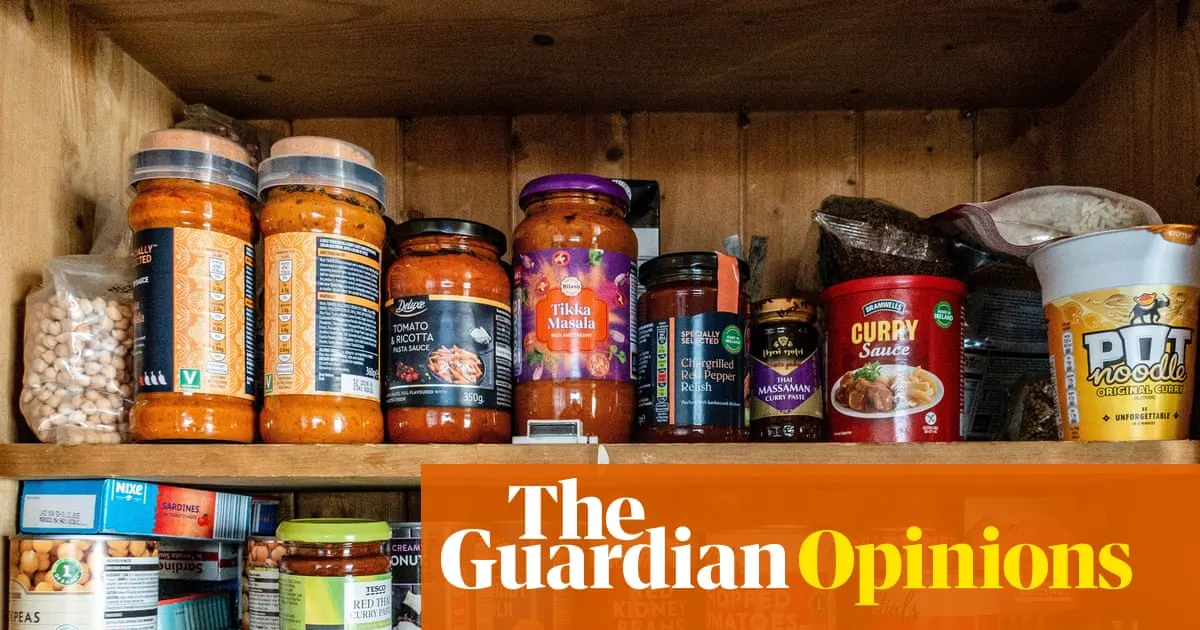
The UK government is asking households to keep three days’ worth of food and water for emergencies, advice the writer sees as reasonable given how often wars and other shocks disrupt supplies. But she questions whether household stockpiles can offer meaningful protection without a wider public plan for emergencies.
The article notes that Britain has had no national food stockpile since the 1990s, while many households already struggle to afford enough food: one in eight, rising to one in six households with children, experience food insecurity. Possible threats range from cyber-attacks and power cuts to extreme weather and crop failures, which could last longer than three days. The writer argues that household preparedness depends on emergencies being brief and an organised collective response arriving quickly.
- The government recommends three days of food and water at home.
- One in eight UK households already experiences food insecurity.
- Household stockpiles need a wider emergency response to be useful.
New here? Start with this
The UK government has recently recommended that households keep three days' worth of food and water available for emergencies. This has raised questions about whether such preparation is adequate given the range of potential threats to food supply.
Britain has not maintained a national food stockpile since the 1990s, whilst many households already struggle to afford sufficient food. One in eight households, rising to one in six with children, currently experience food insecurity.
Potential threats to food supplies include cyber-attacks, power cuts, extreme weather and crop failures, some of which could last longer than three days. The effectiveness of individual household stockpiles depends on emergencies being relatively brief and on a swift, coordinated public response.
Both sides, in good faith
The strongest fair case each way — we don't pick a winner.
The case for
Individual household stockpiling is a reasonable precaution that empowers people to take responsibility for their own security. Given genuine risks from cyber-attacks, extreme weather, and supply disruptions, encouraging households to maintain a three-day buffer is practical, low-cost advice that can reduce panic and ease pressure on emergency services. This approach works with the reality that people best understand their own circumstances, and most households can manage this modest preparation without undue burden.
The case against
Promoting individual household stockpiling without corresponding government investment in national food security risks creating false reassurance and deepening inequality. Those already experiencing food insecurity—one in eighth households, rising to one in six with children—cannot stockpile when they struggle to afford adequate daily meals. Real emergency resilience requires state-level infrastructure, maintained reserves, and social safety nets, not exhortations for households to fend for themselves; individual stockpiling addresses symptoms whilst neglecting the systemic protection that actually safeguards populations in genuine crises.