Politics news and discussion on TalkFuse.
Presidential election 2027: Why Macron threw his support behind judoka Teddy Riner’s presidential bid
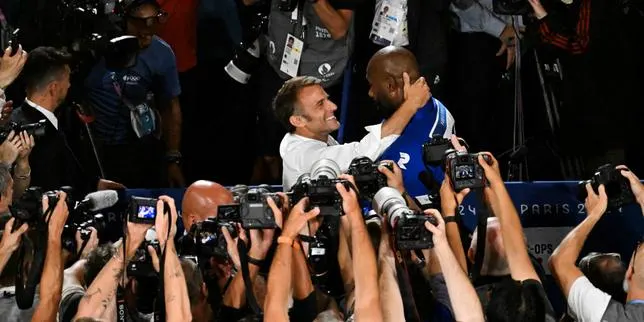
Emmanuel Macron quickly welcomed judoka Teddy Riner’s announcement that he would run in France’s 2027 presidential election, comparing the athlete’s outsider image with his own rise to power. Macron’s endorsement could help Riner gain credibility, but it also ties him to a president with record-low popularity and risks upsetting other potential successors in Macron’s centrist camp.
Riner presents himself as outside established politics, saying France does not need a professional politician; he has also criticised the country’s debt, public mood and state authority. People linked to his campaign include former health minister François Braun and several figures with ties to Macron. With Marine Le Pen and Jean-Luc Mélenchon leading the wider field, Macron’s allies see Riner as a possible way to attract voters across the centre and beyond, though the Elysée denies running a campaign through him.
In short
- Macron praised Teddy Riner’s bid for France’s 2027 presidency.
- Riner casts himself as an outsider and criticises the country’s direction.
- His candidacy could reshape competition among centrist hopefuls.
Steelman: both sides, in good faith
The strongest fair case each way — we don't pick a winner.
The case for
Macron’s support could give Teddy Riner credibility and help him turn an outsider profile into a viable candidacy. Supporters may see him as able to reach voters beyond the usual party base and offer a fresh response to concerns about debt, public mood and state authority, while broadening the centrist camp’s appeal against leading rivals.
The case against
The endorsement may burden Riner with Macron’s low popularity and make his claim to stand outside established politics harder to sustain. It could also look like an effort to shape the succession around a candidate close to the president, alienating other centrist contenders and raising doubts about whether Riner’s candidacy is independent.
Explained simply
France’s president is elected for a five-year term, and the next vote is due in 2027. Emmanuel Macron, a centrist who came to power in 2017 after founding his own political movement, cannot run for an immediate third term, leaving his allies to consider who might succeed him.
Teddy Riner is a celebrated French judoka with little experience in elected politics. He has presented himself as an outsider and spoken about concerns including France’s public finances and trust in the state; people linked to his prospective campaign include former health minister François Braun.
The election field also includes established political figures such as Marine Le Pen on the far right and Jean-Luc Mélenchon on the left. Riner’s appeal could matter to Macron’s centrist camp as it looks for support beyond its usual voters, while his association with Macron may also shape how voters see his independence.
Elections Government Politics World