Protests in Ukraine’s cities against Zelensky’s removal of defence minister
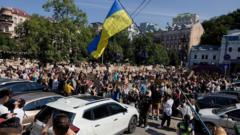
Ukrainian President Volodymyr Zelensky's surprise decision to replace popular Defence Minister Mykhailo Fedorov has triggered protests in Kyiv and other cities, along with anger from civil society and MPs. Crowds, mostly of young people, gathered on Thursday morning carrying signs reading "Hands off Fedorov" and "Stop sabotaging victory!", chanting "Shame!" The move exposed a bitter rift at the top of Ukraine's war effort, with Fedorov confirming he had urged Zelensky to replace Commander-in-Chief Oleksandr Syrskyi and General Staff Chief Andrii Hnatov, accusing Syrskyi of blocking reform initiatives and "splitting our country" rather than finding ways to defeat Russia.
By evening, Zelensky had named Maj-Gen Yevhenii Khmara, acting head of the Security Service, as acting defence minister, praising his experience with "technological combat operations". Fedorov, 35, had held the post only since January but was credited with revitalising the ministry through anti-corruption efforts and data-driven analysis of front-line performance; he declined Zelensky's offer to stay on as an adviser. Syrskyi responded coolly on Telegram, defending his record and wishing Fedorov well, while MPs were due to vote on a potential replacement, interior minister Ihor Klymenko, though Zelensky said no formal nomination had been made. The reshuffle also saw parliament confirm Serhiy Koretsky as prime minister after Yuliia Svyrydenko's resignation.
In short
- Zelensky sacked defence minister Fedorov, sparking street protests in Ukraine
- Move revealed rift between Fedorov and army chief Syrskyi
- Maj-Gen Yevhenii Khmara named acting defence minister
Steelman: both sides, in good faith
The strongest fair case each way — we don't pick a winner.
The case for
The protesters and civil society figures backing Fedorov argue that his removal undermines crucial reform efforts at a critical time in Ukraine's conflict. Though newly appointed, Fedorov was already credited with anti-corruption initiatives and data-driven analysis of military performance—precisely what the defence ministry needed to function effectively. His supporters contend his removal, seemingly as punishment for advocating changes to military leadership, prioritises personal loyalty over the professional, merit-based governance Ukraine's military requires, and they worry it signals retreat from the anti-corruption standards the country has fought to establish.
The case against
Those supporting Zelensky's decision argue that during an existential military conflict, unified command and strategic stability must be paramount concerns. Fedorov's public disputes with senior military commanders and apparent campaign to replace them risked fragmenting the military precisely when it must function as a coordinated whole against Russia's ongoing threat. They contend that replacing him with Khmara, whose security background emphasises technological operations, represents a necessary adjustment to ensure cohesive defence ministry leadership, even if reform initiatives—valuable in peacetime—must temporarily yield to the demands of effective wartime command.
Explained simply
President Volodymyr Zelensky has removed Ukraine's Defence Minister Mykhailo Fedorov, sparking protests in Kyiv and across the country. The reshuffle has exposed disagreements within Ukraine's military and political leadership during the country's war with Russia. Young Ukrainians gathered in the streets carrying signs in support of Fedorov and opposing the decision.
Fedorov had been defence minister since January and was credited with anti-corruption reforms and modernising the ministry's approach to the war. Despite his short time in the role, he had become popular with the public and influential in government. Fedorov confirmed he had urged Zelensky to replace senior military commanders, including Commander-in-Chief Oleksandr Syrskyi, saying they were blocking necessary reforms.
The tensions reflect fundamental disagreements about how Ukraine should conduct the war with Russia. Fedorov accused certain military leaders of resisting necessary changes and harming the war effort. These divisions at the highest levels of Ukraine's government and military come at a critical moment for the country's security.
Europe Government Politics World