Hegseth’s livestreamed firing squad plan revives prospect of public execution
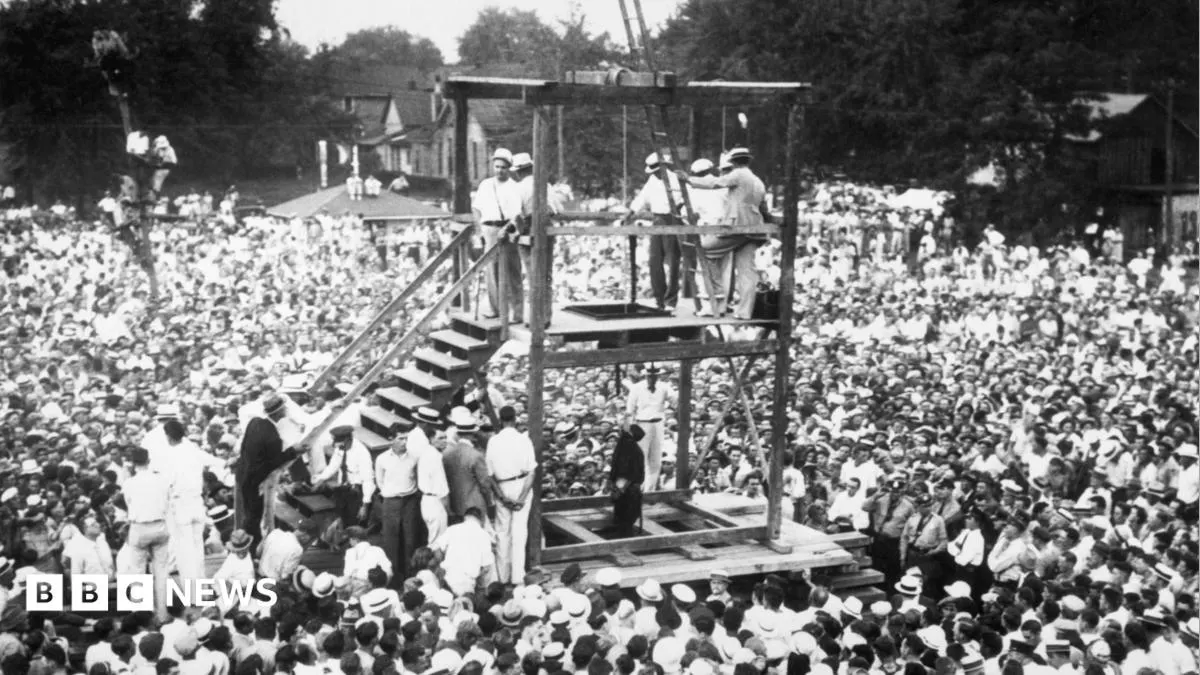
US Defence Secretary Pete Hegseth has announced that Nidal Hasan, convicted of killing 13 soldiers at Fort Hood in 2009, will be executed by firing squad, with the Pentagon saying the execution will be livestreamed. The plan revives the prospect of a public execution in the United States nearly 90 years after the last widely attended cases, prompting alarm among scholars and people connected to that history.
Rainey Bethea’s 1936 hanging in Kentucky drew an estimated 20,000 spectators and was followed by a state ban on public executions; a lesser-known hanging in Missouri the next year was the last public execution in the country. Support for the death penalty has fallen from 80% in 1994 to 52% today, according to a capital-punishment scholar cited in the article. The article says it is not yet clear how Americans view livestreaming an execution, though the technology could reach far more people than gathered in Kentucky.
- The Pentagon says Hasan’s execution will be livestreamed.
- His case would revive public execution in the US.
- US death-penalty support is reported at 52%.
New here? Start with this
Nidal Hasan is an Army psychiatrist convicted of killing 13 soldiers at Fort Hood, a military base in Texas, in 2009. The attack was one of the most serious incidents of violence at a US military installation in recent times and raised significant questions about security protocols.
The United States conducted public executions until the 1930s. The last widely attended execution was Rainey Bethea's 1936 hanging in Kentucky, which drew approximately 20,000 spectators and prompted the state to ban public executions. A hanging in Missouri the following year proved to be the final public execution in the country.
Public support for the death penalty has shifted significantly in recent decades. In 1994, around 80 per cent of Americans favoured it, but support has fallen to roughly 52 per cent today. This declining support is relevant to understanding why the prospect of a public execution is significant in contemporary America.
Both sides, in good faith
The strongest fair case each way — we don't pick a winner.
The case for
Proponents argue that if capital punishment is lawful policy, the state should conduct it transparently so that the public—in whose name execution is carried out—can witness and scrutinise the process. They contend that concealing state actions from public view contradicts democratic principles and creates opportunities for abuse or irregularity, and that citizens deserve to see the reality of what their government does, whatever their personal views on capital punishment.
The case against
Opponents contend that transparency and accountability need not require public spectacle, and draw on historical precedent from the 1936 Kentucky execution that drew thousands, arguing that mass viewership of execution can transform it from solemn judicial act into widespread spectacle with brutalising societal effects. They maintain that accountability is adequately served through designated witnesses and transparent reporting whilst preserving the condemned person's dignity and execution's gravity.
Read the full article at the source →
Originally published by BBC World as “Public executions in the US stopped nearly a century ago – why are they resuming now?”.