World news and discussion on TalkFuse.
Hegseth’s livestreamed firing squad plan revives prospect of public execution
Developed over time first seen 2 months ago
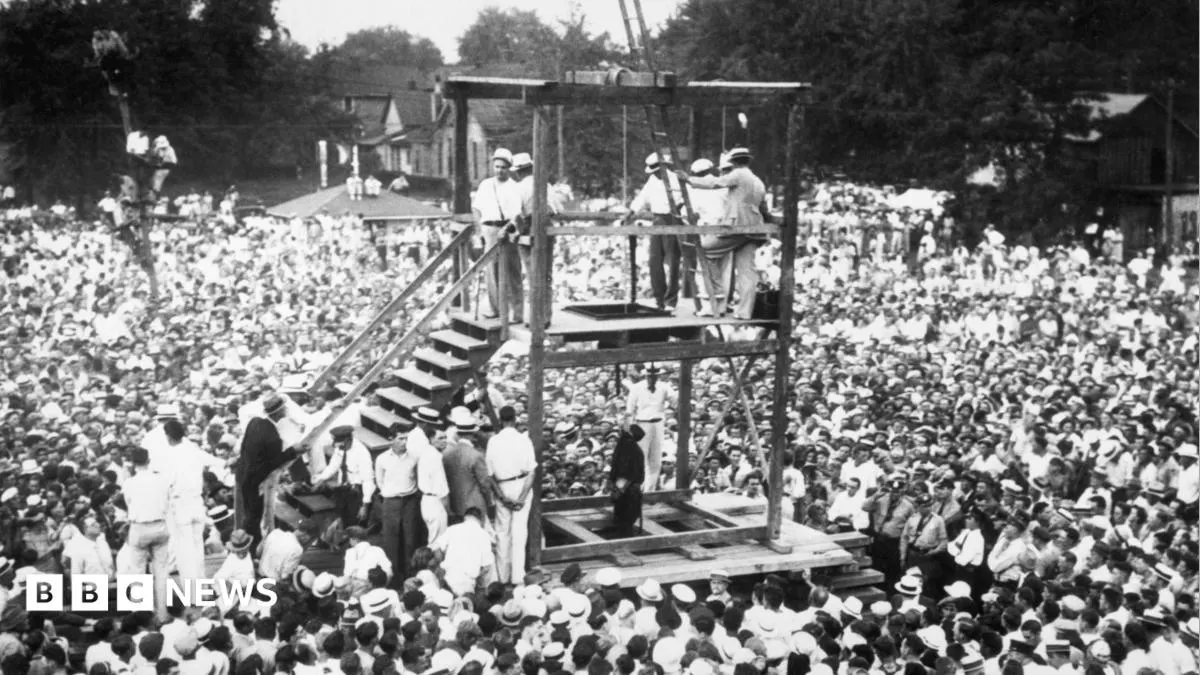
Newly added coverage highlights the historical parallels and public reaction to Defence Secretary Pete Hegseth’s announcement that Nidal Hasan’s execution by firing squad will be livestreamed. The plan revives the prospect of a public execution in the US, more than 90 years after a widely attended hanging helped prompt a move towards private executions.
An estimated 20,000 people watched Rainey Bethea’s hanging in Kentucky in 1936; the state outlawed public executions 18 months later, and a Missouri hanging in 1937 was the last in the US. Capital-punishment scholar Michael Radelet says support for the death penalty has fallen from 80% in 1994 to 52% now. Author Sonya Lea, whose grandparents attended Bethea’s hanging, says livestreaming could extend the spectacle far beyond the crowd in Kentucky.
- Sources
- 3
- Outlets
- 2
- Left · Centre · Right
- 0 · 3 · 0
In short
- Hegseth says Hasan’s firing-squad execution will be livestreamed.
- The plan echoes a 1936 hanging watched by 20,000 people.
- US support for the death penalty has fallen to 52%.
How this story developed
- 2 months ago The article adds historical context to Defence Secretary Pete Hegseth’s announcement that the execution of Nidal Hasan, who killed 13 fellow soldiers in 2009, will be carried out by firing squad and livestreamed.
- 2 months ago Newly added coverage highlights the historical parallels and public reaction to Defence Secretary Pete Hegseth’s announcement that Nidal Hasan’s execution by firing squad will be livestreamed.
- 2 months ago US Defence Secretary Pete Hegseth has announced that Nidal Hasan, convicted of killing 13 soldiers at Fort Hood in 2009, will be executed by firing squad, with the Pentagon saying the execution will be livestreamed.
Steelman: both sides, in good faith
The strongest fair case each way — we don't pick a winner.
The case for
Proponents argue that if capital punishment is lawful policy, the state should conduct it transparently so that the public—in whose name execution is carried out—can witness and scrutinise the process. They contend that concealing state actions from public view contradicts democratic principles and creates opportunities for abuse or irregularity, and that citizens deserve to see the reality of what their government does, whatever their personal views on capital punishment.
The case against
Opponents contend that transparency and accountability need not require public spectacle, and draw on historical precedent from the 1936 Kentucky execution that drew thousands, arguing that mass viewership of execution can transform it from solemn judicial act into widespread spectacle with brutalising societal effects. They maintain that accountability is adequately served through designated witnesses and transparent reporting whilst preserving the condemned person's dignity and execution's gravity.
Explained simply
Nidal Hasan is an Army psychiatrist convicted of killing 13 soldiers at Fort Hood, a military base in Texas, in 2009. The attack was one of the most serious incidents of violence at a US military installation in recent times and raised significant questions about security protocols.
The United States conducted public executions until the 1930s. The last widely attended execution was Rainey Bethea's 1936 hanging in Kentucky, which drew approximately 20,000 spectators and prompted the state to ban public executions. A hanging in Missouri the following year proved to be the final public execution in the country.
Public support for the death penalty has shifted significantly in recent decades. In 1994, around 80 per cent of Americans favoured it, but support has fallen to roughly 52 per cent today. This declining support is relevant to understanding why the prospect of a public execution is significant in contemporary America.
Coverage · 3 sources
Bias meters
From 3 rated sources.
Read the full article at the source →
Originally published by BBC World as “Public executions in the US stopped nearly a century ago – why are they resuming now?”.