Technology news and discussion on TalkFuse.
Qualcomm opens customer trials of Dragonfly AI inference racks
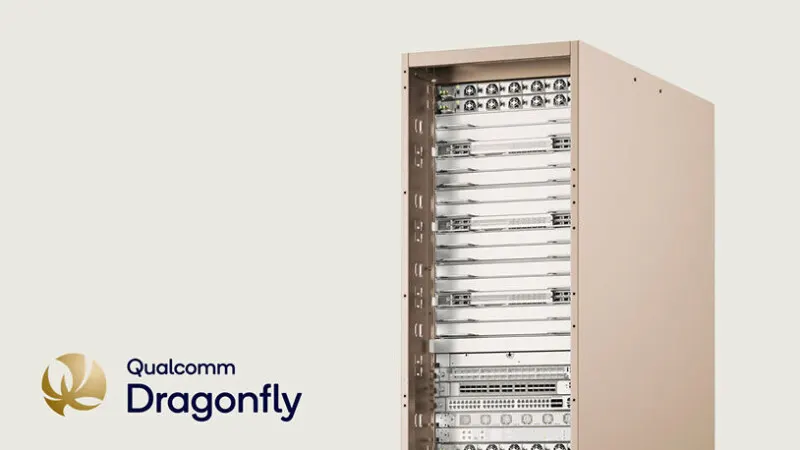
Qualcomm has opened cloud-based trials of its Dragonfly AI200 rack-scale system for selected customers, through Cirrascale Cloud Services. The system is aimed at running AI inference workloads, with Qualcomm arguing it could lower power and operating costs compared with Nvidia-based alternatives.
Each AI200 card has 768 GB of LPDDR memory, and a liquid-cooled rack with 56 cards provides about 43 TB. Qualcomm says it can support models from 7 billion to 10 trillion parameters, including long-context and agentic workloads; however, its use of LPDDR rather than the faster, more costly HBM3e used in Nvidia’s Blackwell systems means the claimed performance and savings remain to be assessed. Trials are available through Cirrascale’s AI Innovation Cloud, with a path to production deployments.
In short
- Qualcomm is offering selected customers cloud trials of its AI200 system.
- A 56-card rack provides about 43 TB of memory.
- Customers can assess its performance and costs against alternatives.
Steelman: both sides, in good faith
The strongest fair case each way — we don't pick a winner.
The case for
Qualcomm’s trials could give customers a credible alternative for inference, where power use and operating costs can matter as much as peak memory speed. Its large LPDDR capacity may suit long-context and agentic workloads, and cloud trials let customers assess real-world performance before committing to deployments.
The case against
The claims of lower costs and power use remain unproven until customers test the racks against their own workloads and comparable systems. LPDDR is less costly than HBM3e but slower, so its large memory capacity may not compensate where bandwidth is critical; early trials also do not establish that the system is ready to match established alternatives at scale.
Explained simply
AI inference is the stage when a trained AI model responds to questions or generates content. It takes place each time a service uses a model, so the computing systems that handle it can affect how quickly and cheaply an AI product runs.
Qualcomm makes chips and other technology, while Nvidia is a major supplier of systems used to run AI models. Cirrascale provides cloud computing services, letting customers try specialist hardware without first buying and installing it themselves.
The systems in this story use LPDDR memory, a type commonly found in phones and computers; Nvidia’s Blackwell systems use HBM3e, designed for high-performance computing. The comparison matters because memory speed, power use and cost can all affect whether a system is practical for large models and heavy workloads.
Read the full article at the source →
Originally published by The Register as “Qualcomm offers test drive of its rack-scale Nvidia AI challenger”.