Quantum computers outperform classical ones, with results you can trust
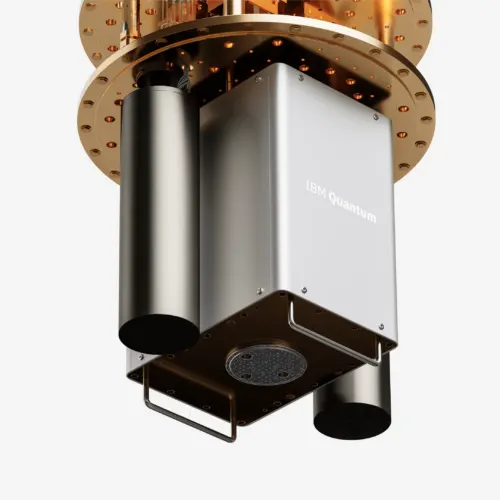
IBM has announced three new experiments which it says demonstrate a “quantum advantage”: quantum processors produced results beyond practical classical simulation while using methods intended to show the answers can be trusted. This matters because previous claims have often been weakened by improved classical algorithms, and because today’s error-prone quantum machines can produce outputs too complex for conventional computers to verify directly.
One project, involving IBM, Japan’s RIKEN and error-mitigation firm Qedma, modelled a Floquet quantum process using an Ising model, in which a grid of interacting magnets changes over time. Researchers used creative error-handling and validation approaches rather than relying solely on smaller, classically checkable versions of the same calculation. The results are not immediately commercially useful, but IBM argues they provide stronger evidence that current hardware is progressing towards reliable quantum computation.
In short
- IBM reports three verifiable demonstrations of quantum advantage.
- Error-prone quantum results remain difficult to validate.
- The work is promising but not yet practically useful.
Steelman: both sides, in good faith
The strongest fair case each way — we don't pick a winner.
The case for
IBM’s experiments may mark meaningful progress because they report results beyond practical classical simulation and use error-handling and validation methods designed to make the outputs more credible. Even without immediate commercial use, such evidence could help show that today’s imperfect quantum hardware is advancing towards reliable computation.
The case against
The findings are an announced research milestone, not proof of broadly useful quantum computing: the model has no immediate commercial application, and the machines remain error-prone. Since trust depends on validation methods rather than direct classical checking, a cautious reading is that the results support progress but do not yet establish a durable or practically significant advantage.
Explained simply
Quantum computers are machines that process information in fundamentally different ways from the computers we use daily. They exploit properties of quantum physics to potentially solve certain complex problems much faster than traditional machines. However, demonstrating that quantum computers can genuinely outperform classical computers in practical ways has proved surprisingly difficult.
Previous claims of quantum advantage have been undermined when scientists developed better algorithms for classical computers, narrowing or closing the gap. Additionally, today's quantum computers are prone to errors, and their answers are often so complex that conventional computers cannot easily verify whether they are correct. This leaves a puzzle: how can you trust a quantum computer's result if you cannot check it?
This latest announcement attempts to address these challenges by using improved error-correction and validation methods alongside experiments designed to be verifiable. The work involves IBM, Japanese research institute RIKEN, and quantum firm Qedma, and whilst the current results are not yet commercially useful, researchers argue they represent meaningful progress towards quantum computers that produce reliable answers.