Questions still haunt Houdini’s Halloween death 100 years later
Developed over time first seen 5 hours ago
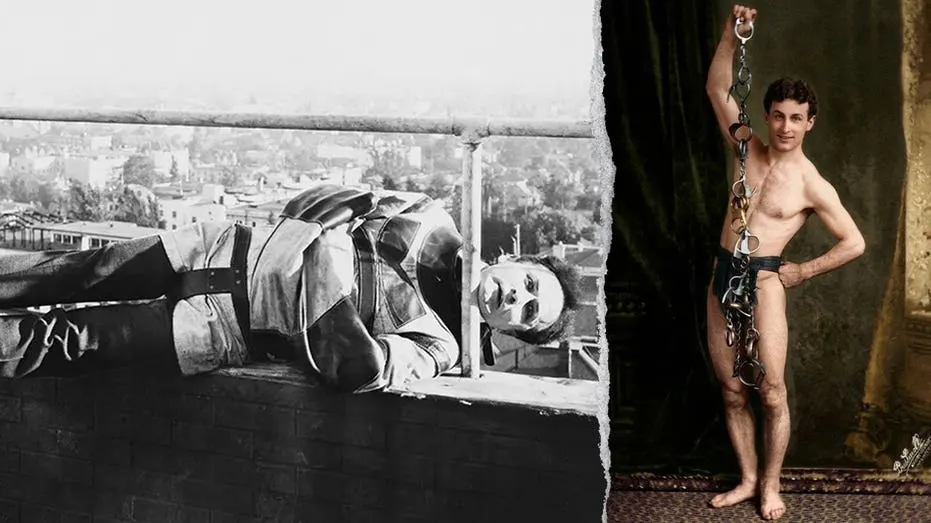
Harry Houdini, the Hungarian-born escape artist and magician, died on 31 October 1926, aged 52. His recorded cause of death was peritonitis after a ruptured appendix, but uncertainty about the events before his death has kept alternative theories alive for a century.
Nine days before he died, student J. Gordon Whitehead punched Houdini in the stomach while he was unprepared. Historians say the blows may have distracted him from appendicitis symptoms, delaying treatment, though they have not been proved to have caused the condition. His insurer paid his family an additional $25,000 because his death was attributed to an accident, and his wife Bess held Halloween séances for ten years in an unsuccessful attempt to contact him.
- Sources
- 2
- Outlets
- 1
- Left · Centre · Right
- 0 · 0 · 2
In short
- Houdini died of peritonitis in 1926, aged 52.
- Punches days earlier may have delayed medical attention.
- His wife held Halloween séances for ten years.
How this story developed
- 2 hours ago Harry Houdini, the Hungarian-born escape artist and magician, died on 31 October 1926, aged 52. His recorded cause of death was peritonitis after a ruptured appendix, but uncertainty about the events before his death has kept alternative theories alive for a century.
Full account
Harry Houdini died on Halloween in 1926, aged 52. A century later, the circumstances of the escape artist’s final illness still attract questions. The recorded cause of death was peritonitis following a ruptured appendix, but a confrontation in his dressing room nine days earlier has made the sequence of events unusually difficult to disentangle.
Born Erik Weisz in Hungary, Houdini moved to the United States with his family as a young child. He became an international star through acts that seemed to place him in immediate danger: restraints, locked containers and escapes performed under pressure. His reputation for surviving such ordeals has helped turn the story of his death into a mystery, even though the medical record gives a clear immediate cause.
On 22 October 1926, a university student named J. Gordon Whitehead visited Houdini backstage at a theatre in Montreal. According to accounts described by historians, Whitehead asked whether Houdini could withstand punches to the stomach. Houdini agreed, but was reclining when the blows began and had no chance to prepare himself. Another person in the room reportedly intervened to stop Whitehead.
The timing has prompted a lasting question: did the punches cause Houdini’s appendicitis? That link has never been established. Houdini historian and biographer John Cox offers a different explanation. He suggests that the pain from the blows may have led Houdini to mistake or discount symptoms of an illness already developing. On that account, the encounter mattered because it delayed treatment, rather than because it caused the appendix to become inflamed.
Houdini’s appendix subsequently ruptured, leading to peritonitis, a serious infection. The available account does not settle exactly when appendicitis began or whether earlier care would have saved him. It does, however, explain why the backstage incident remains central to discussion of his death: a dramatic event occurred just before a fatal illness whose early symptoms could also have involved abdominal pain.
Other explanations have circulated for decades. Some have proposed an intestinal blockage; others have suspected people involved in spiritualism, whose claims Houdini had been publicly challenging. Neither theory displaces the recorded cause of death on the evidence presented in the supplied reports. Popular culture has added another misconception: a 1953 film portrayed Houdini as dying after failing to escape his Water Torture Cell, although that was not how he died.
Where outlets differ
From the full account, which is AI-written from the sources:
Both supplied reports are from Fox News. The first emphasises the Montreal punches, the recorded cause of death and competing theories; the second chiefly describes Fox Nation’s AI-generated anniversary series and its production. The second gives little detail about the medical debate.
Explained simply
Harry Houdini was a Hungarian-born magician and escape artist whose daring performances made him famous. He died in 1926, aged 52, after his appendix ruptured and he developed peritonitis, a serious infection inside the abdomen.
Nine days before his death, student J. Gordon Whitehead punched Houdini in the stomach while he was unprepared. Historians say the blows may have distracted Houdini from signs of appendicitis and delayed medical care, but they have not been shown to have caused the illness.
The circumstances mattered to Houdini’s family as well as to his legacy: his insurer paid an extra $25,000 because his death was classed as an accident. His wife, Bess, also held séances on Halloween for ten years, hoping to contact him, without success.
Coverage · 2 sources
Bias meters
From 2 rated sources.