Rainmakers: The drones used to seed clouds
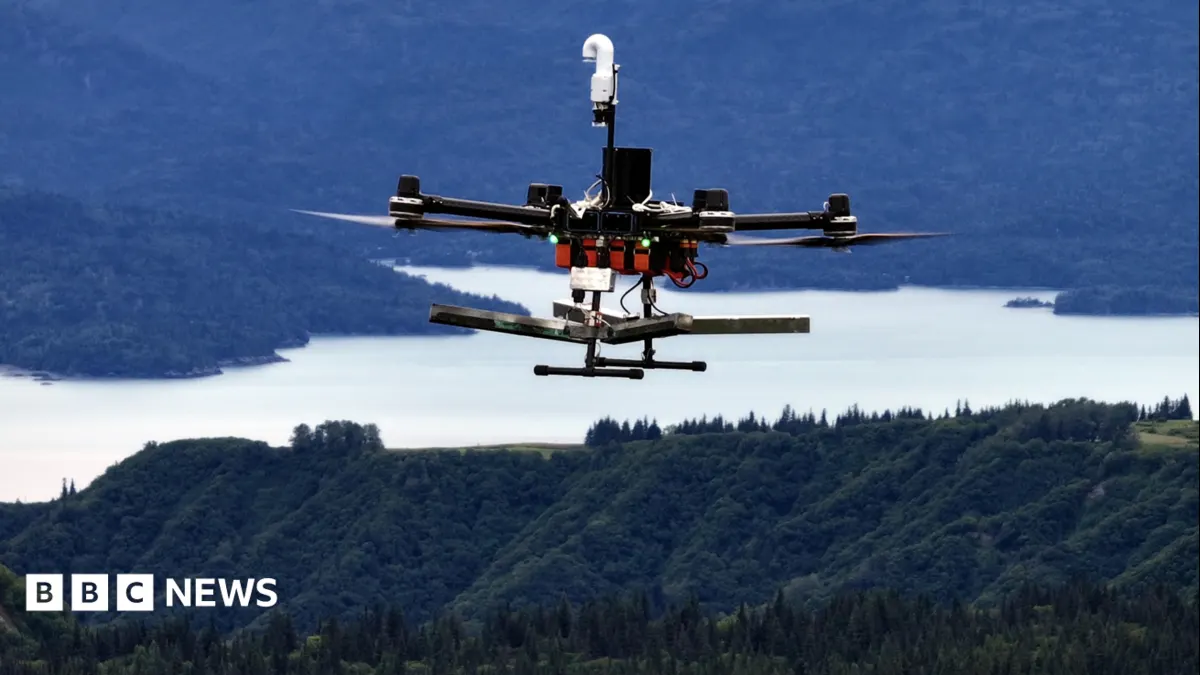
Rainmaker, a San Francisco start-up, used drones to seed clouds over Homer, Alaska, on 23 August, dispersing silver iodide to encourage rainfall. The trial drew concern because residents were not widely informed, while questions remain about the environmental effects and how much extra water cloud seeding can reliably produce.
The company says the operation generated 19 million US gallons of water in three hours, equivalent to about 0.01 inches of rain across 100 square miles. Rainmaker’s chief executive says each flight releases 20 grams of silver iodide, which he argues creates ground concentrations far below US safety limits. Cloud seeding dates back to 1946 and is used or under development in more than 50 countries, but it depends on suitable clouds and weather conditions.
- Rainmaker seeded clouds over Homer, Alaska, using drones.
- The company claims the trial produced 19 million US gallons in three hours.
- Residents and environmental advocates question monitoring and safety.
New here? Start with this
Cloud seeding is the practice of dispersing substances, typically silver iodide particles, into clouds to encourage the formation and falling of rain. The technique has been attempted since the 1940s and is now used or being tested in more than 50 countries as various governments and companies seek to address water shortages and drought.
The motivation is straightforward: as droughts become more frequent and severe due to climate change, governments and water utilities look for ways to stretch limited water supplies. However, scientists remain uncertain about how much additional rainfall cloud seeding actually produces, and there are ongoing concerns about the environmental impact of releasing chemicals into the atmosphere and whether the public is adequately informed about such operations.
These questions take on fresh relevance as new technologies and commercial operators enter the field with novel approaches to cloud seeding. The technique's effectiveness depends on having suitable clouds and weather conditions, so results are never guaranteed, yet continued investment and interest suggest that many still view it as a promising tool in addressing water scarcity.
Both sides, in good faith
The strongest fair case each way — we don't pick a winner.
The case for
Cloud seeding is an established technology with over seven decades of proven use in more than fifty countries, and the potential to generate significant additional water supplies in drought-affected regions makes careful development of this tool genuinely important for climate adaptation. The company contends that silver iodide dispersal occurs at concentrations well below established safety thresholds, and the innovation of drone-based delivery could make the approach more efficient and accessible to communities facing water stress.
The case against
This operation highlights legitimate concerns about community consent and environmental caution. Residents were not adequately informed before the trial, raising serious questions about transparency and the autonomy of affected communities over activities in their region. Moreover, the long-term environmental effects of silver iodide accumulation remain insufficiently studied, and the actual water yield reported—0.01 inches across 100 square miles—appears modest relative to these environmental and social risks.