‘Ramayana’ Sets November Release Date
Developed over time first seen 2 months ago
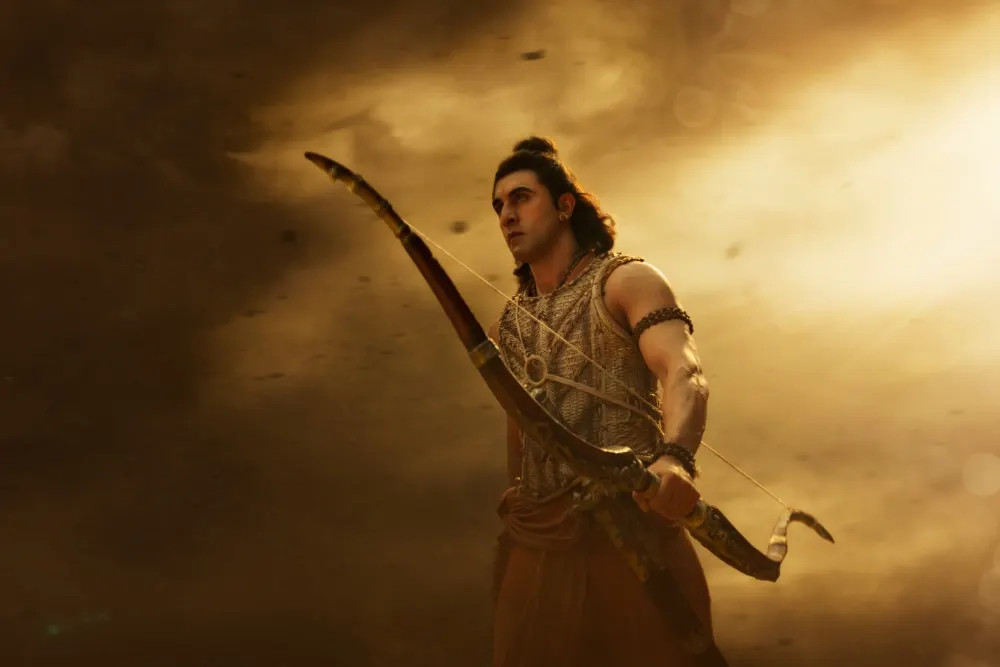
Sony Pictures Entertainment has confirmed that "Ramayana", its two-part epic adaptation of the ancient Hindu saga, will open globally on 6 November, with detail released on its creative team and technical scale. Directed by Nitesh Tiwari and starring Ranbir Kapoor, Yash and Sai Pallavi, the film retells the story of exiled prince Rama, his consort Sita and the war triggered by her abduction by the demon king Ravana. The project pairs major Hollywood craft talent with Bollywood's biggest names in an attempt to bring Indian mythology to a global mainstream audience, releasing in multiple languages including English.
The score comes from Hans Zimmer and A.R. Rahman, with action choreography by Terry Notary and Guy Norris and production design by Ramsey Avery and Ravi Bansal; visual effects are handled by eight-time Oscar-winning house DNEG, known for "Dune", "Interstellar" and "Inception". Both parts were filmed for Imax and produced by Namit Malhotra's Prime Focus Studios and Yash's Monster Mind Creations, with Karan Johar's Dharma Productions handling Indian distribution. Part 1 releases in the Diwali holiday window on 6 November, deliberately timed to coincide with the festival that marks Rama's mythical homecoming, while Part 2 is set for Diwali 2027; Tiwari, director of India's highest-grossing film "Dangal", works from a screenplay by Shridhar Raghavan.
- "Ramayana" Part 1 opens globally 6 November, timed to Diwali
- Stars Ranbir Kapoor, Yash and Sai Pallavi; directed by Nitesh Tiwari
- Score by Hans Zimmer and A.R. Rahman; VFX by DNEG; Part 2 due Diwali 2027
New here? Start with this
Sony's "Ramayana" is a big-budget, two-part film based on one of Hinduism's oldest and most widely known epics, the story of Prince Rama, his wife Sita, and the demon king Ravana who abducts her, sparking a war. The story has deep religious and cultural significance across South Asia and among the Hindu diaspora worldwide, so bringing it to the screen carries weight beyond ordinary blockbuster filmmaking.
The film is notable for blending major Hollywood and Bollywood talent. It is directed by Nitesh Tiwari and stars Indian actors Ranbir Kapoor, Yash and Sai Pallavi, while its music, effects and design teams include Hollywood names such as composer Hans Zimmer and the visual effects studio DNEG, alongside Indian composer A.R. Rahman. This pairing reflects an ambition to give the project international reach rather than releasing it solely for Indian audiences.
The release strategy is also tied to the story's cultural roots: part one is timed to Diwali, the Hindu festival that itself celebrates Rama's return home, with part two following on Diwali two years later. It is being made by production companies linked to Yash and producer Namit Malhotra, with Karan Johar's Dharma Productions distributing in India, underlining how the project sits at the intersection of Indian and global film industries.
Full account
Sony Pictures Entertainment has confirmed that its two-part epic "Ramayana" will open globally on 6 November, timed to coincide with the Diwali holiday period. The film, directed by Nitesh Tiwari, stars Ranbir Kapoor as the exiled prince Rama, Sai Pallavi as his wife Sita, and Yash as the demon king Ravana, whose abduction of Sita triggers the war between good and evil at the heart of the ancient Hindu narrative. A second instalment is scheduled to follow on Diwali 2027.
The production draws on major international talent alongside its Indian cast and crew. Hans Zimmer and A.R. Rahman have composed the score together, while Terry Notary and Guy Norris have overseen action choreography and Ramsey Avery and Ravi Bansal have handled production design. Namit Malhotra's Prime Focus Studios is producing, with Yash's Monster Mind Creations also credited as a producer. Sony is releasing the film internationally, including an English-language version, while distribution within India will be managed separately by Karan Johar's Dharma Productions.
Coverage frames "Ramayana" as a large-scale attempt to bring the 5,000-year-old Sanskrit epic to a global cinema audience, with both parts shot for Imax and visual effects supplied by DNEG, the studio behind work on "Dune," "Interstellar" and "Inception." A trailer released over the summer previewed elaborate battle sequences and effects-driven mythological imagery, and reports note the symbolic weight of the November release date: Diwali traditionally commemorates Rama's homecoming to Ayodhya after fourteen years in exile and his defeat of Ravana, with the festival's lamps said to represent the city's welcome to its returning prince.
Tiwari, whose earlier film "Dangal" remains India's highest-grossing release, directs from a screenplay by Shridhar Raghavan. Coverage is consistent on the core details of cast, release date and creative team, though outlets vary in how much context they provide beyond the basic announcement, with some placing greater emphasis on the production's scale and symbolism and others sticking closely to the bare facts of the release.
Where outlets differ
One outlet gives a detailed plot description (Sita's abduction, the war between righteousness and evil) and explains the religious/cultural significance of the Diwali release date, while the other outlet instead quotes the official studio synopsis verbatim, which is worded more vaguely around 'love, duty and destiny.'
Only one source mentions that the film was shot for Imax and names DNEG as the visual effects house, along with its award pedigree and credits on films such as 'Dune' and 'Interstellar' — the other source omits this entirely.
Only one source notes Tiwari's prior film 'Dangal' as India's highest-grossing film and names screenwriter Shridhar Raghavan, and only one explicitly credits Yash's Monster Mind Creations as a producer and Karan Johar's Dharma Productions as the Indian distributor.
One source explicitly states that Sony's release covers territories outside India, implying a separate Indian distribution arrangement, which the other source leaves largely implicit.