Rayo Vallecano to move stadium over Legionnaires risk
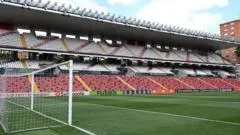
Rayo Vallecano have been indefinitely barred from playing at their Estadio de Vallecas home ground, less than three weeks before the new La Liga season begins, after an audit found a risk of Legionnaires' disease. The regional government of Madrid, which owns the stadium and leases it to the club, suspended Rayo's licence to host matches, citing accumulated refuse and debris that could cause disease outbreaks or fires, alongside electrical faults. No alternative venue has yet been confirmed, leaving the club's opening fixtures in doubt.
Madrid's regional head of sport, Mariano de Paco, said Rayo had failed to comply with requests for maintenance work and proof of water quality, describing the situation as having reached "a point of no return" and calling it "intolerable". Urgent repairs are set to begin immediately and could take two to six months, while club president Raul Martin Presa, long criticised by fans for poor upkeep, could not be reached. The stadium, built in 1976 and the smallest in La Liga, has faced repeated complaints, including an "unplayable" pitch last season and a forced away-venue switch against Atletico Madrid in February; a two-year renovation plan to expand capacity to 18,500 was proposed last month, while Rayo's first home game, against Alaves, remains scheduled for 20 August.
- Rayo Vallecano's stadium licence suspended over Legionnaires' disease risk.
- Madrid regional government cites poor maintenance and safety failures.
- No alternative venue confirmed before season starts 20 August.
New here? Start with this
Rayo Vallecano is a football club in Spain's elite La Liga division. Their home ground, Estadio de Vallecas, is owned by Madrid's regional government, which has suspended the club's licence to play matches there. The decision stems from health and safety concerns, including a risk of Legionnaires' disease—a serious bacterial infection transmitted through contaminated water systems—along with electrical faults and accumulated debris.
The suspension creates an immediate practical problem for the club: they must find a temporary venue whilst repairs are carried out, and the new La Liga season begins in less than three weeks. Authorities say the club failed to complete required maintenance work and did not provide proof of adequate water quality. Repairs are expected to take between two and six months.
The stadium, built in 1976, is the smallest in La Liga and has a history of maintenance problems. Previous complaints have included pitch defects and other facility concerns. The club had announced renovation plans recently to improve the stadium, but those are now superseded by the urgent need to address the health and safety issues.
Both sides, in good faith
The strongest fair case each way — we don't pick a winner.
The case for
Public health safety cannot be compromised. An audit identified a genuine risk of Legionnaires' disease—a potentially fatal condition—alongside accumulated debris and electrical faults. The club failed to comply with maintenance requests despite prior complaints. The government, as stadium owner, has a legal duty to protect the public, and immediate suspension is the only responsible action when such health hazards are confirmed.
The case against
Whilst the health concerns require urgent remediation, the government's response was executed negligently and unfairly penalises athletes and supporters. Imposing an indefinite ban weeks before the season without arranging alternative venues forces forfeiture of opening fixtures, penalising those with no responsibility for the president's negligence. The regional government, as stadium owner, shares responsibility for deterioration and should have addressed it earlier or arranged repairs during the off-season. A responsible approach would have set firm remediation deadlines and temporary alternative venues rather than sudden suspension.