Science news and discussion on TalkFuse.
UN forecasts record El Niño to persist into 2027
Developed over time first seen 3 months ago
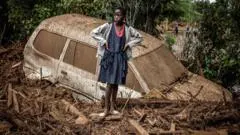
The World Meteorological Organization (WMO) has issued its most emphatic forecast yet, warning of a "nearly 100% likelihood" that this year's exceptionally strong El Niño will persist through February 2027. The UN weather agency said the event, driven by unusually warm eastern tropical Pacific waters, is on track to be the strongest on record, prompting UN Secretary-General António Guterres to warn that the world has entered a "danger zone" of extreme weather as El Niño's effects compound with existing man-made climate change.
El Niño typically raises global average temperatures by 0.1–0.2°C, but scientists expect this year's intensified version to push 2026 towards being the hottest year on record, with the delayed effects likely making 2027 even hotter still. Impacts are already visible: the US has just experienced its hottest summer on record, droughts have worsened Sudan's hunger crisis via low Nile water levels, Puerto Rico has introduced water rationing, and eastern Pacific fisheries have been disrupted. Climate scientist Daniel Swain cautioned that the scale of this El Niño makes its full consequences hard to predict but said they will "almost certainly" be dramatic.
- Sources
- 2
- Outlets
- 2
- Left · Centre · Right
- 0 · 1 · 0
In short
- WMO predicts record-strength El Niño will last through February 2027
- UN warns of a "danger zone" of extreme weather worldwide
- Droughts, heatwaves and fishery disruptions already being felt globally
How this story developed
- 3 months ago Guterres escalated his language further, describing the event as being "supersized before our eyes" and citing rising sea temperatures alongside the WMO's explanation that its unprecedented confidence stemmed from unusually strong agreement across its forecasting models, while scientist Daniel Swain now called it potentially the largest climate event anyone alive has witnessed.
- 3 months ago UN officials sharpened the messaging by branding the phenomenon "supersized" and stressing that its unprecedented intensity now required governments and infrastructure worldwide to actively prepare for widespread disruption to agriculture and water supplies, rather than simply monitoring the threat.
- 3 months ago The World Meteorological Organization declared it near-certain that an unusually powerful El Niño would last through February 2027, with UN chief António Guterres cautioning that compounding heat had pushed the planet into a "danger zone" already marked by record US summer heat, worsening Sudanese hunger, Puerto Rican water rationing and disrupted Pacific fisheries.
Full account
The United Nations has warned that the world has entered a "danger zone of extreme weather" as a historically powerful El Niño takes hold, with forecasters predicting it will influence global weather patterns until at least February 2027. The World Meteorological Organization (WMO), the UN's specialist weather and climate agency, said sea surface temperatures in the tropical Pacific had risen so sharply that this El Niño could prove the strongest since comparable records began around 1950. UN Secretary-General António Guterres said the phenomenon was being "supersized before our eyes", adding that the planet was in "uncharted waters" that were themselves heating up.
El Niño is a naturally occurring climate pattern in which shifting trade winds allow unusually warm water to spread across the central and eastern Pacific, releasing additional heat into the atmosphere and disrupting rainfall and storm patterns worldwide. Typical consequences include drought in some regions alongside heavier flooding, landslides and more intense typhoons elsewhere; southern Brazil, for instance, suffered severe flooding and landslides linked to a previous episode. Monitoring data showed surface temperatures in the Pacific's key tracking zone already more than 2C above average and heading towards a possible 4C anomaly, with subsurface waters registering anomalies exceeding 8C in places. Warmer-than-normal waters were also being recorded in the Indian Ocean, the tropical Atlantic and off parts of Australia, raising concerns about further marine heatwaves, coral bleaching and algae blooms following recent damage to Australian marine ecosystems.
WMO Secretary-General Celeste Saulo said the event had the potential to inflict a "massive blow" on communities and economies, and described the organisation's response as a "major mobilisation" to get forecasts and warnings to as many vulnerable communities as possible, including strengthened early warning systems and pre-positioned medical assistance. Because El Niño typically adds roughly 0.1–0.2C to global average temperatures on top of the warming already caused by human activity, scientists expect the current year to challenge temperature records, with the delayed effects of the extra heat pushing 2027 higher still. This compounding of natural and human-driven warming comes as separate UN analysis suggested the world was likely to breach 1.5C of warming within the next few years, a threshold long regarded as a critical marker in international climate efforts.
Independent scientists interviewed characterised the scale of the event in stark terms. Climate scientist Daniel Swain said the El Niño was so large that its consequences were not yet fully understood, cautioning against firm predictions of specific impacts while stressing that the overall effects would almost certainly be substantial; he described it as potentially the biggest climate event, short of long-term warming itself, that anyone alive today might experience. In Australia, researchers such as Dr Alistair Hobday linked the natural cycle to the kind of extreme heat that exacerbates marine disasters already worsened by climate change. Taken together, the reports underline that while El Niño is a natural and recurring phenomenon, its unprecedented intensity this time, layered on top of ongoing anthropogenic warming, is prompting unusually unequivocal warnings from both the UN and independent scientists about the risks to lives, livelihoods and ecosystems worldwide.
Where outlets differ
From the full account, which is AI-written from the sources:
The BBC-sourced report focuses more on real-world humanitarian and ecological impacts (Brazil's floods and landslides, Australian marine heatwaves and coral bleaching, WMO's early-warning and medical mobilisation efforts) and gives detailed oceanographic figures (2C, 4C and 8C anomalies).
The Time-style report emphasises the WMO's forecasting language itself, noting it issued a 'nearly 100% likelihood' prediction described as the most certain in the organisation's history, and focuses more on the global temperature record implications (2026 vs 2027) and the 1.5C threshold.
Only the second source quotes climate scientist Daniel Swain, offering a more speculative, uncertainty-focused scientific voice, while only the first source quotes Dr Alistair Hobday specifically on Australian marine ecosystem damage.
The two accounts frame the same Guterres and Saulo quotes similarly, but the first foregrounds the WMO's operational/early-warning response, whereas the second foregrounds the statistical certainty and record-breaking nature of the forecast.
Explained simply
El Niño is a natural climate pattern in which the surface waters of the tropical Pacific Ocean warm up more than usual, disrupting the normal flow of winds and ocean currents. It happens every few years and, because the Pacific plays such a large role in the planet's weather engine, its effects ripple out across the globe, shifting rainfall, temperatures and storm patterns far beyond the ocean itself.
The United Nations, through its meteorological agencies, tracks and forecasts these events because of the wide-reaching disruption they can cause to farming, water supplies, and extreme weather risk in many countries. Past strong El Niño episodes have been linked to droughts in some regions and heavy flooding in others, along with knock-on effects for food prices and economies that depend on predictable seasons.
What makes this episode notable is its projected strength and expected duration, with forecasters suggesting it could persist longer and hit harder than previous events on record. Because El Niño's impact is felt unevenly around the world, understanding it matters both to governments planning for potential disruption and to ordinary people whose local weather, harvests or water supplies could be affected.
Coverage · 2 sources
Climate Geopolitics Politics Science World