Reform UK Leader Pledges Major Tax Cuts as Party Grapples with Funding Scandal
Developed over time first seen 2 months ago
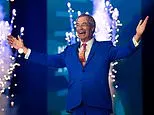
Reform UK's Birmingham conference concluded with the party's tax-cutting agenda overshadowed by a widening row over political donations. Economic spokesman Robert Jenrick used his conference speech to pledge that a Reform government would raise the tax-free personal allowance from £12,570 to £15,000 within its first 100 days in office, staking his job on the promise, while the event was also marked by disorder when protesters interrupted Nigel Farage's keynote and were ejected, with police later appealing for a woman seen being grabbed by the hair to come forward.
The donations scandal deepened after Channel 4 News broadcast footage appearing to show senior officials James Orr and Dan Jukes discussing how to disguise donations from foreign sources, prompting both to step down and the party to launch an internal investigation; home affairs spokesperson Zia Yusuf distanced himself from the pair, and reports suggested the existing police probe into £500,000 of donations to the party could now widen as a result. Farage rejected the allegations as a smear from opponents "scared" of Reform, even as the row ran alongside other conference moments, including deputy Jenrick's pledge that a Farage government would "crush" Argentina over the Falklands and Laila Cunningham's high-profile pitch to become London mayor.
- Reform's £15,000 tax-free allowance pledge overshadowed by donations scandal
- Officials Orr and Jukes quit amid Channel 4 foreign-donations footage
- Police probe into £500,000 donations reportedly set to widen
New here? Start with this
Reform UK, led by Nigel Farage, is a right-wing populist party that has been gaining support in opinion polls and is trying to present itself as a credible alternative government, not just a protest movement. Part of that effort involves setting out concrete policies, such as the tax and spending plans unveiled at its conference in Birmingham, to show it has a serious economic plan rather than just campaign slogans.
At the same time, the party has faced repeated questions about how it is funded and run, including rows over donations and the roles of senior aides. James Orr and Dan Jukes are figures who had held influential positions within the party before being suspended amid the latest controversy, which matters because funding transparency is a recurring vulnerability for smaller, fast-growing parties.
These two threads, ambitious policy announcements and internal disciplinary problems, matter together because they reflect the central challenge facing Reform UK as it tries to grow from an insurgent party into one seen as fit to hold power: convincing voters it has both a workable programme and the internal stability to deliver it.
Both sides, in good faith
The strongest fair case each way — we don't pick a winner.
The case for
Supporters of Reform UK's approach would argue that unveiling a detailed tax-and-spending platform in Birmingham shows a party maturing beyond protest politics into a serious, costed governing proposition, which is precisely what sceptical voters demand before lending their trust. They would point to the swift suspension of James Orr and Dan Jukes as evidence that Farage is willing to act decisively on integrity concerns rather than protect allies, treating transparency over donations as essential to building the credibility any insurgent party needs. On this view, holding firm to an ambitious economic message despite internal turbulence demonstrates discipline and shows the party can walk and chew gum at once.
The case against
Critics would counter that launching major tax-cut pledges at the exact moment a funding scandal breaks looks like a calculated attempt to change the story, and that genuine accountability would involve independent investigation rather than internal suspensions announced by the leader himself. They would question whether tax cuts paired with spending reductions have been rigorously costed, given a pattern of previous policy announcements from insurgent parties later unravelling under scrutiny. They might also see reports of Farage privately reconsidering his political future as a sign of deeper instability at the party's core, suggesting the policy launch is papering over unresolved questions about governance and donor transparency rather than resolving them.
Full account
Nigel Farage used Reform UK's annual conference in Birmingham to promise a package of substantial tax cuts for 'working people', pensioners and small businesses, framing it as central to easing the cost of living and reviving economic growth. Full details were held back for a further announcement, but the party has been examining whether to raise the frozen £12,570 income tax threshold, which critics have dubbed the biggest stealth tax in recent history. Treasury spokesman Robert Jenrick was expected to set out roughly £80 billion of public spending reductions, with more than half coming from the benefits bill, some of which would go towards reducing the deficit and high government borrowing costs, with the remainder funding the tax reductions.
The conference took place against a backdrop of disruption and controversy. Farage's own speech was delayed after a security scare, triggered when Greenpeace activists remotely operated a banner during deputy leader Richard Tice's address, prompting police to sweep the venue for further devices; protesters who had got into the hall also interrupted proceedings more than once. Farage dismissed the funding row engulfing his party as a 'little local difficulty' and accused an organised 'Establishment' campaign of trying to undermine Reform, insisting he would not be knocked off course and that the party remained on course to win the next election, which he suggested could come as early as next year.
The funding controversy centred on secretly filmed footage, reported by Channel 4 News, in which two senior figures – head of policy James Orr and long-time aide Dan Jukes – discussed accepting money from a US company to cover £32,500 in polling costs, an arrangement experts warned could fall foul of electoral law. Separately, the same pair were reportedly filmed discussing a proposed £500,000 donation from an undercover reporter posing as the UK-based son of a fictitious American businessman, in what appeared to be an attempt to circumvent the ban on foreign donations; Farage himself was said to have taken part in some of the discussions. Both men stepped down on Friday, with Farage denying any law had been broken or that 'dodgy money' had been accepted, though he pointedly downgraded his description of Jukes – previously called 'like a son' – to a mere 'contractor', a shift said to have unsettled some senior figures in the party.
Alongside the immediate scandal, associates suggested Farage had privately been reassessing his political future over the summer, worn down by a run of security threats, the freezing of two family members' bank accounts linked to their association with him, and intense media scrutiny, with the murder of Ann Widdecombe cited as a particularly distressing episode. A source close to him denied he was preparing to quit, while donor Arron Banks likewise played down any suggestion he might step back. Farage nonetheless pressed ahead with an ambitious agenda for a prospective first 100 days in office, including halting Channel crossings, cutting energy bills by scrapping Net Zero-related levies, expanding medical training to reduce reliance on overseas doctors and nurses, and warning that Parliament would sit around the clock to force through Reform's legislative programme, with a threat to flood the House of Lords with new appointees if peers stood in the way.
Where outlets differ
One report centres on the tax-cutting and spending-cut agenda unveiled at conference, including the £80bn savings figure and the income tax threshold plan, while the other focuses almost entirely on the funding scandal and Farage's personal and political pressures, giving the tax announcement far less attention.
The scandal-focused account goes into much greater depth on the substance of the Channel 4 allegations (the £32,500 US polling money and the £500,000 fake-donor sting), naming Orr and Jukes and detailing Farage's shifting description of Jukes, none of which appears in the tax-focused account.
Only one source raises the claim that Farage has privately considered his future in politics, citing family security concerns and the murder of Ann Widdecombe, alongside denials from an ally and from donor Arron Banks – a dimension entirely absent from the other report, which instead frames the funding row as a mere 'local difficulty' driven by opponents.
The tax-focused account emphasises Farage's defiance and electoral confidence plus disruption from Greenpeace protesters and conference security scares, details not mentioned in the funding-focused piece.
Coverage
- Daily Mail — Farage pledges billions in tax cuts to boost ‘working people’… as two close aides are suspended following new storm over donations
- Daily Mail — Nigel Farage tells friends he’s been ‘taking stock’ of his political future as two top Reform aides are forced out over latest funding row