Report Reveals Disproportionate Distribution of $560 Million Infrastructure Grants to Labor Electorates
Developed over time first seen 2 months ago
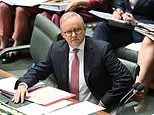
An independent Centre for Public Integrity analysis has found that over 73 per cent of Australia's $560 million Major and Local Community Infrastructure Program was directed to electorates held by the Labor Party, prompting accusations of political favouritism in the grant allocation process. The findings have triggered scrutiny into whether the distribution methodology favours the government's own electoral interests.
The situation is particularly contentious because Prime Minister Anthony Albanese previously criticised the Coalition government for making comparable allocation decisions, arguing against partisan grant distribution. Critics now argue that the current findings represent an inconsistency between his past statements condemning selective fund allocation and the apparent outcome of the government's own infrastructure investment decisions.
- Sources
- 2
- Outlets
- 1
- Left · Centre · Right
- 0 · 0 · 2
In short
- Report shows 73%+ of $560M community infrastructure funding went to Labor-held electorates
- Albanese previously condemned Coalition government for similar grant allocation patterns
- Findings highlight apparent contradiction between government's stated principles and demonstrated practice
How this story developed
- 2 months ago An independent Centre for Public Integrity analysis has found that over 73 per cent of Australia's $560 million Major and Local Community Infrastructure Program was directed to electorates held by the Labor Party, prompting accusations of political favouritism in the grant allocation process.
Full account
A report by the Centre for Public Integrity has found that a $560 million federal scheme to fund community infrastructure disproportionately benefited electorates held by the governing Labor Party. The analysis examined the Major and Local Community Infrastructure Program, an invitation-only grants scheme used to deliver commitments made during the 2025 election campaign, and concluded that more than 73 per cent of the funding allocated was directed to Labor-held seats, compared with roughly 23 per cent for Coalition seats and about four per cent for others.
The centre broke the figures down further, noting that hundreds of millions of dollars went to seats where Labor faced genuine electoral competition, while a much smaller sum went to seats where it did not. Its chair, Anthony Whealy, said that had the money been distributed proportionately, Labor electorates would have received tens of millions of dollars less and non-Labor electorates correspondingly more. He argued the scale of the imbalance raised serious concerns about whether merit or political advantage had driven the allocation, and said the invitation-only process left the public unable to have confidence in the outcome.
Assistant Treasurer Daniel Mulino rejected the suggestion that the scheme amounted to pork barrelling, telling ABC Radio that standing up grants programmes to deliver election commitments after a campaign was long-standing and consistent practice across governments, intended to ensure commitments were honoured in a timely way. That defence did not satisfy crossbench MPs: independent Helen Haines called for a broader overhaul of federal grants processes, arguing taxpayer money should not be used to buy votes and that community need ought to outweigh political calculation, while independent Kate Chaney likened the episode to the Coalition's earlier 'sports rorts' affair, which had seen funding for sporting infrastructure skewed towards Liberal and National seats and ultimately cost minister Bridget McKenzie her cabinet position.
The episode carries a pointed political history, since Labor, and Prime Minister Anthony Albanese in particular, was a vocal critic of the Coalition's use of grants programmes while in opposition, including attacks on both the 'sports rorts' saga and the Howard government's earlier Regional Partnerships Program. Commentary sympathetic to the Coalition seized on this, arguing the近73 per cent figure now attached to Labor mirrors the very proportion Albanese once condemned, and pressed the point that the grants in question have not yet been formally awarded, leaving room for the allocation to be revised. Reporting also diverged on some of the underlying numbers and framing: coverage sourced closer to the centre's own findings emphasised the distinction between Labor-held seats overall and the subset where Labor faced genuine competition, while opinion-driven commentary focused on a slightly different set of dollar figures, highlighted that dozens of electorates received no funding at all, and stressed the absence of any link between the grants and measures of household income or community need.
Where outlets differ
From the full account, which is AI-written from the sources:
Source 1 (ABC-style report) is more measured and quotes both sides directly — the Centre for Public Integrity's chair, the Assistant Treasurer's defence, and crossbench MPs Helen Haines and Kate Chaney — framing the story around process and accountability.
Source 2 (opinion/comment piece) is overtly partisan and critical of Labor, foregrounding claims of hypocrisy by contrasting Albanese's past criticism of the Coalition's 'sports rorts' and the Howard-era Regional Partnerships Program with the current findings.
The two sources cite different dollar breakdowns: Source 1 says $493 million went to seats where Labor was 'competitive' versus $66 million elsewhere, implying Labor should have received about $66 million less and non-Labor seats $116 million more. Source 2 instead says $409 million (73 per cent) went to Labor-held seats outright, calculating an excess of about $118 million, and separately states Labor marginal seats received $66.5 million more than a proportional share.
Source 2 includes additional details not present in Source 1, such as 45 electorates receiving no funding at all and the researchers finding no correlation between allocations and household income or community connectedness, as well as noting the grants have not yet been formally awarded.
Source 1 provides more historical and political context on the 'sports rorts' affair and Bridget McKenzie's resignation; Source 2 instead draws the historical parallel to the 2003 Regional Partnerships Program under John Howard.
Steelman: both sides, in good faith
The strongest fair case each way — we don't pick a winner.
The case for
Defenders of the government's approach argue that infrastructure funding is properly directed according to demonstrated need, population growth and shovel-ready project readiness, rather than by mechanically capping how much any electorate can receive based on who holds it. They point out that incumbent government electorates, particularly marginal ones, often coincide with areas of high population growth and long-standing infrastructure backlogs, so a skew in funding is not inherently evidence of bias but may reflect legitimate policy priorities and departmental assessment processes that operated at arm's length from ministers. They also caution against treating a single independent report's percentage figure as proof of intent, noting that grant programmes are complex and that similar patterns have appeared under governments of both persuasions when funding follows electoral marginality rather than deliberate favouritism.
The case against
Critics argue that a distribution in which nearly three-quarters of a $560 million programme flowed to the governing party's own electorates is a strong indicator of pork-barrelling, regardless of the technical justifications offered, and that such patterns erode public trust in the fairness of taxpayer-funded infrastructure spending. They contend that the Prime Minister's own prior criticism of the Coalition for comparable conduct raises legitimate questions of consistency and accountability, since a leader who condemned selective allocation when in opposition should be held to the same standard in government. For them, the issue is not merely one instance of funding but a broader principle that public money must be distributed through transparent, needs-based criteria insulated from electoral calculation, and that independent scrutiny such as this report is essential to safeguarding that principle.
Explained simply
Prime Minister Anthony Albanese's Labor government has been running the Major and Local Community Infrastructure Program, a $560 million fund meant to pay for local projects such as halls, sports facilities and parks around Australia. Grants like this are usually approved by ministers, which means questions can arise about whether money is being spread fairly across the country or steered towards areas that benefit the government politically.
The Centre for Public Integrity, a research body that examines transparency and accountability in Australian politics, has analysed how the fund's money was actually distributed. Its findings, showing a large share going to seats held by Labor MPs, matter because infrastructure grants are supposed to be allocated on merit rather than political advantage, and because voters rely on such schemes being run fairly regardless of who is in power.
The issue carries added weight because Albanese has previously spoken out against the Coalition, the main opposition grouping made up of the Liberal and National parties, when it was accused of similar conduct while in government. That history means the current report is being read partly through the lens of whether Labor's own practices match the standard it once demanded of its rivals.
Coverage · 2 sources
Bias meters
From 2 rated sources.
Elections Government Politics World