Sport news and discussion on TalkFuse.
Gavin Bazunu withdraws from Republic of Ireland fixture against Israel
Developed over time first seen 2 months ago
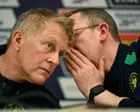
The Republic of Ireland will play Israel in Hungary after the squad voted by a significant majority to proceed, despite pressure to boycott the fixture over Israel’s military actions in Gaza. Bolton goalkeeper Gavin Bazunu withdrew in protest, saying he could not participate while innocent people were being killed. Ireland will wear black armbands and will not take part in the pre-match handshake or exchange of pennants.
The decision followed around nine hours of discussions among players, coaches and officials. Bazunu stressed that his stance was directed at the atrocities in Gaza, not against Israeli people or the Jewish community. Manager Heimir Hallgrímsson apologised for previously saying Ireland were “playing against genocide”, while Israel’s team welcomed Ireland’s decision and said football should remain separate from politics.
- Sources
- 2
- Outlets
- 2
- Left · Centre · Right
- 1 · 0 · 1
In short
- Ireland will play Israel after a significant-majority squad vote.
- Gavin Bazunu withdrew, citing personal principles over Gaza.
- Ireland will wear black armbands and skip some formalities.
How this story developed
- 2 months ago Bazunu later explained on Instagram that his objection concerned atrocities in the region rather than Israelis or Jews, while Israel’s leadership welcomed the decision and said football had prevailed.
- 2 months ago After a week of domestic pressure and about nine hours of Saturday discussions, the squad confirmed it would fulfil the fixture, while coach Heimir Hallgrímsson apologised for describing the match as playing against genocide.
- 2 months ago The Republic of Ireland voted by a significant majority to play Israel in Hungary despite calls for a boycott over Gaza, with Gavin Bazunu withdrawing and the team planning to wear black armbands and skip pre-match formalities.
Full account
Bolton's goalkeeper Gavin Bazunu has withdrawn from the Republic of Ireland's forthcoming match against Israel in Hungary, citing moral objections to the country's military operations in Gaza. The fixture, scheduled for Sunday evening, had become increasingly controversial within Irish football circles following mounting domestic pressure on the team to boycott the encounter. Bazunu's withdrawal marked the culmination of a day of intense internal deliberation at the squad's training base in Debrecen.
The team's hierarchy facilitated an extended consultation process on Saturday to determine whether to proceed with the fixture. Following Bazunu's morning notification to coaching staff of his intention to withdraw, the squad engaged in approximately four hours of discussion amongst themselves and with officials. The Football Association of Ireland subsequently organised a vote amongst the playing contingent, which returned what chief executive David Courell described as a "significant majority" in favour of fulfilling the scheduled fixture. However, accounts of the voting figures and procedures differ considerably between sources, with one former manager claiming the tally was 14–8, whilst the FAI declined to confirm or deny these specific numbers.
In a statement released on social media, Bazunu articulated his position with reference to his personal faith and conscience. He expressed profound respect for his teammates, management, and the Irish nation whilst emphasising that his decision was not rooted in opposition to Israeli citizens or the Jewish community generally, but rather stemmed from his conviction that participation would constitute tacit acceptance of what he characterised as regional atrocities. He portrayed the moment as a rare opportunity to take a principled stand on a matter of significant moral consequence.
Those squad members who voted to proceed will wear black armbands during the fixture and will abstain from customary pre-match ceremonies, including the formal handshake and exchange of pennants. Head coach Heimir Hallgrímsson acknowledged widespread discomfort with the fixture whilst retreating from earlier remarks describing the situation as "playing against genocide," now characterising that phrasing as imprecise. External criticism of the FAI's handling of the matter proved substantial, with former national team manager Brian Kerr questioning the legitimacy of the decision-making process, alleging that Bazunu had been excluded from the voting procedure, and calling for board resignations.
Where outlets differ
From the full account, which is AI-written from the sources:
Vote count specificity: Source 1 reports only 'significant majority' without numbers; Source 2 cites Brian Kerr's claim of 14–8 and notes FAI's refusal to confirm these figures
Bazunu's exclusion from voting: Source 1 does not address this; Source 2 explicitly states he was not informed of or allowed to attend the voting meeting
External criticism prominence: Source 1 focuses primarily on Hallgrímsson's comments; Source 2 prominently features Kerr's accusations and calls for board resignations, including sportswashing allegations
Family perspective: Only Source 2 includes statements from Bazunu's family characterising his decision as courageous
Pre-match protest measures: Source 1 details black armbands and ceremony abstention plans; Source 2 makes no mention of these measures
Institutional critique: Source 1 maintains neutral tone toward FAI; Source 2 adopts a more critical stance regarding decision-making processes and board accountability
Left-leaning outlets 1
Only here: withdraws, republic, fixture
Right-leaning outlets 1
Only here: former, manager, astonishing, accusation, towards
Every side used: gavin, bazunu, ireland, israel
Headline columns compared word for word; nothing in them is AI-written.
Steelman: both sides, in good faith
The strongest fair case each way — we don't pick a winner.
The case for
The principle that sport should remain separate from political disputes offers pragmatic value: if matches were routinely cancelled based on nations' foreign policies or military actions, international sport would become unstable and fragmented, ultimately harming athletes and fans. The squad's democratic vote respecting player autonomy, combined with meaningful symbolic gestures like armbands and abstaining from ceremonies, allows the team to acknowledge moral concerns whilst maintaining sport's unifying function; moreover, engaging with nations through sport can facilitate dialogue and understanding rather than isolation.
The case against
Athletes occupy a privileged platform and bear moral responsibility for their choices, particularly when they believe civilians are being killed on a significant scale; for Bazunu and others, conscience dictates that participation—even with symbolic protest—risks normalising the conflict and implicitly legitimates sporting relations with Israel. The scale of civilian casualties in Gaza represents an exceptional circumstance that supersedes ordinary political neutrality, making withdrawal not a politicisation of sport but a fundamental ethical stance against complicity in what participants believe constitutes grave harm.
Explained simply
The Republic of Ireland and Israel are national football teams that compete in UEFA competitions. Their match is part of the Nations League, a tournament involving European countries, with fixtures played at neutral venues when required.
The fixture has attracted political attention because of Israel’s military operations in Gaza and the wider conflict in the region. Some people in Ireland have called for the match to be boycotted, while the football authorities and players have had to consider whether taking part could be seen as a political statement.
Coverage · 2 sources
Bias meters
From 2 rated sources.
Cricket Entertainment Football Middle East Music Sport World
Read the full article at the source →
Originally published by The Guardian as “Republic of Ireland’s Gavin Bazunu boycotts Israel match ‘as a person of principle’”.