Republicans fail to ease one of Trump’s greatest fears as Supreme Court measure collapses
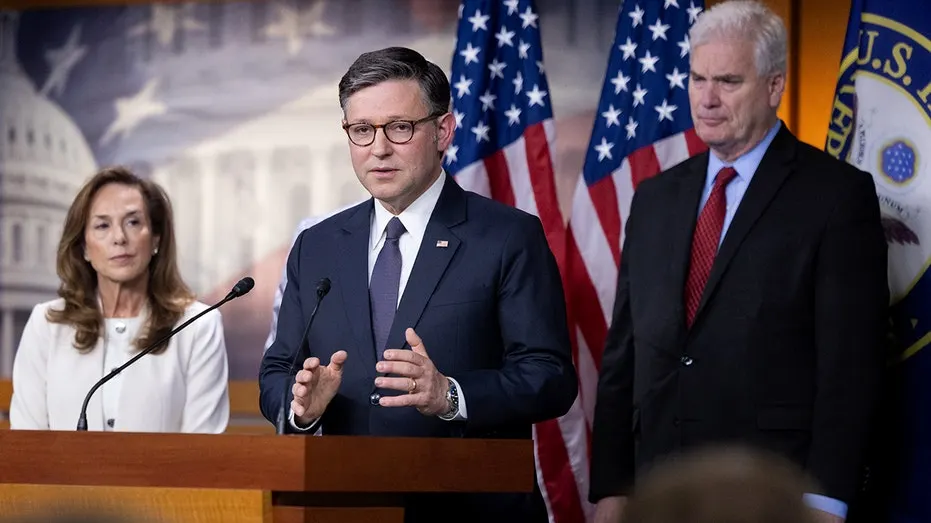
A Republican-led constitutional amendment to permanently cap the US Supreme Court at nine justices failed in the House of Representatives on Wednesday, after most Democrats voted against it. The measure was designed to ease concerns raised repeatedly by President Donald Trump that Democrats might attempt to expand, or "pack", the court if they regain control of Congress, a step some progressive figures have openly floated.
Speaker Mike Johnson fast-tracked the bill by Rep. Andy Biggs but agreed to raise the passage threshold from a simple majority to two-thirds, and it fell short despite winning support from most House members. Republicans argued that fixing the number of justices at nine, the current level, would stop any future majority from stacking the court for political advantage, while Democrats, including Reps. Jamie Raskin and Mary Gay Scanlon, countered that Congress has altered the court's size before and accused Republicans of trying to entrench a conservative majority they say was engineered by Mitch McConnell. Some progressives have proposed expanding the bench to 13 justices, one per federal circuit.
In short
- House vote to cap Supreme Court at nine justices failed on Wednesday
- Move aimed to address Trump's fears of Democrats "packing" the court
- Democrats say it would lock in a conservative majority; some want 13 justices
Steelman: both sides, in good faith
The strongest fair case each way — we don't pick a winner.
The case for
Supporters argue that a permanent nine-seat limit would protect the Court from partisan retaliation: whichever party controls Congress could not enlarge the bench to secure a favourable majority. They see a fixed rule as a safeguard for judicial independence and a way to ease fears of court-packing.
The case against
Opponents argue that Congress has historically set the Court’s size by law, and that permanently fixing it at nine would remove a legitimate option for future lawmakers responding to serious institutional problems. They also contend that the proposal would entrench a Court shaped by recent partisan conflict while leaving its current composition untouched.
Explained simply
The US Supreme Court is the country’s highest court, deciding major disputes about the Constitution and federal law. It currently has nine justices, who serve for life unless they retire or are removed.
Congress sets the number of justices by law, and the size of the court has changed several times in US history. Proposals to add seats, often called “court packing”, have become part of a wider political debate about the court’s role and its ideological balance.
Republicans and Democrats disagree over whether fixing the court at nine would protect it from political manipulation or limit Congress’s options in future. The argument matters because changes to the court’s size could affect which cases it hears and how it rules on issues that shape US law.