Republicans turn on Trump’s $5,000 voter ‘bribe’ desperately trying to avoid election ‘circus act’
Developed over time first seen 2 months ago
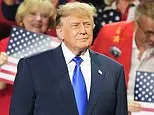
Donald Trump's promise of a $5,000 "dividend" payment to Americans if Republicans win the November midterms has provoked open dissent within his own party, with critics branding it an election "bribe" and questioning both its cost and legality. The row underscores growing unease among some Republicans about tying federal payouts directly to an electoral outcome, with the affair coming to be seen as damaging political theatre rather than a vote-winner.
Trump announced the pledge at a Dallas rally, saying every adult US citizen would receive the payment if Republicans retained control of the House and Senate, with the money to be spent domestically; estimates put the total cost at $1 to $1.3 trillion, far exceeding COVID-era stimulus cheques, and any scheme would require congressional approval. Senior figures including Congressman Chip Roy and Senator Ted Cruz raised concerns about funding and eligibility restrictions, while Congressman Thomas Massie called the offer "insulting" and donor Joe Lonsdale condemned it as a "bread and circus" bribe; Trump nonetheless pressed ahead, separately unveiling $500 rebate cheques for nearly a million people, though earlier promised "DOGE" and "tariff" dividends have still not materialised.
- Sources
- 4
- Outlets
- 4
- Left · Centre · Right
- 0 · 1 · 3
In short
- Trump's $5,000 election-tied "dividend" pledge sparked Republican backlash.
- Critics call it a bribe; cost estimated at $1-1.3 trillion.
- Trump added $500 rebate cheques despite unresolved earlier payment promises.
How this story developed
- 2 months ago Donald Trump has widened his controversial midterm cash-payment pledges by adding $500 rebate cheques for nearly a million people, on top of the already contentious $5,000-per-adult "dividend" he has promised if Republicans win both chambers in November.
- 2 months ago Donald Trump's promise of a $5,000 "dividend" payment to Americans if Republicans win the November midterms has provoked open dissent within his own party, with critics branding it an election "bribe" and questioning both its cost and legality.
- 2 months ago Donald Trump has added a $500 rebate cheque for nearly a million people to his already contentious $5,000 "dividend" pledge, deepening a rift within his own party as senior Republicans openly balk at the cost and optics of the original promise.
- 2 months ago Donald Trump has doubled down on his contested $5,000 "dividend" pledge, announcing separate $500 rebate cheques for nearly a million people even as senior Republicans openly revolt against the original promise.
- 2 months ago Donald Trump has drawn criticism from within his own Republican Party after pledging a $5,000 "dividend" payment to every American adult if Republicans retain control of Congress in November's midterm elections.
- BBC World Can Trump really pay $5,000 to every American adult?
- The Hill Trump defends timing of $5,000 dividend announcement
- Fox News Trump defends $5,000 dividend proposal, praises 'beautiful' tariffs on 'Ingraham Angle'
- Daily Mail Republicans turn on Trump’s $5,000 voter ‘bribe’ desperately trying to avoid election ‘circus act’
Full account
Donald Trump has provoked unease within his own party after promising that every adult American citizen would receive a $5,000 payment if Republicans retain control of both chambers of Congress in November's midterm elections. Speaking at a Republican rally in Dallas on Wednesday evening, the US president framed the payment as a 'dividend' funded by what he described as the country's economic success, telling the crowd that the money would need to be spent within the United States. He offered no further detail on how the scheme would work, who would administer it, or how spending would be verified, and the announcement was met with loud cheers from supporters in the hall.
The pledge quickly drew criticism from figures within Trump's own political camp, several of whom compared it to vote-buying. Palantir co-founder and Republican donor Joe Lonsdale said he supported a midterm victory but was 'strongly against bread and circus bribes'. Texas congressman Chip Roy questioned how a sum he estimated at 'well over $1 trillion' could possibly be funded, while Senator Ted Cruz said the plan would cost 'a massive amount' and suggested payments should be restricted rather than universal. Kentucky congressman Thomas Massie, a frequent Trump critic, said he felt 'insulted' by the idea that his vote could be bought for $5,000 and joked that, accounting for the inflation such a scheme might cause, he would want at least double. Former congresswoman Marjorie Taylor Greene, once a Trump ally, mocked the proposal as a payment for 'peasants' that would only be sent once the votes were safely in.
Beyond the political sniping, the practicalities of the plan attracted heavy scrutiny. With roughly 270 million adults in the United States, a universal $5,000 payment would cost an estimated $1 trillion to $1.3 trillion, a sum that commentators warned would widen the federal deficit, add to an already swelling national debt and risk stoking further inflation. Trump gave no indication of how Congress, which controls federal spending, would be asked to approve such an outlay, and legal experts cited by the BBC said it was doubtful a payment of this scale could be authorised through a presidential executive order alone. Vice-President JD Vance later suggested to Fox News that tariff revenue could help cover the cost and indicated that wealthier Americans would likely be excluded, though no formal proposal has been published. Democrats dismissed the whole pledge as an 'empty promise', and economist Erica York of the Tax Foundation said she would be 'extremely surprised' if Congress ever approved it, calling it one of the worst possible uses of $1.3 trillion at a time when deficits are already on an unsustainable trajectory.
Questions were also raised about whether the offer could be lawful, given that federal law bars payments intended to influence how someone votes. Legal academics were divided: Dr Joan Mahoney of the University of Southampton told the BBC she believed the pledge would likely be treated as an ordinary, if unusually explicit, campaign promise akin to pledging tax cuts, since the money would go to all citizens regardless of how they voted. Laurel Rapp of Chatham House took a more sceptical view, describing the offer as a markedly transactional arrangement unlike typical election-season promises. The row also revived memories of previous unfulfilled Trump pledges, including a $5,000 'DOGE dividend' and a $2,000 'tariff dividend', neither of which has materialised, though a smaller $1,776 'warrior dividend' was paid to around 1.4 million military personnel in December 2025.
Where outlets differ
From the full account, which is AI-written from the sources:
The tabloid-style report concentrates on the backlash from Republican lawmakers and donors, quoting Lonsdale, Chip Roy, Cruz, Massie and Marjorie Taylor Greene directly and framing the story around GOP infighting and the 'bribe' accusation, with lighter treatment of funding mechanics.
The BBC report focuses more on legality and feasibility, citing law lecturer Dr Joan Mahoney and Chatham House's Laurel Rapp on whether the offer breaches vote-buying laws, and economist Erica York on the fiscal implications, while noting Democrats called it an 'empty promise'.
Only the BBC account notes Vice-President JD Vance's suggestion that tariff revenue could fund the scheme and that wealthy Americans might be excluded, a detail absent from the other report.
The first source situates the pledge within a pattern of previous unfulfilled Trump 'dividend' promises (DOGE dividend, tariff dividend) and the one that was paid (the warrior dividend), context not covered by the BBC excerpt.
Estimates of the total cost vary slightly between sources ($1-1.3 trillion versus a more specific $1.3 trillion based on roughly 270 million adults).
Centre outlets 1
Only here: really, every, american, adult
Right-leaning outlets 3
- Republicans turn on Trump’s $5,000 voter ‘bribe’ desperately trying to avoid election ‘circus act’Daily Mail
- Trump defends timing of $5,000 dividend announcementThe Hill
- Trump defends $5,000 dividend proposal, praises 'beautiful' tariffs on 'Ingraham Angle'Fox News
Only here: defends, dividend, republicans, turn, voter
Every side used: trump
Headline columns compared word for word; nothing in them is AI-written.
Steelman: both sides, in good faith
The strongest fair case each way — we don't pick a winner.
The case for
Supporters argue that returning tariff revenue directly to citizens as a dividend is a legitimate and even innovative form of fiscal relief, akin to stimulus payments many previously welcomed, and that it fulfils a clear campaign commitment to ordinary households feeling the pinch of high living costs. They contend that requiring congressional approval is simply how the system is meant to work, not evidence of bad faith, and that criticising the idea before legislation is even drafted pre-judges a policy that could genuinely benefit working families. They also note that some pledged payments, such as the warrior dividend, have already been delivered, suggesting the administration can follow through when funding mechanisms are in place.
The case against
Critics, including senior Republicans, argue that unfunded five-figure pledges risk worsening the deficit and setting unrealistic expectations without a credible funding source or legislative path. They point to a pattern of unfulfilled promises, such as the DOGE and tariff dividends, as reason for scepticism about whether this one will materialise, and they view the timing, landing only after the midterms, as suspicious enough to resemble an inducement to voters rather than sound policy. For fiscally conservative lawmakers, the deeper concern is that announcing popular payouts without securing votes first undermines both fiscal discipline and public trust in the seriousness of the pledge.
Explained simply
Republicans in Congress broadly control both chambers alongside Trump's presidency, but a growing number of them are publicly breaking with him over a proposed cash payment to voters, arguing it looks like an attempt to buy support ahead of the midterm elections. The "dividend" idea, first floated as a way to share proceeds from Trump's tariff policies with the public, has taken several different forms and dollar amounts over recent months, none of which have yet been paid out in full.
Key figures include Trump himself, who continues to push the payments; Senate Majority Leader John Thune, who oversees whether Republicans can muster enough votes to pass such a measure; and a mix of Republican lawmakers, from Marjorie Taylor Greene to Thomas Massie, who have criticised the plan. Any payment of this kind would need Congress to approve it, which is not guaranteed given the internal party disagreement.
The issue matters because it touches on how election campaigns are funded and conducted, and on whether government payments timed around a vote could be seen as improper influence. It also highlights tension between Trump and members of his own party over economic policy and spending, at a time when the midterm elections in November are approaching.
Coverage · 4 sources
Bias meters
From 4 rated sources.
- Daily MailRightRepublicans turn on Trump’s $5,000 voter ‘bribe’ desperately trying to avoid election ‘circus act’
- BBC WorldCentreCan Trump really pay $5,000 to every American adult?
- The HillRightTrump defends timing of $5,000 dividend announcement
- Fox NewsFar rightTrump defends $5,000 dividend proposal, praises 'beautiful' tariffs on 'Ingraham Angle'
Americas Elections Government Politics World