Research roundup: 6 cool science stories we almost missed
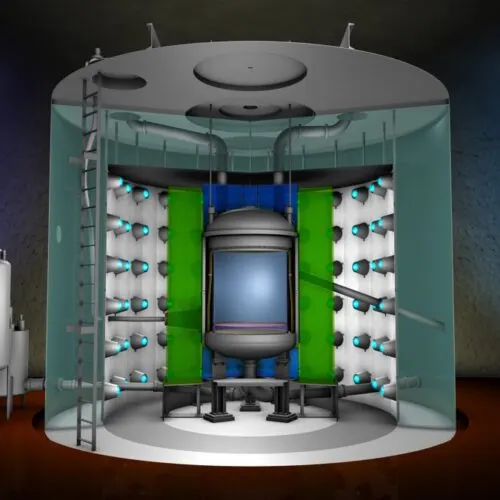
Researchers have reported several recent scientific findings, including a possible dark matter signal and quantum entanglement between Z bosons at the Large Hadron Collider. The results add to ongoing research into fundamental physics, but the dark matter observation is only a hint and does not establish a discovery.
The LUX-ZEPLIN detector, located in a South Dakota gold mine, recorded an unexplained event with higher nuclear recoil energy than expected for a WIMP, while no corresponding lower-energy events appeared. The team says the signal is below the threshold for confirmation and could be a statistical fluctuation; meanwhile, ATLAS researchers inferred entanglement from the decay patterns of Z bosons, describing it as the highest-energy example observed so far. The roundup also covers possible psychoactive substance use in the Late Pleistocene and a technical account of a telescope attributed to Galileo.
- LUX-ZEPLIN reported an unconfirmed possible dark matter signal.
- ATLAS researchers observed entanglement between Z bosons.
- The roundup includes Ice Age substances and a Galileo-era telescope.
New here? Start with this
Scientists have reported several recent discoveries across different areas of physics research. These findings appear in a roundup because they represent progress in fundamental research, though some are at early stages and require further confirmation before scientists can declare them definitive breakthroughs.
Dark matter is an invisible substance thought to make up much of the universe's mass, yet it has never been directly detected. Researchers use sensitive detectors deep underground to try to catch signs of dark matter particles; a recent result from the LUX-ZEPLIN detector in South Dakota has registered an unusual event that could hint at dark matter's existence, though the signal is too weak to confirm the finding on its own.
Separately, physicists at the Large Hadron Collider have found evidence that Z bosons—particles created in high-energy collisions—exhibit quantum entanglement, a bizarre phenomenon where particles become mysteriously linked. The roundup also covers other recent findings, from investigations into ancient psychoactive substances to the study of a telescope historically attributed to Galileo.