Science news and discussion on TalkFuse.
Stanford researchers implant human brain organoid cells into mouse cortex
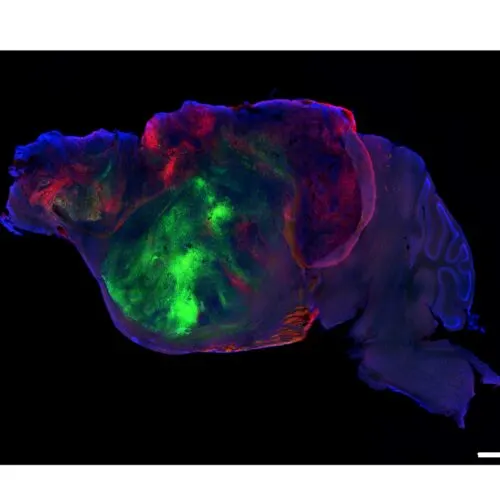
Researchers at Stanford have developed a technique that replaces most of a mouse's cortex with human brain organoid cells, offering a potential new way to study human brain diseases in a more realistic biological context. Brain organoids, small tissue structures grown from stem cells, have shown promise for modelling human disease but lack the connections to other brain structures needed to function normally, and previous attempts to insert human neurons into animal brains were limited because the transplanted cells remained surrounded by the host's own functioning neurons.
To overcome this, the team genetically deleted a gene needed for cell division in almost all cortical cells, wiping out most of the mouse cortex and halving the brain's volume, before replacing it with human organoid tissue. Remarkably, the mice largely survived this procedure, though it required intensive support, including reducing litter sizes so the affected pups received more nursing, extending nursing time and providing very high-calorie food. The mice were also immunocompromised to prevent rejection of the human cells. Despite the survival success, the article notes the results represent only a slight improvement over mice missing the brain structure entirely.
In short
- Stanford scientists replaced most of a mouse's cortex with human brain organoid cells
- Mice survived despite losing much of their cortex, with intensive rearing support
- Outcomes were only marginally better than mice lacking the cortex altogether
Steelman: both sides, in good faith
The strongest fair case each way — we don't pick a winner.
The case for
Replacing much of the mouse cortex with human-derived tissue could let researchers study brain diseases in a more biologically realistic setting, including how human cells interact with a living brain. If the approach can be refined, it may help test treatments and answer questions that organoids alone cannot, potentially improving research while reducing reliance on less informative models.
The case against
The procedure removes most of a developing mouse’s cortex, halves its brain volume and requires intensive support, raising serious concerns about animal welfare and the value of the resulting lives. The reported functional gain is slight compared with mice lacking the structure altogether, so the benefits remain uncertain; researchers should establish clear scientific value and strong welfare safeguards before expanding the work.
Explained simply
Brain organoids are small, simplified pieces of brain tissue grown from stem cells. Researchers use them to study how human brain cells develop and how diseases affect them, but organoids grown in the lab lack the connections to other brain regions that help a brain function.
The Stanford team transplanted human organoid cells into mice after removing most of the animals’ cortex, a large outer part of the brain. Earlier efforts to add human cells left them mixed with the mouse’s own working neurons, making it difficult to study them in isolation.
The mice survived with intensive care, and their immune systems were suppressed to reduce the risk of rejecting the human cells. The approach could offer a way to study human brain disease in living animals, though the reported improvement over mice without a cortex was slight.
Read the full article at the source →
Originally published by Ars Technica as “Researchers swap in human brain cells for a mouse’s cortex”.