Residents voice outrage at plans for solar farm on South Yorkshire green belt
Developed over time first seen 2 months ago
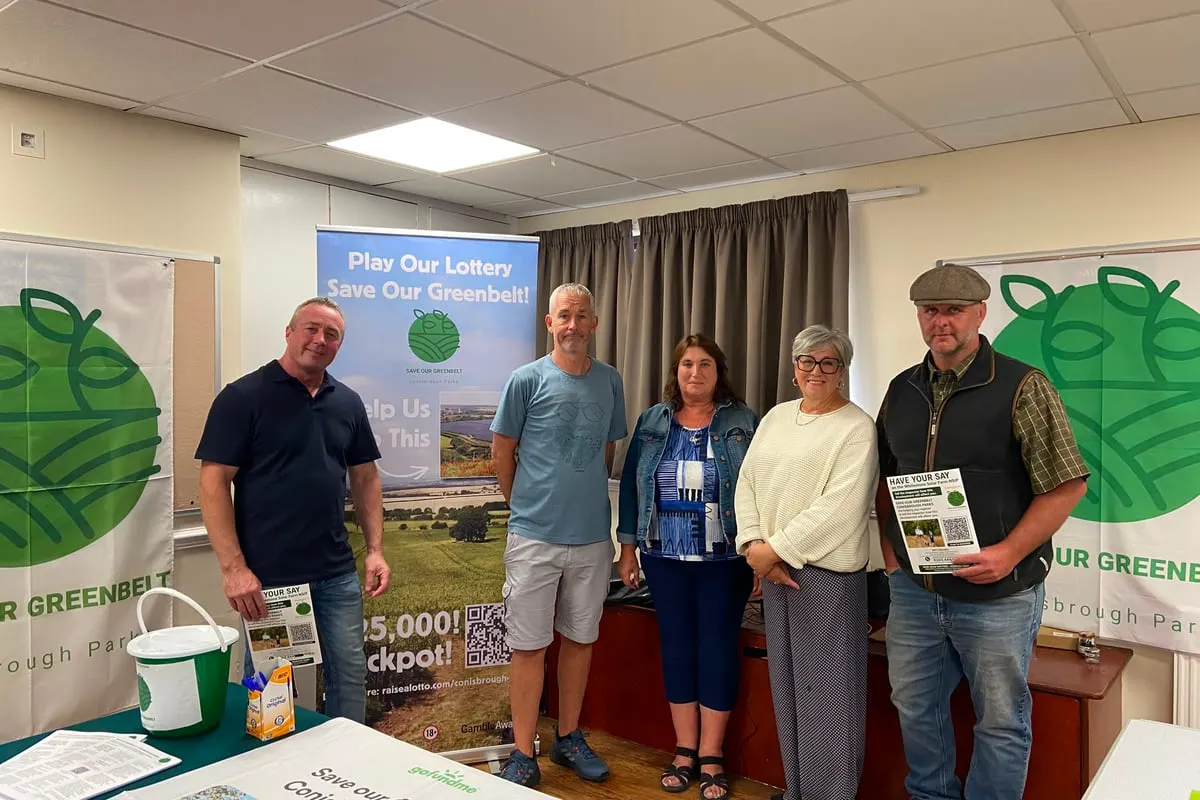
Residents from Rotherham and Doncaster raised objections at a 6 August meeting in Ravensfield Parish Hall over the proposed Whitestone Solar Farm, a large green-belt development planned across land between the two areas. Campaigners said they were concerned about the scheme’s scale, effects on countryside, farming and local businesses, and whether communities had been adequately informed. Some stressed that they support renewable energy in principle but argued that rooftop and previously developed sites should be considered more fully. Online groups including Whitestone Warriors and Save Our Green Belt have been formed in opposition.
The developer, Whitestone Net Zero Ltd, managed by Green Nation, says the project has been reduced following consultation and would provide solar generation, battery storage, underground cables and a connection to the proposed Long Lane substation near Brinsworth. Its current information says 691 hectares would contain solar and other above-ground infrastructure, with 458 hectares set aside for wildlife measures; it also proposes 14.5km of new permissive paths while retaining existing public rights of way. The application has been accepted for examination as a nationally significant infrastructure project, meaning the final decision will be taken by the Secretary of State rather than local councils. Residents’ concerns and the claimed environmental, access and energy benefits will therefore form part of the formal planning process.
- Residents objected to the Whitestone Solar Farm’s proposed use of green-belt land.
- The developer says the scheme has been reduced and includes habitat measures and new paths.
- The nationally significant project is being examined by the Planning Inspectorate before a ministerial decision.
Both sides, in good faith
The strongest fair case each way — we don't pick a winner.
The case for
The project addresses critical renewable energy needs essential for meeting climate targets and ensuring energy security, whilst the developer has undertaken consultation and significantly reduced the scheme. Solar farms are temporary installations that allow land restoration afterward, and the substantial environmental mitigation measures—458 hectares dedicated to wildlife and 14.5km of new public paths—demonstrate genuine effort to minimise landscape impact. Given that renewable infrastructure must be deployed somewhere and alternatives like rooftop solar and previously developed sites alone cannot meet national energy requirements, accepting green belt development of strategically located, comprehensively mitigated projects represents a proportionate response to an urgent climate imperative.
The case against
Green belt protection embodies a carefully established planning principle intended to prevent permanent sprawl and preserve countryside for future generations, and once compromised, such protection is virtually irretrievable in practice. The scheme's scale—691 hectares of above-ground infrastructure—would fundamentally alter the landscape character and threaten agricultural viability and rural economies, whilst assertions that alternatives have been adequately explored remain contested. Local communities have legitimate concerns about consultation and the right to shape their environment, and accepting that national energy needs automatically supersede green belt protection sets a precedent that could erode these safeguards elsewhere.
Full account
Plans for a vast new solar power scheme stretching across green belt land between Rotherham and Doncaster have prompted strong opposition from local residents, who packed a public meeting at Ravensfield Parish Hall on 6 August 2026 to raise concerns about the Whitestone Solar Farm. The proposal, brought forward by developer Green Nation through the applicant company Whitestone Net Zero Ltd, would see solar arrays and battery storage infrastructure built across a swathe of countryside running from Conisbrough in the north down through villages including Bramley, Wickersley, Thurcroft, Aston and Anston towards a new grid connection at Brinsworth. Campaigners have since organised under banners such as Whitestone Warriors and Save Our Green Belt, arguing that many people living nearby remain unaware of the scheme's scale and implications.
The scheme is a substantial piece of national infrastructure rather than a small local development. It is split into three sections — Whitestone 1 near Conisbrough, Whitestone 2 around Ulley and Brinsworth, and Whitestone 3 near Harthill and Woodall — linked by underground cabling feeding into a proposed National Grid substation on Long Lane. Green Nation says the project would generate enough electricity to supply around 250,000 homes and, if consented, would remain operational for 60 years. An application for a Development Consent Order was submitted to the Planning Inspectorate on behalf of the Secretary of State for Energy Security and Net Zero on 10 June 2026 and formally accepted for examination on 3 July, placing the decision within the nationally significant infrastructure process rather than with local councils alone, though Doncaster, Rotherham and, at the site's southern edge, North East Derbyshire authorities are all named as affected areas.
For residents, the practical impact on daily life and livelihoods has dominated discussion. Jonathan Holdsworth, who runs a dog boarding and breeding business near Conisbrough, told the meeting he feared the development could force his business to close, jeopardising plans for his daughter to take it over. Terry Huggett, from Firsby, said the surrounding countryside risked being transformed from green belt into what he described as an industrial-style landscape, while stressing that objectors were not opposed to renewable energy in principle but questioned the motives of private developers he said were driven primarily by financial return. Lauren Clay, from Harthill, echoed that sentiment, suggesting rooftop solar on large commercial buildings and warehouses would be a less contentious alternative to using open green belt land, while acknowledging this route might be slower or costlier for developers to pursue.
Green Nation has sought to reassure objectors, telling reporters that although the site is designated green belt, solar development can be designed in ways that support wider environmental and green belt objectives, and pointing to a reduction in the scheme's footprint of around 17 per cent since it was first proposed. The developer's own project material describes extensive mitigation measures, including roughly 458 hectares set aside for wildlife alongside 691 hectares of solar infrastructure, new native planting, hedgerows and some 14.5km of new permissive paths intended to preserve and improve public access. Notably, the figures cited differ between sources: local reporting referenced an original proposal of about 3,500 acres cut by 17 per cent, the developer's site quantifies the final solar and wildlife areas separately in hectares, and the official planning notice gives a total site extent of approximately 1,488 hectares — a reminder that, as the scheme moves through formal examination, residents, the developer and the planning authorities are, to some extent, still describing different aspects of the same evolving proposal.
Where outlets differ
Hits Radio (via Local Democracy Reporting Service) foregrounds resident anger and personal testimony — quotes from a farmer fearing for his business, and campaigners questioning developer motives and suggesting rooftop alternatives — and frames the scheme mainly in terms of acreage reduced by 17% from an original 3,500 acres.
Green Nation's own project site presents the scheme in developer-friendly technical terms, emphasising design evolution through two rounds of consultation, wildlife mitigation (458 hectares), new footpaths, and landscaping, giving separate hectare/acre figures for solar and wildlife areas that don't map neatly onto the acreage cited elsewhere.
The statutory planning notice (Derbyshire Times/Planning Inspectorate) is a formal legal notice focused on process — confirming the Development Consent Order application was accepted for examination under the Planning Act 2008, naming the responsible councils (including North East Derbyshire, not mentioned by the other sources) and giving a total site figure of about 1,488 hectares, without addressing community reaction at all.
Figures for the scale of the project vary noticeably between sources and are not easily reconciled, likely reflecting different stages/measures (original proposal vs. final masterplan vs. total order limits).
More coverage
- Hits Radio South Yorkshire / Local Democracy Reporting Service — Residents voice outrage at plans for solar farm on South Yorkshire green belt
- Whitestone Solar Farm — Project information
- Public Notice Portal — Consent for the construction, operation, maintenance and decommissioning of the Whitestone Solar Farm – Planning Application