RFK Jr. Clashes With CNN’s Dana Bash About Covid, Fauci, Vaccines & Autism
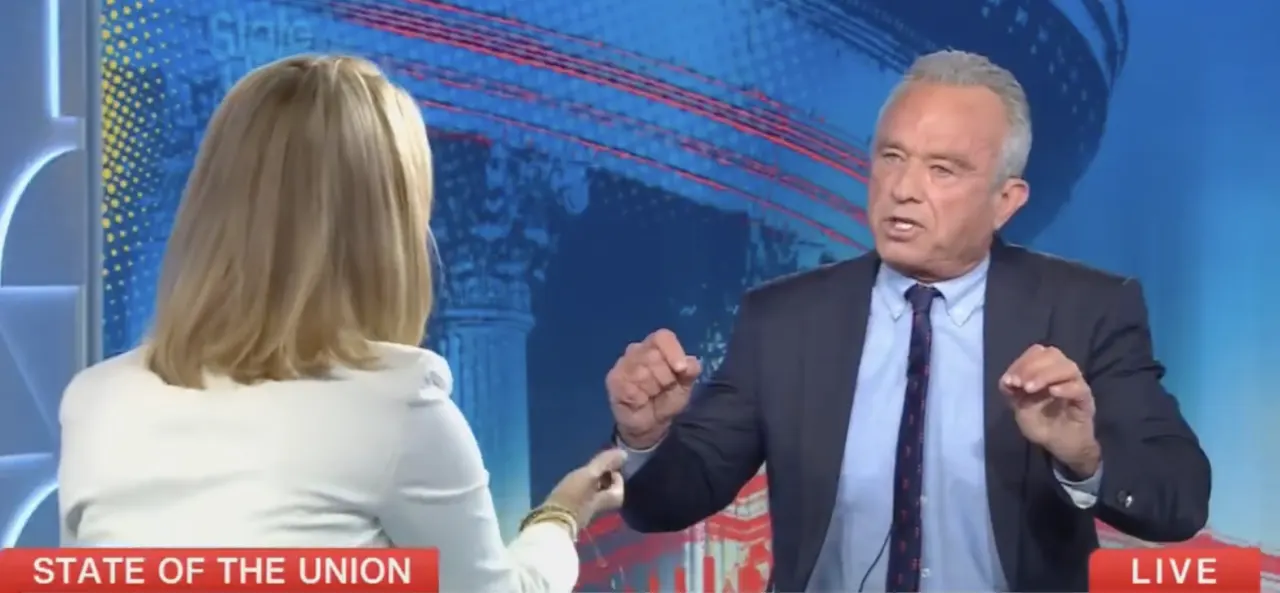
Health and Human Services Secretary Robert F. Kennedy Jr. clashed publicly with CNN's Dana Bash on State of the Union, growing testy when she pressed him on childhood vaccines, Covid and Anthony Fauci. The exchange, which turned personal when Kennedy told Bash she "wouldn't understand" the science, comes as the United States faces its worst measles outbreak in 35 years and highlights ongoing tension between Kennedy's vaccine scepticism and mainstream public health guidance.
Bash cited more than 40 studies covering 5.6 million people that found no link between vaccines and autism, but Kennedy argued most of that research focused only on the MMR jab and called for other childhood vaccines to be studied as rigorously; he did, however, urge parents to vaccinate children against measles. Measles cases in the US have risen roughly tenfold between 2024 and 2025, with more than 2,300 recorded so far this year, despite the disease being considered virtually eliminated domestically since 2000. When Bash asked whether he bore any responsibility for the outbreak, Kennedy said "absolutely not," insisting the surge stemmed from international sources.
- RFK Jr. sparred sharply with CNN's Dana Bash over vaccines and autism.
- He denied responsibility for a 35-year-high US measles outbreak.
- Kennedy still urged parents to get children the MMR vaccine.
New here? Start with this
RFK Jr, whose full name is Robert F. Kennedy Jr, is the US Secretary of Health and Human Services, the government department responsible for public health policy. He has long questioned the safety of some vaccines and has previously suggested links between vaccines and autism, positions that put him at odds with most mainstream medical research and public health bodies. Dana Bash is a senior CNN journalist who hosts the network's Sunday politics programme, State of the Union, where she regularly questions senior officials.
The backdrop to their exchange is a sharp rise in measles cases across the United States, a disease that had been considered largely eliminated domestically since 2000 due to widespread childhood vaccination. Anthony Fauci is a former top US government health official who became a prominent, sometimes divisive, figure during the Covid-19 pandemic for his advice on vaccines and public health measures, and remains a reference point in ongoing debates about that response.
This matters because Kennedy now holds direct authority over US health policy and guidance, meaning his personal views on vaccines carry more weight than before he took office. The rising measles numbers have brought fresh scrutiny to how his scepticism sits alongside his department's role in protecting public health.
Both sides, in good faith
The strongest fair case each way — we don't pick a winner.
The case for
Kennedy's defenders argue he is right to demand rigorous, transparent science rather than deference to institutional authority, noting that most large studies cited by critics focus specifically on the MMR jab rather than the full childhood schedule, and that legitimate scientific inquiry benefits from continued scrutiny rather than being treated as settled beyond question. They see his stance as consistent with, not contradictory to, sound public health, given that he has explicitly urged parents to vaccinate against measles. From this view, restoring public trust after years of institutional missteps during Covid requires openness to uncomfortable questions, not reflexive dismissal of a health secretary's calls for better data.
The case against
Critics argue that repeatedly amplifying doubt about a body of research spanning more than 40 studies and 5.6 million people, regardless of caveats about specific vaccines, does real damage by giving parents permission to delay or skip immunisations, and that a sitting health secretary bears special responsibility for the consequences of that doubt. They point to the tenfold rise in measles cases and the disease's return after being declared eliminated as evidence that rhetoric has measurable costs, and see his rejection of any personal responsibility as inconsistent with holding the nation's top public health office. From this perspective, the moment calls for unambiguous, unified messaging in support of established immunisation science, not further hedging from the very official charged with protecting it.