World news and discussion on TalkFuse.
Robot vessels take on the dangerous work of mine hunting
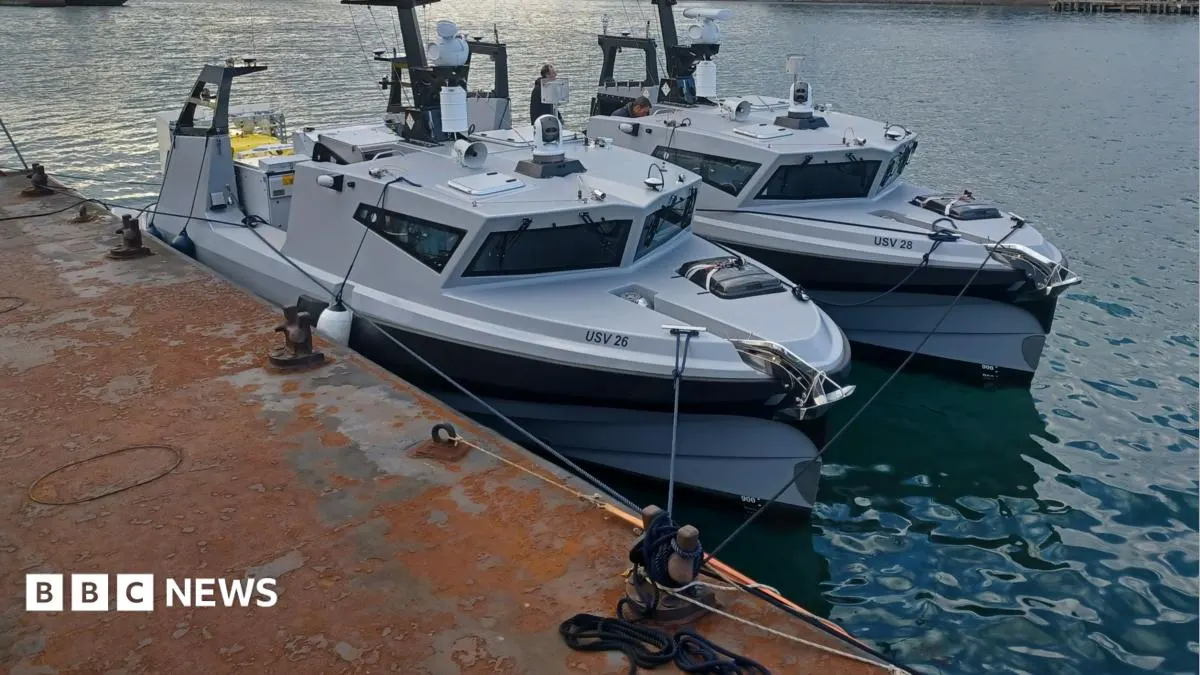
Robot vessels and other autonomous systems are increasingly being used to search for sea mines, a dangerous task traditionally carried out by specialist ships with large crews. The shift matters because mines can threaten shipping even when no attack is underway, and unmanned craft allow navies to investigate hazards while keeping sailors farther from danger.
Mines can lie on the seabed, float, or move towards a target, and may be triggered by a ship’s acoustic or magnetic signals. Newer systems use sonar, sensors and AI to scan the seabed and build detailed 3D images; one Thales craft was developed with the Royal Navy and France’s Marine Nationale. The article says these systems can be cheaper and deployed by air, while shore teams may need about 20 people rather than the roughly 80 aboard a conventional minehunter.
In short
- Robot vessels are taking on mine-hunting work.
- They reduce the number of sailors exposed at sea.
- Sensors and AI help identify mines on the seabed.
Steelman: both sides, in good faith
The strongest fair case each way — we don't pick a winner.
The case for
Autonomous mine-hunting vessels can search hazardous waters without placing large crews close to explosives, reducing risks to sailors while helping navies protect shipping. If they are cheaper and can be deployed by air, they may also let forces investigate more areas and respond more quickly, with shore teams operating the systems.
The case against
Autonomous systems may be less dependable than specialist ships and crews when conditions are complex or mines are difficult to detect, so relying on them could leave dangerous gaps in protection. Their sensors, software and communications can fail or be disrupted, and navies may still need costly crewed vessels and trained personnel to verify findings and deal with threats.